Busan, South Korea: Part Three
As we stopped to explore lunch options, the first thing I noticed… the stilted, colorful clownlike characters. They carried a giant banner so they were tasked with advertising for something. I could not read it in Korean…
In order to get to our restaurant, we had to walk under the arches in BIFF square. This is referred to as the birthplace of Busan’s International Film Festival. Such a festive spot. Squares signed with actors/actresses autographs and handprints. It is similar to Beverly Hills Walk of Fame, though this is more focused on food and tourists than to the artists themselves.
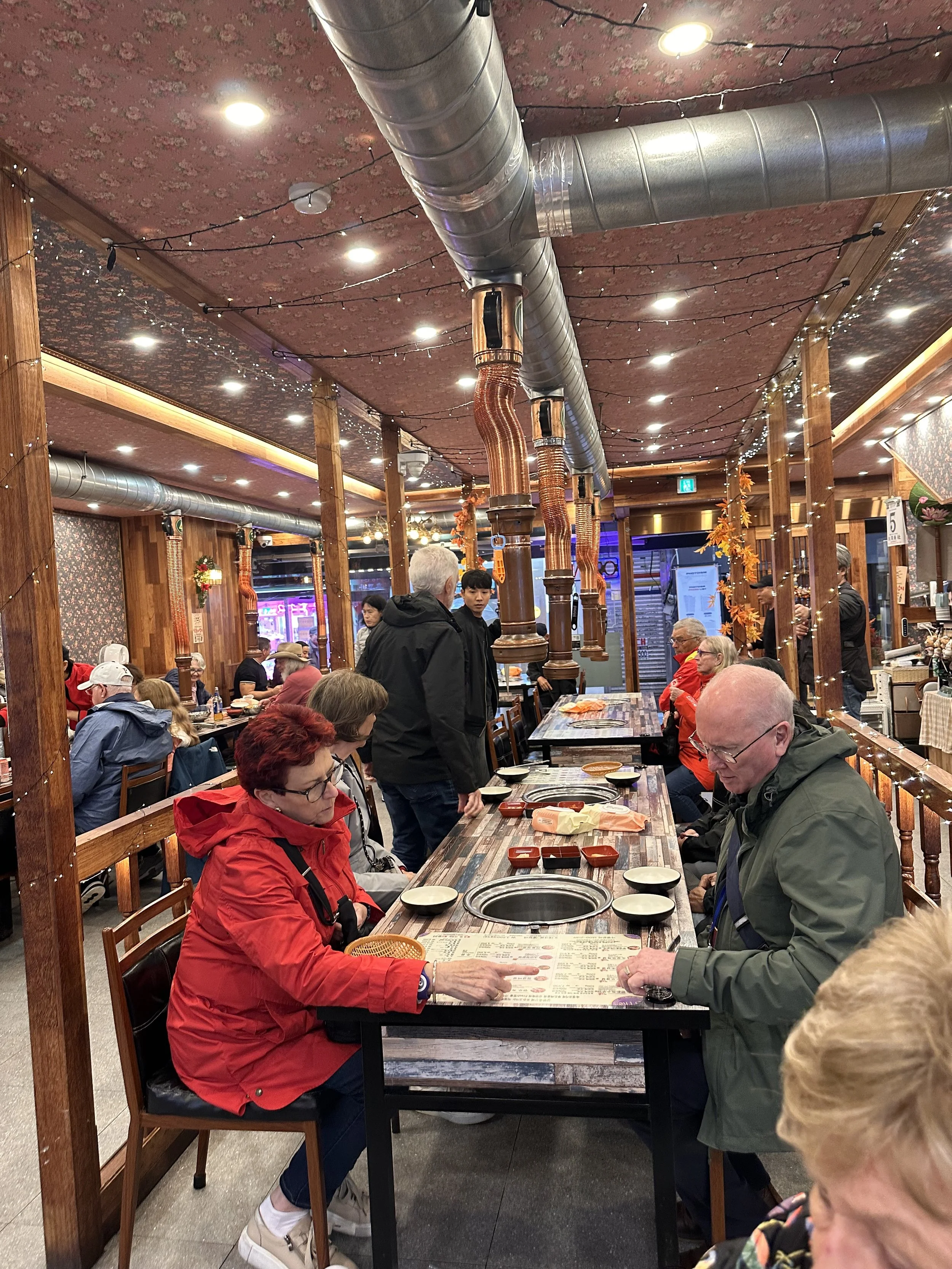
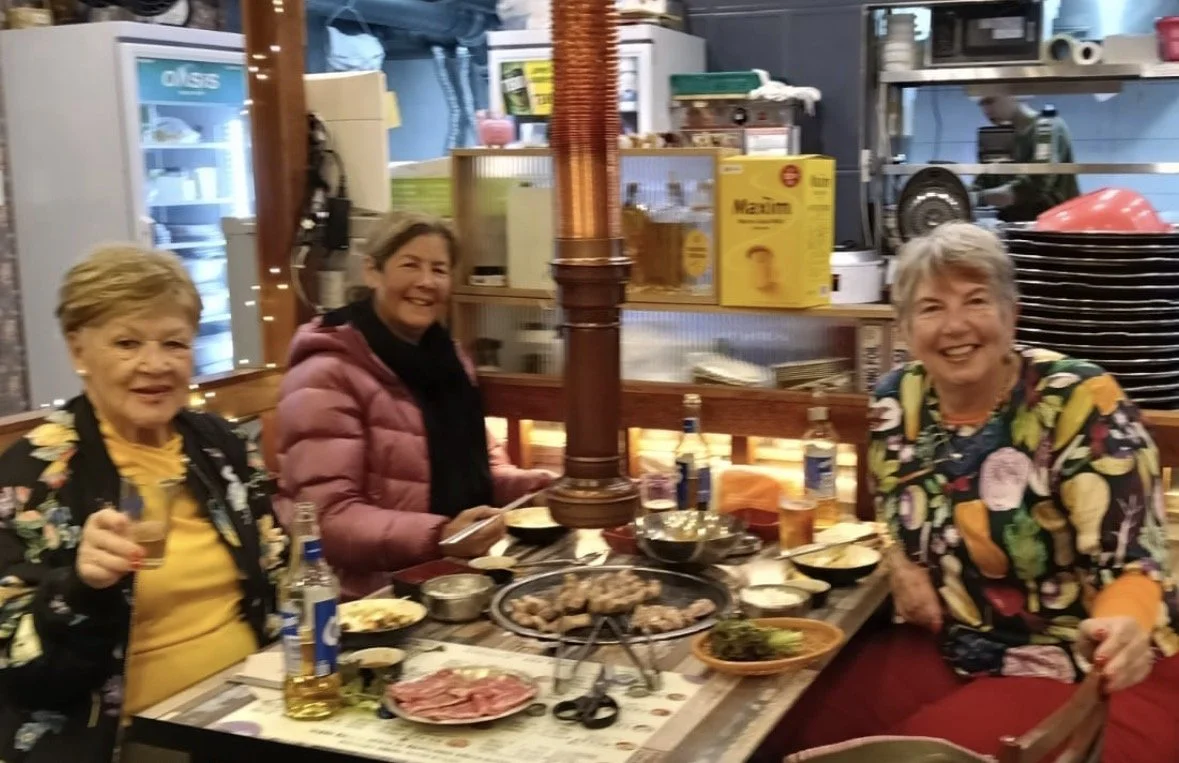
Our small tour group arrived at just the right time. Joe, our guide said if there wasn’t enough seating, we could split up and visit different restaurants, but we would just check this out to see if we could sit together. As it ended up, I sat at a table with Jo and Kay, the others sat across from us. As soon as we were seated, the server came and lit our barbque… and brought the necessary utensils. Our food was ordered and brought out quickly. We had quite a feast! Pork belly, kalbi and a think steak with rice, veggies and lettuce. I ate until I couldn’t fit another bite in!!!
Just so I know where to find the name of the restaurant in the future… I’ll leave this right here. Actually, I’m 95.5% sure I will return for a land-based visit. Not sure exactly when it will fit into my future plans but I will fit it in somewhere, sometime… fairly soon :-)
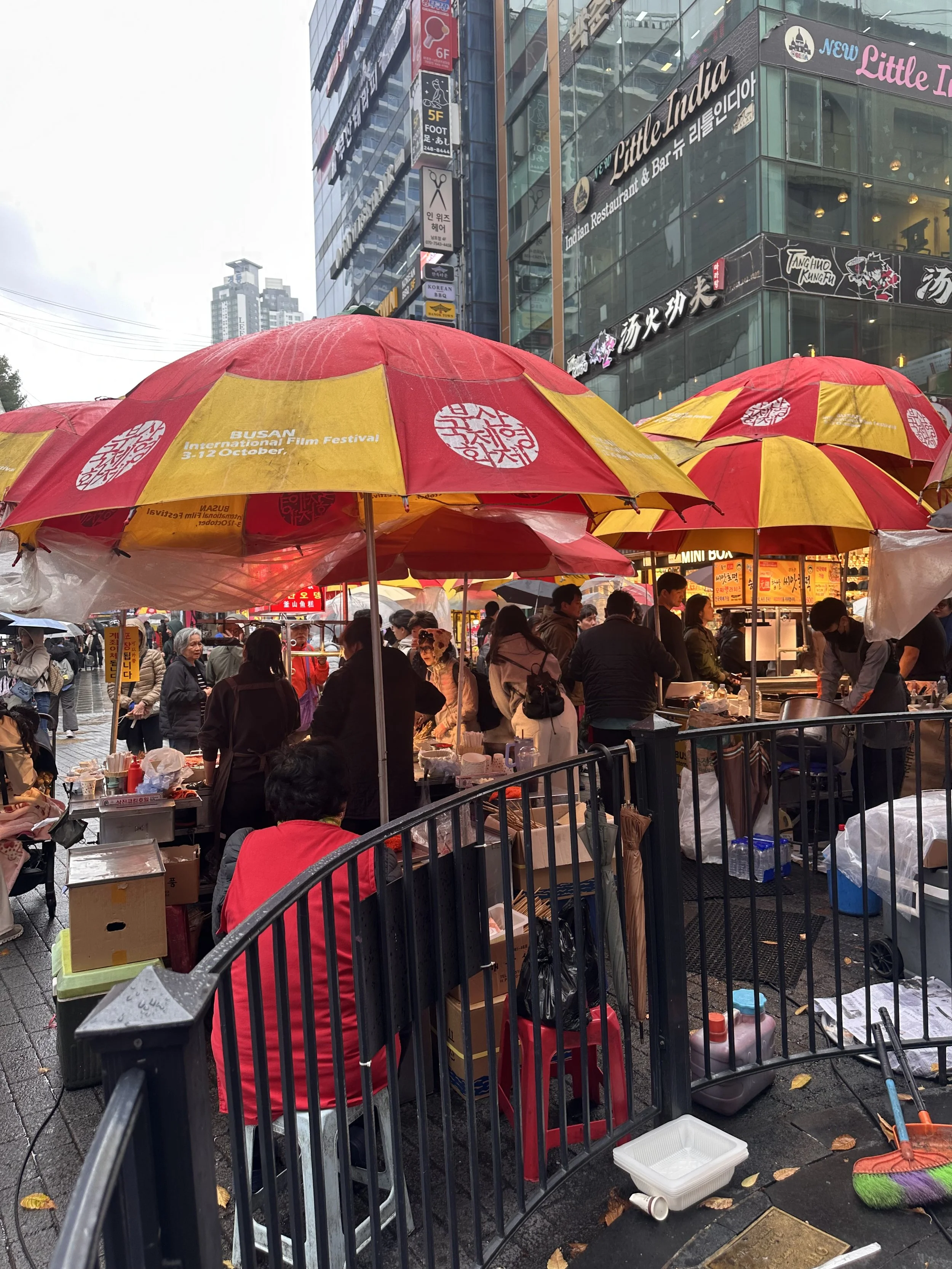
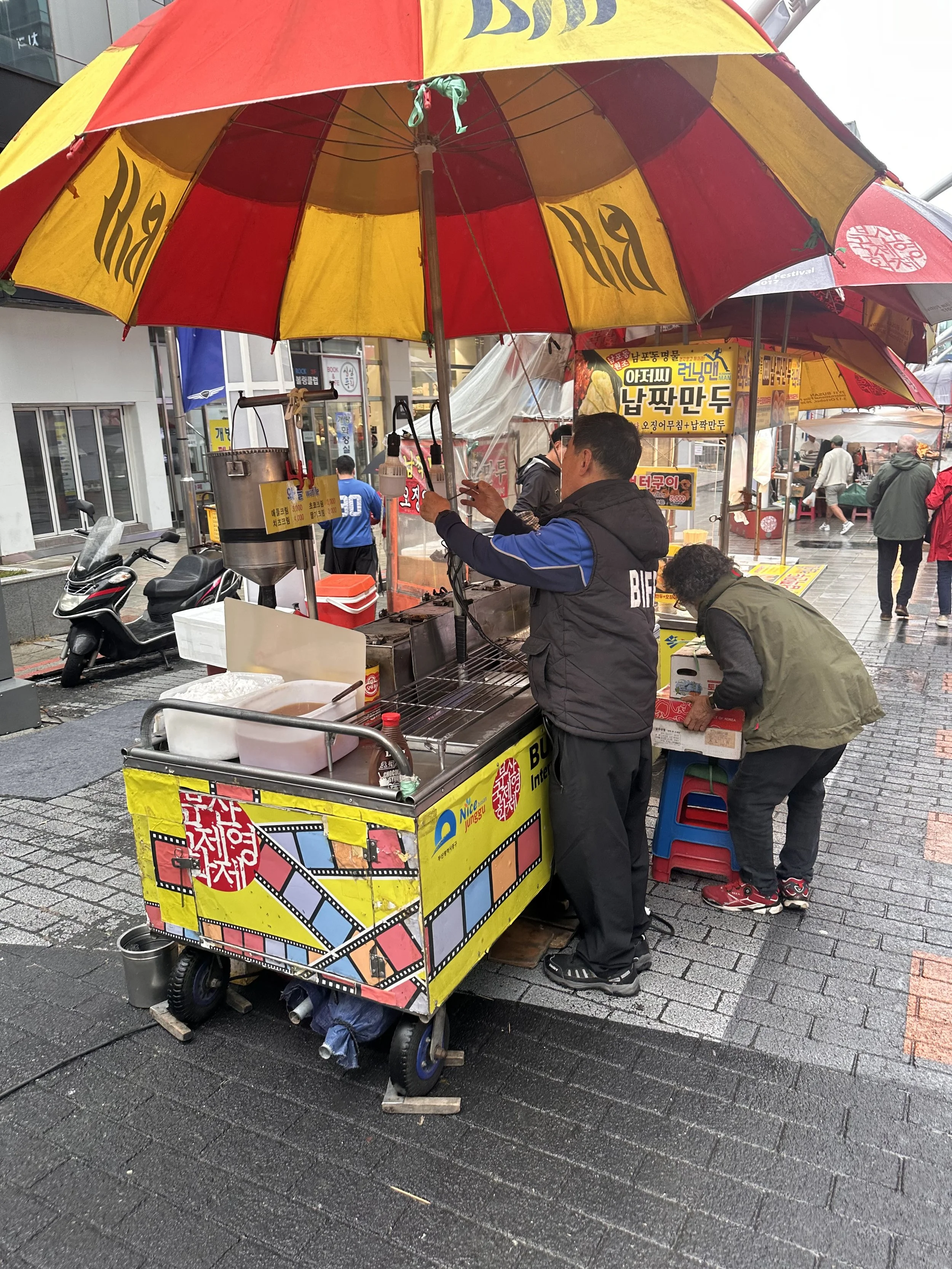
Lined with street food and souvenir vendors, this main street is very active. Rain didn’t deter anyone from walking around.
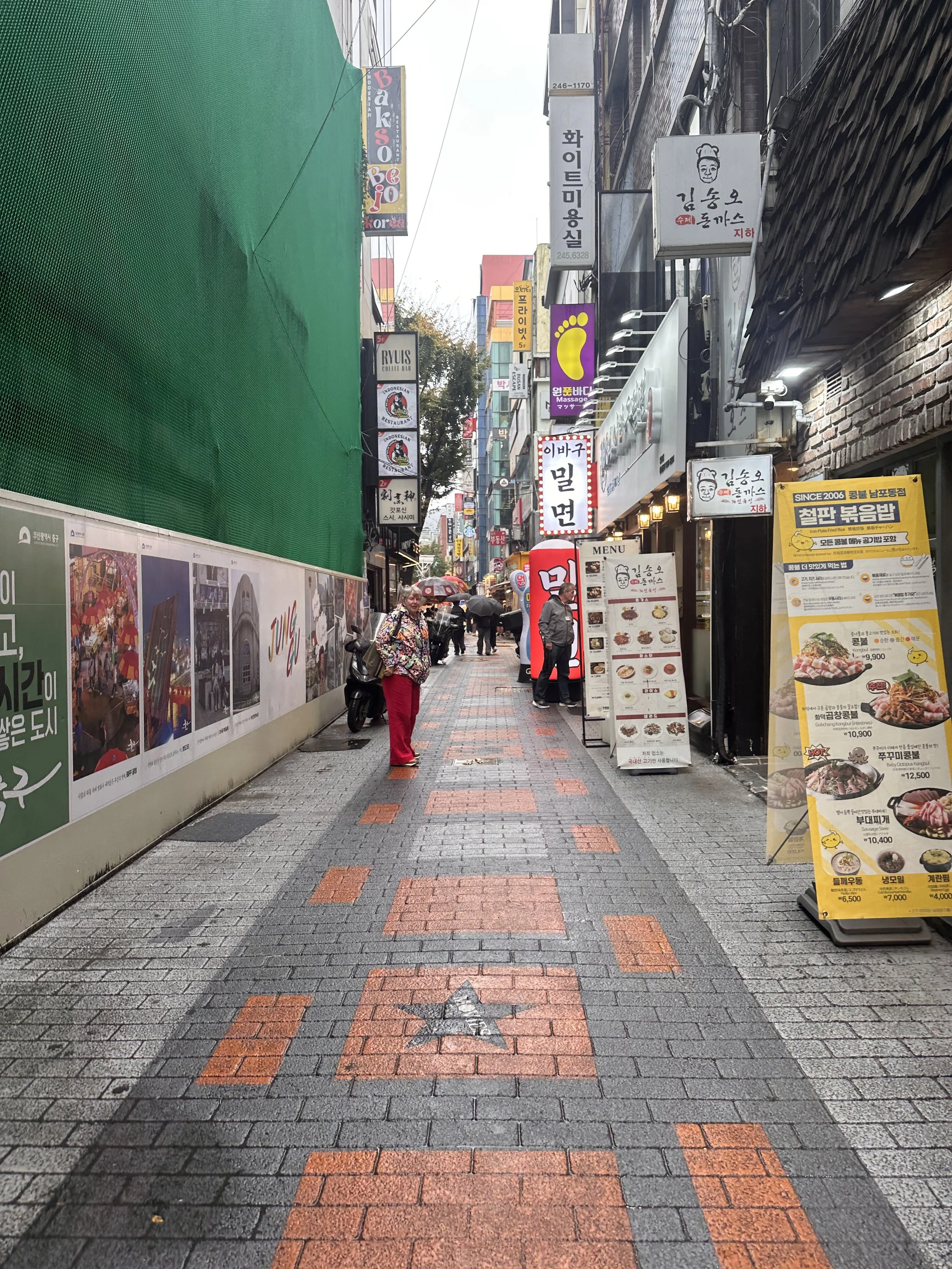
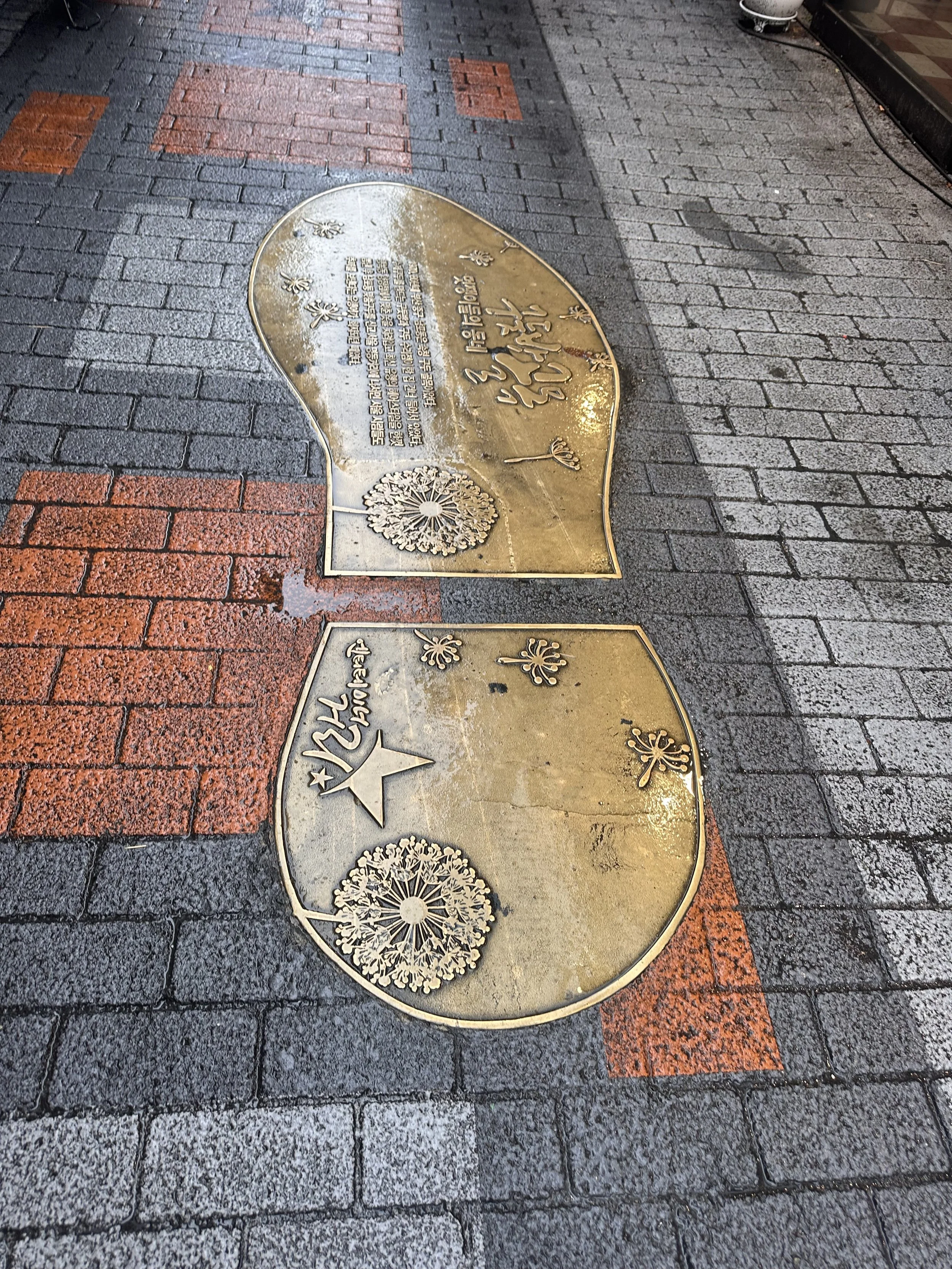
We followed the footstep out… actually, it just happened to be on our route back to our tour guide. Not sure if I mentioned it but when we left the Temple, one couple did not make it back in time. In order to see everything, it was clearly explained to us that timeliness was crucial. Waiting longer than desired, we finally had to leave the couple behind. They ended up catching a taxi and meeting us at the next stop. Once again, they missed the bus here. They were sitting at the table eating… we all got up to pay… and somehow, they didn’t make it back. Joe said it was the first time he’s had to leave someone once, let alone twice!
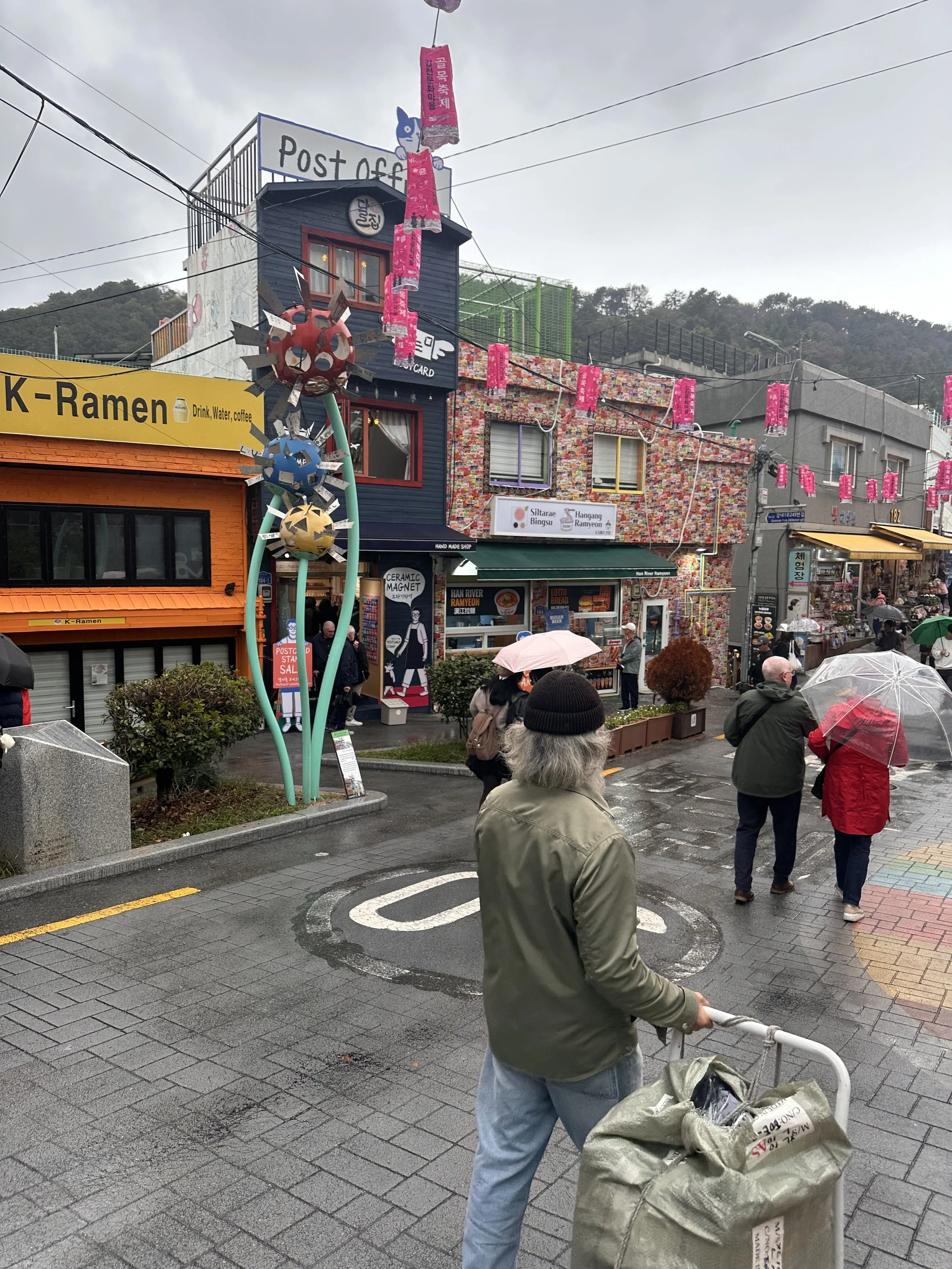
Now for my favorite part of the trip so far… Referred to as the “Machu Picchu of Busan” or “Korea’s Santorini”, this little village stole my heart. During the 1920’s and 30’s, Busan government moved lower income Korean laborers and dockworkers into this valley. This kept working-class families out of sight but close enough to walk to work manual labor jobs.
This remained a modest village until the Korean war in the 1950’s. Hundreds of thousands of war refugees flooded the area. Growing from one district to nine, one rule was that as they built from the bottom up the hill, no one could block the view of another. Prior to the war, the hillside was still green space.
For decades, Gamcheon Valley remained one of Busan’s poorest and most crowded neighborhoods. By the early 2000’s, many of the younger residents had moved away leaving empty lots.
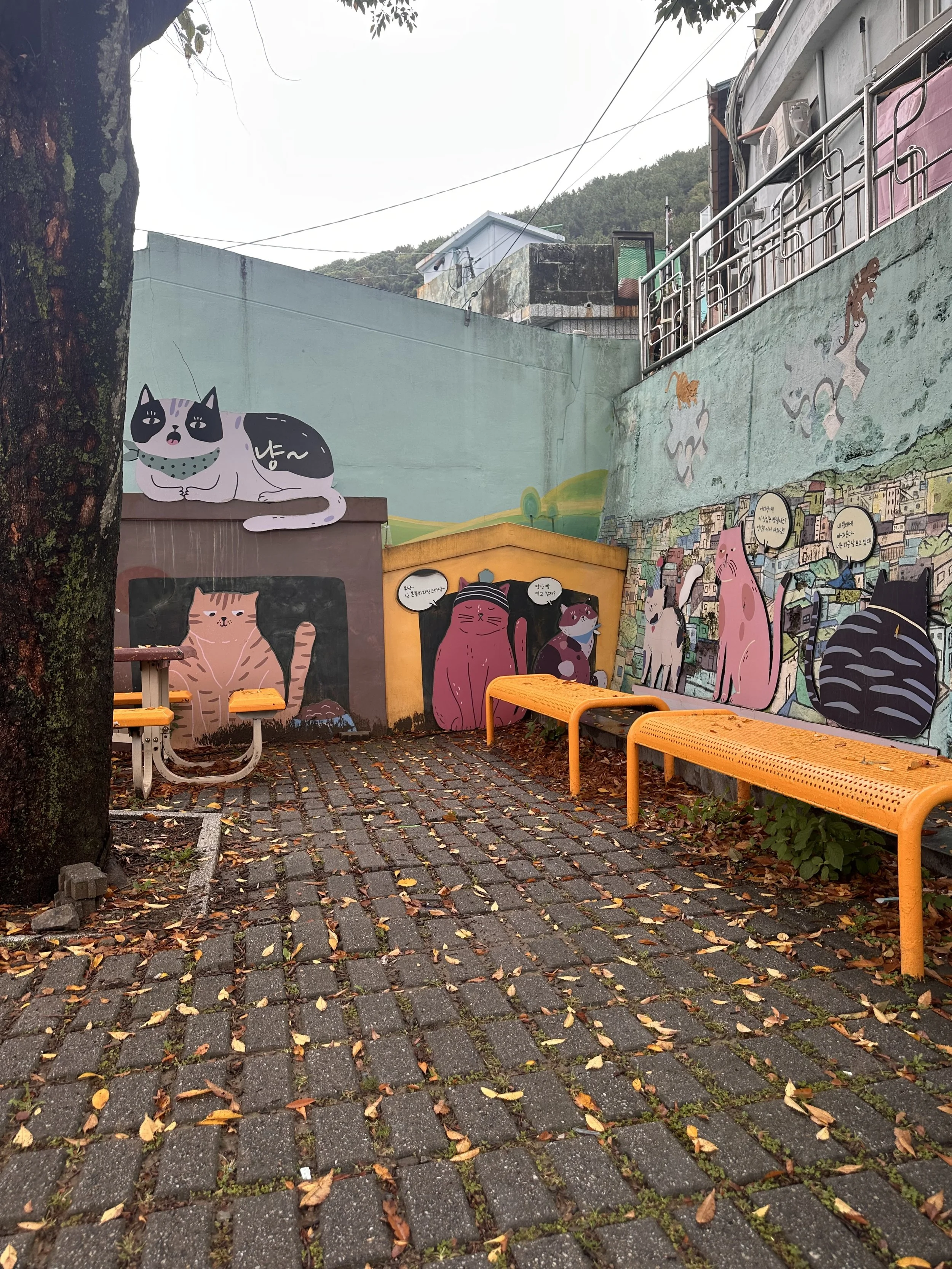
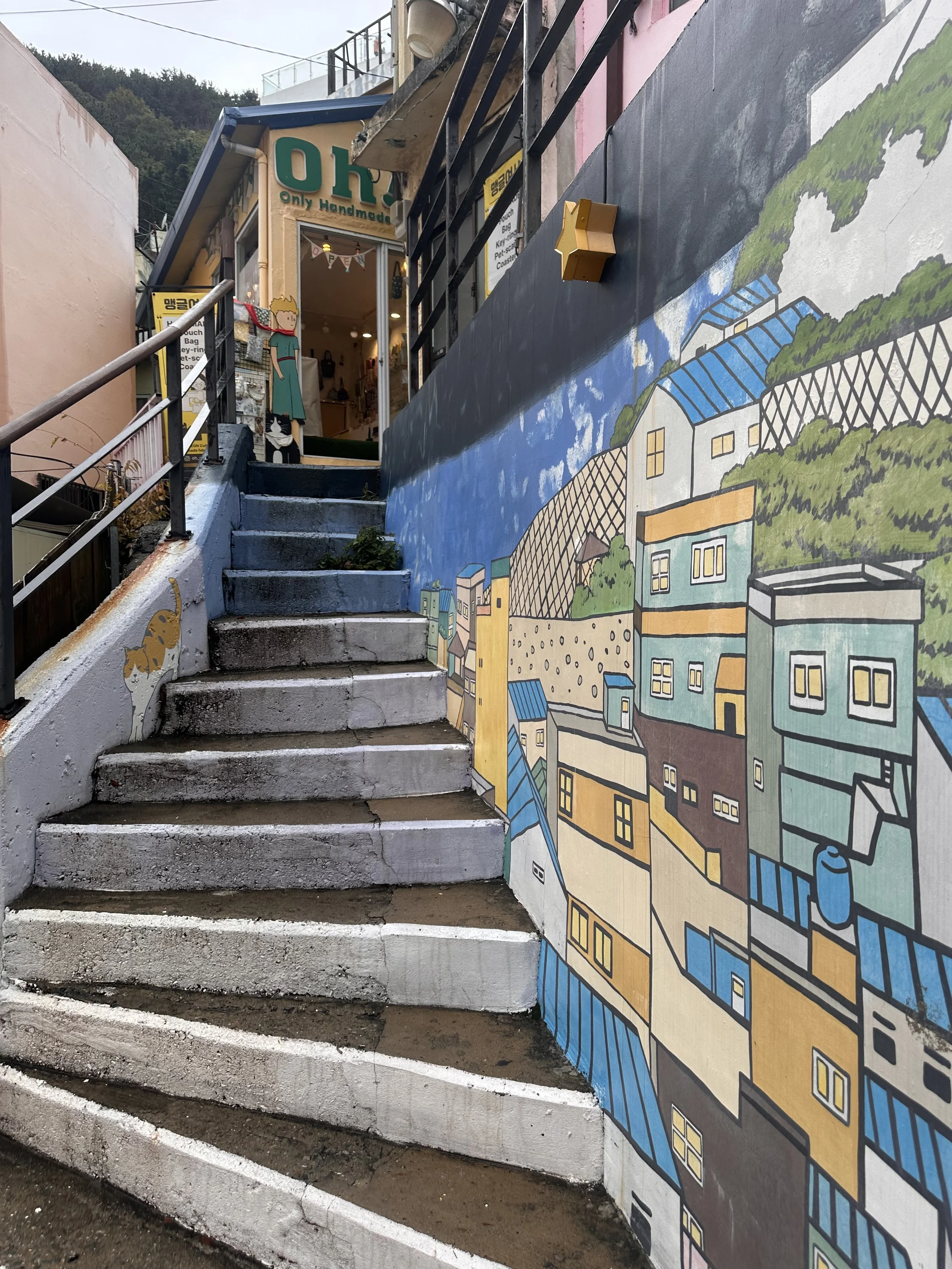
As an effort to revitalize the area without tearing down its history, South Korea’s Ministry of Culture, Sports and Tourism launched an aggressive project. Named “Dreaming of Machu Picchu in Busan”, local residents, artists and students took to painting the cement houses bright pastel colors. Murals and sculptures are scattered throughout the alleys.
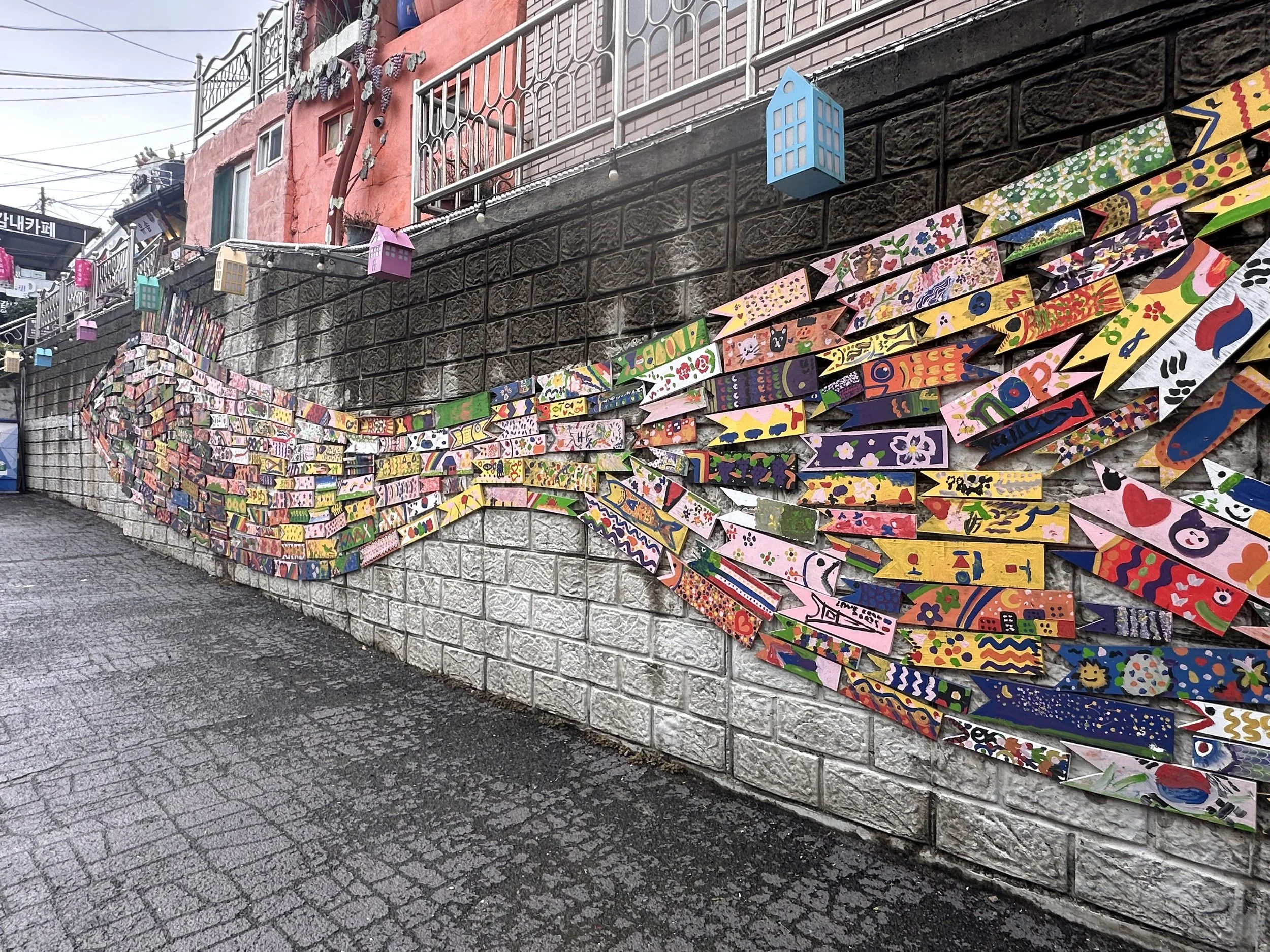
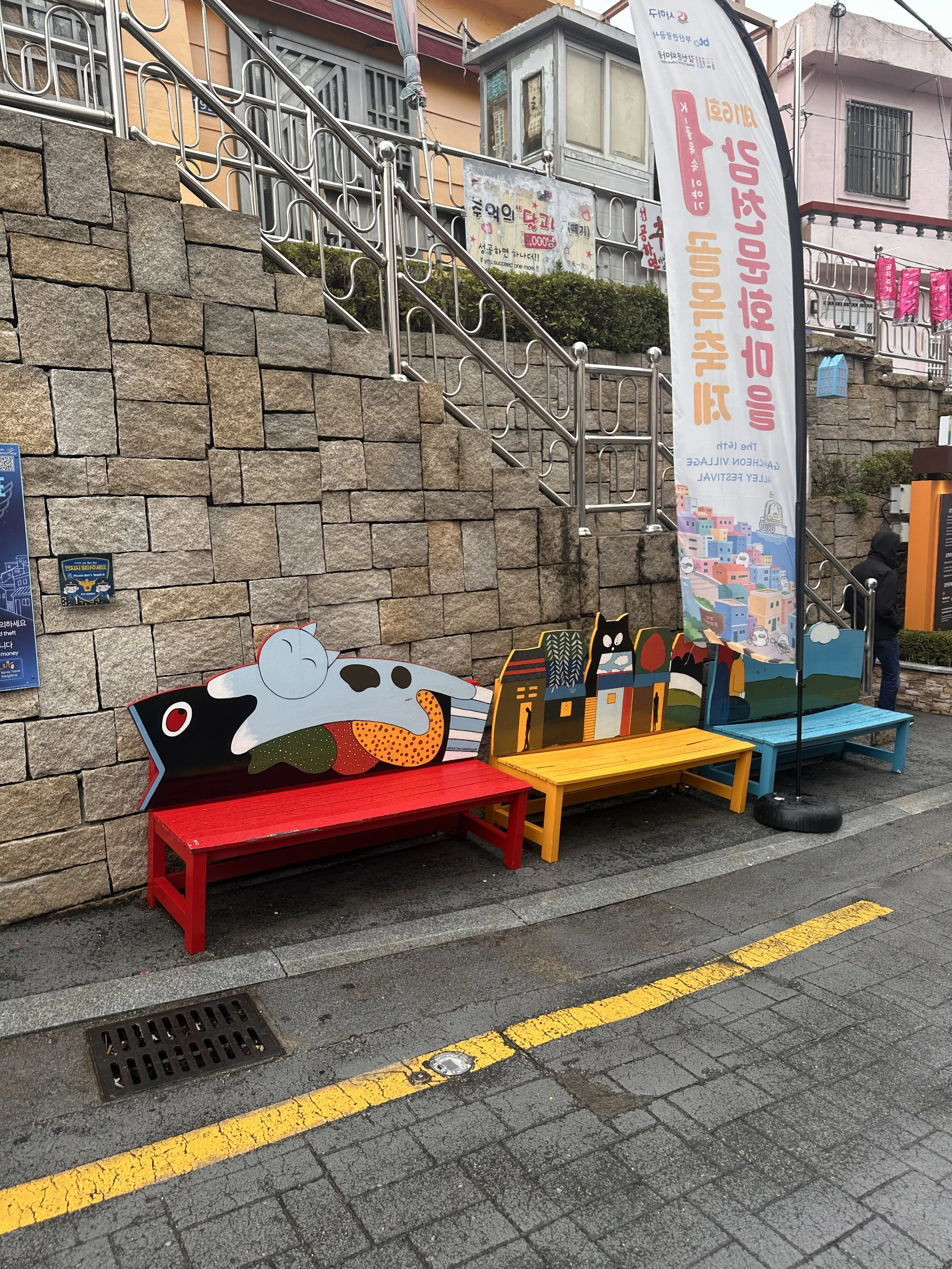
Appropriately named, “Fish Swimming Through the Alley”, this wall art was created in 2012 as a continuation of rebuilding the economy of the area. Standing back, it looks like a wavy fish. Up close, you can see that the artist colorfully painted slats of wood. Each shaped with a square end also one end looks like the tail of a fish. This was intended to be a tribute to the hardworking women of Gamcheon. Many women made daily treks down the steep hills to sell fish. They took on the difficult task of keeping this area afloat after the Korean War.
Commissioned benches like the one on the right, can be found throughout the alleys. Because the area is so steep, the Cultural Committee decided to implement resting areas that went along with the colorful them throughout the area. Offering rest with a view, these are actually signed works of art.
While walking through the alley, I crossed paths with our tour guide. He offered to take my photo with the iconic colorful hillside as a backdrop. There is another popular spot to take a photo but the line was SO long! It has the Little Prince and Desert Fox sculptures. They are perched on the railing overlooking the homes. With a gap between them, people line up to sit between the two as friends looking over the valley.
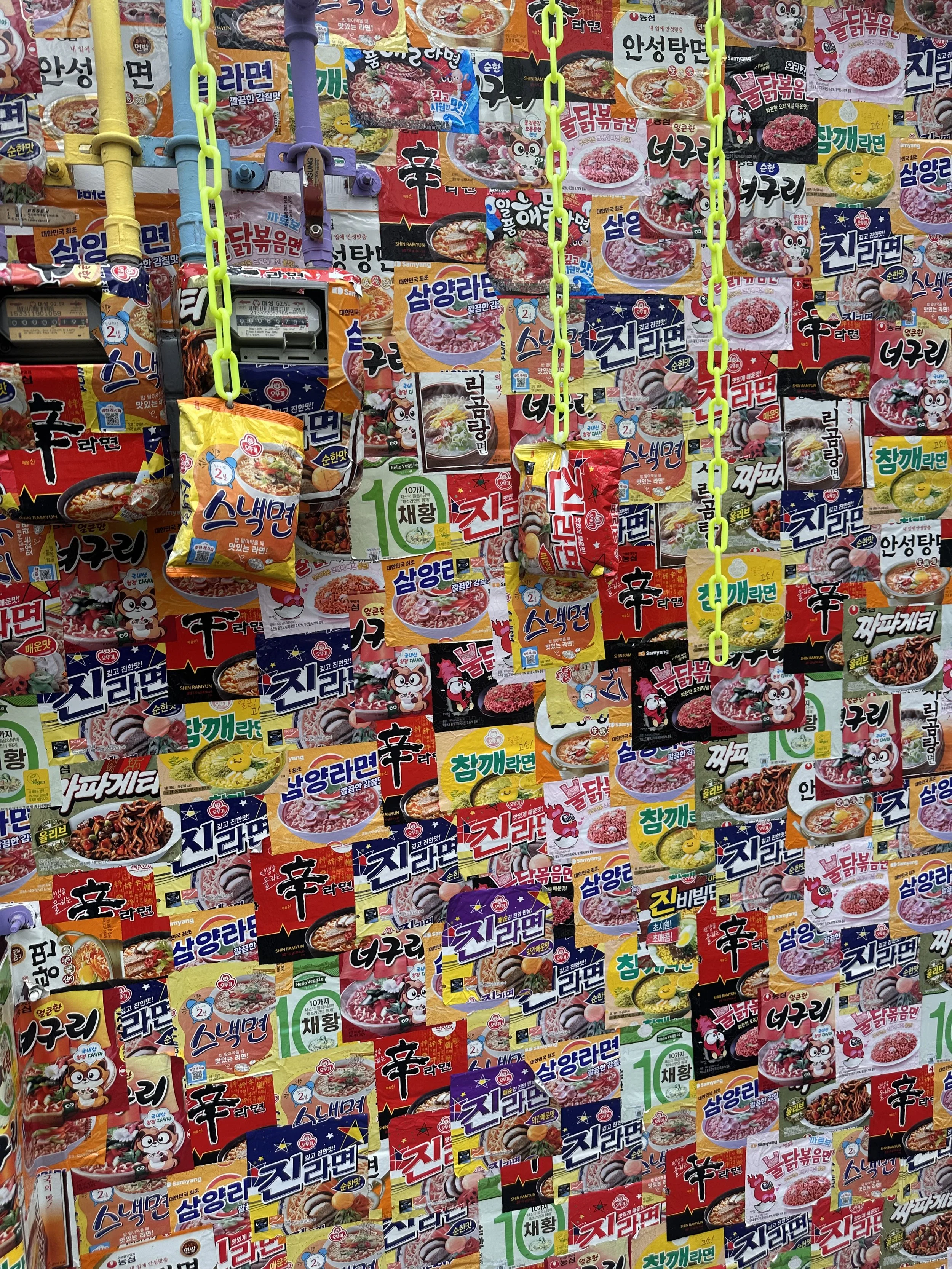
As I strolled by this strip of shops, one thing caught my eye. The wallpaper on the exterior of the shop was Korean instant noodle labels. I had to step up to take a close-up shot! Hundreds of them… later I found out this is a viral Instagram photo location. I can see why… it was colorful and an original use of labels.
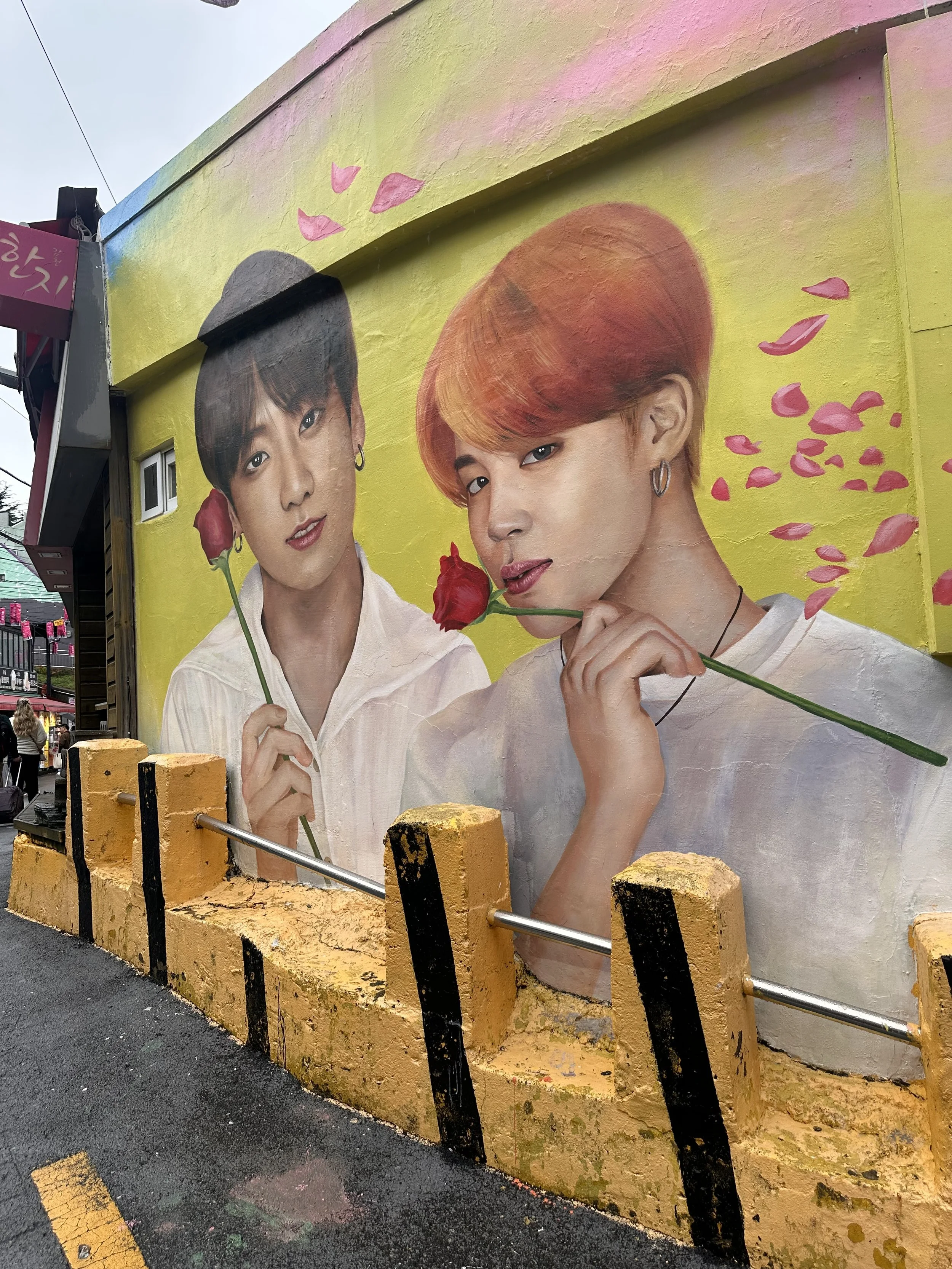

On the left is a mural of local phenom musicians. Jimin and Jungkook from the BTS band. Born and raised in Busan, the town is extremely proud of their popularity. On the left is an example of the memorabilia found throughout Busan.
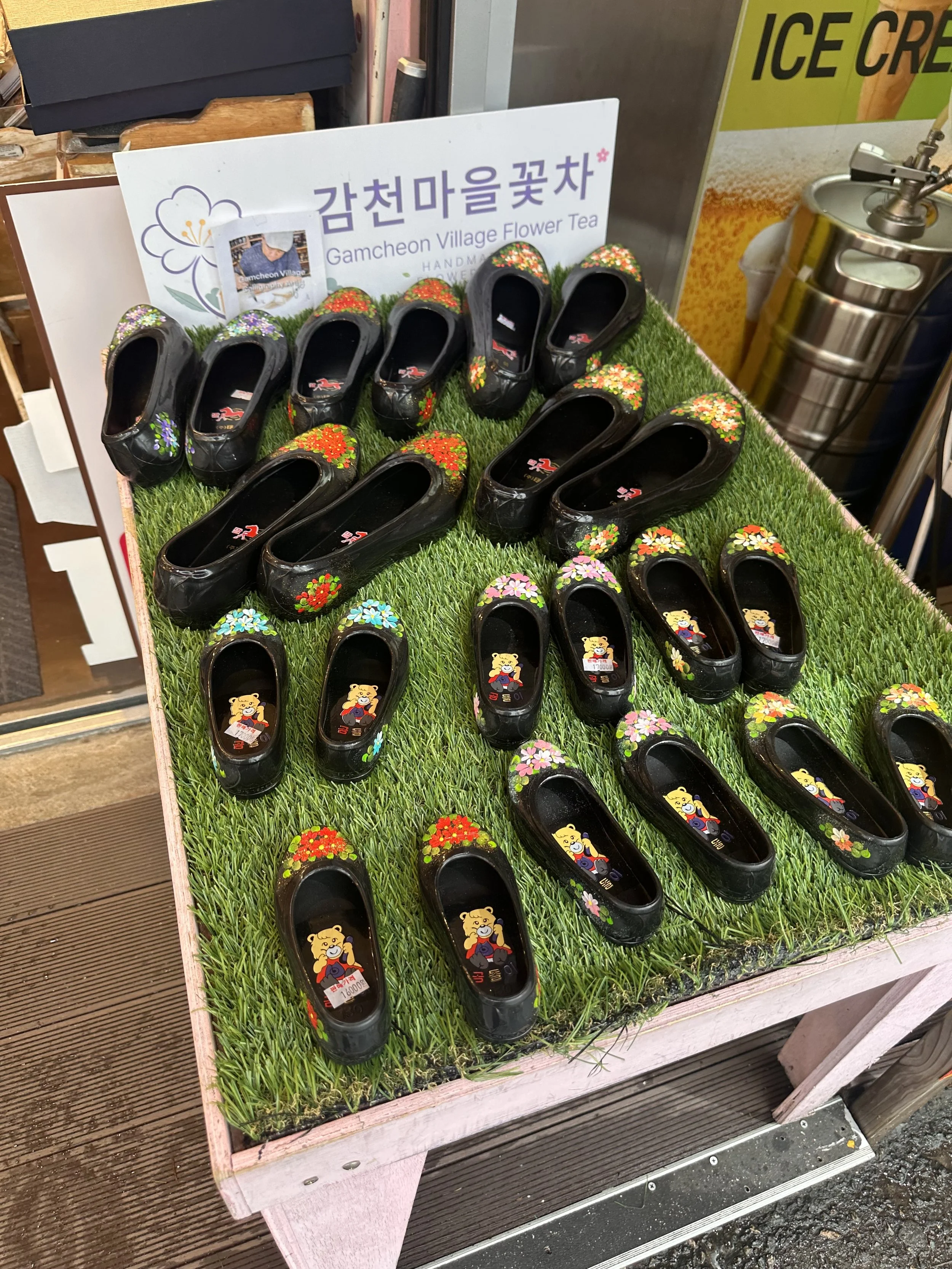
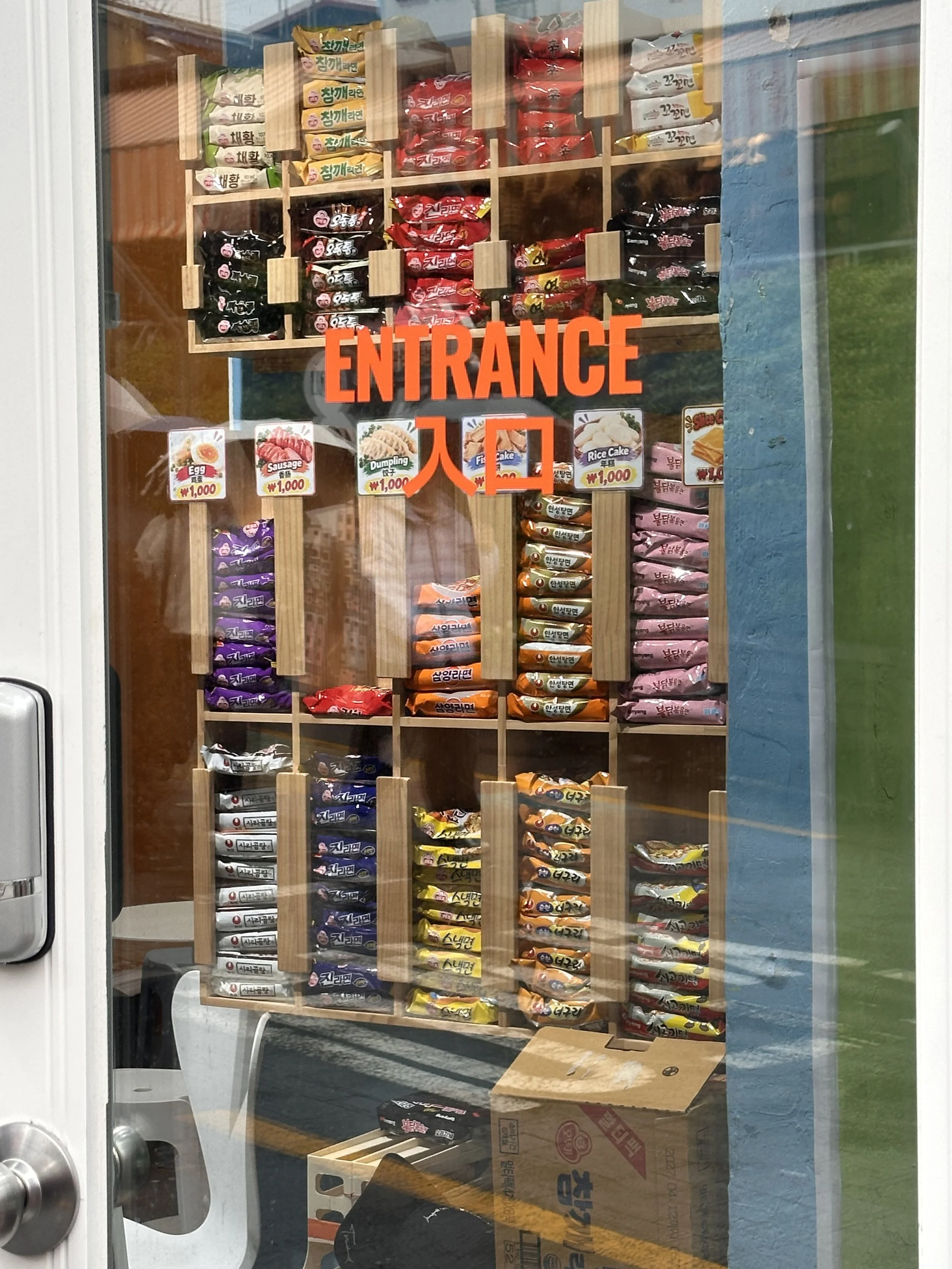
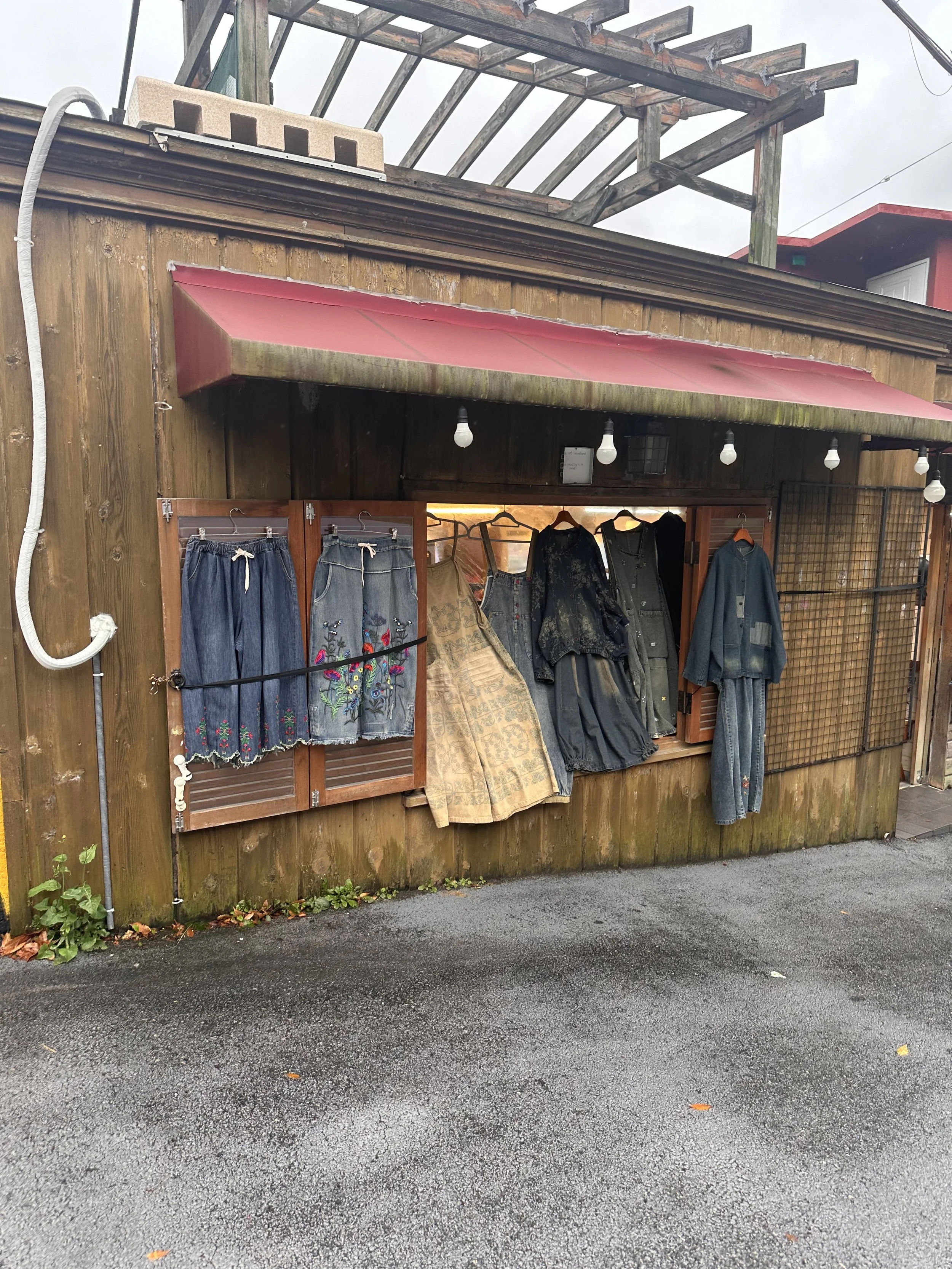
With shop after shop selling food, clothing, souvenirs and local art, there is still a conflict between the long time locals and the exploding tourism. The profits tend to support the local government and not much trickles down to those who live on the steep cliffside. As is common in tourist locations, the prices of properties has risen dramatically. With this area being mostly elderly on fixed incomes, the population has dropped 40% since the village was revamped. Many of the painted homes sit empty.
Here is the sad irony to this entire situation… the Cultural Committee set about to preserve this area that was failing economically. Ironically, the attention it has drawn in an era of “Instagram-able photo ops” has had a negative impact on local residents in a couple of ways. One is that instead of using the funds to help the elderly navigate the steep alleys, the city almost seems perched ready to buy up empty houses to make into public spaces. Another negative is that the alleys were formerly considered an extension of the home. They were “public spaces” for the residents. Laundry was hung outdoors, neighbors gathered… and now visitors walk through every nook and cranny of this village. The locals have lost their privacy and the way of life they’ve know. Of course, they did not want to struggle financially in a poverty area, many actually preferred that to being overrun with tourists. In an effort to rebuild a village, it is slowly being turned into a hillside museum. The greed, the influx of interested tourists have added to the “progress”. It made me feel kind of bad that I was part of overtaking and photographing their home…
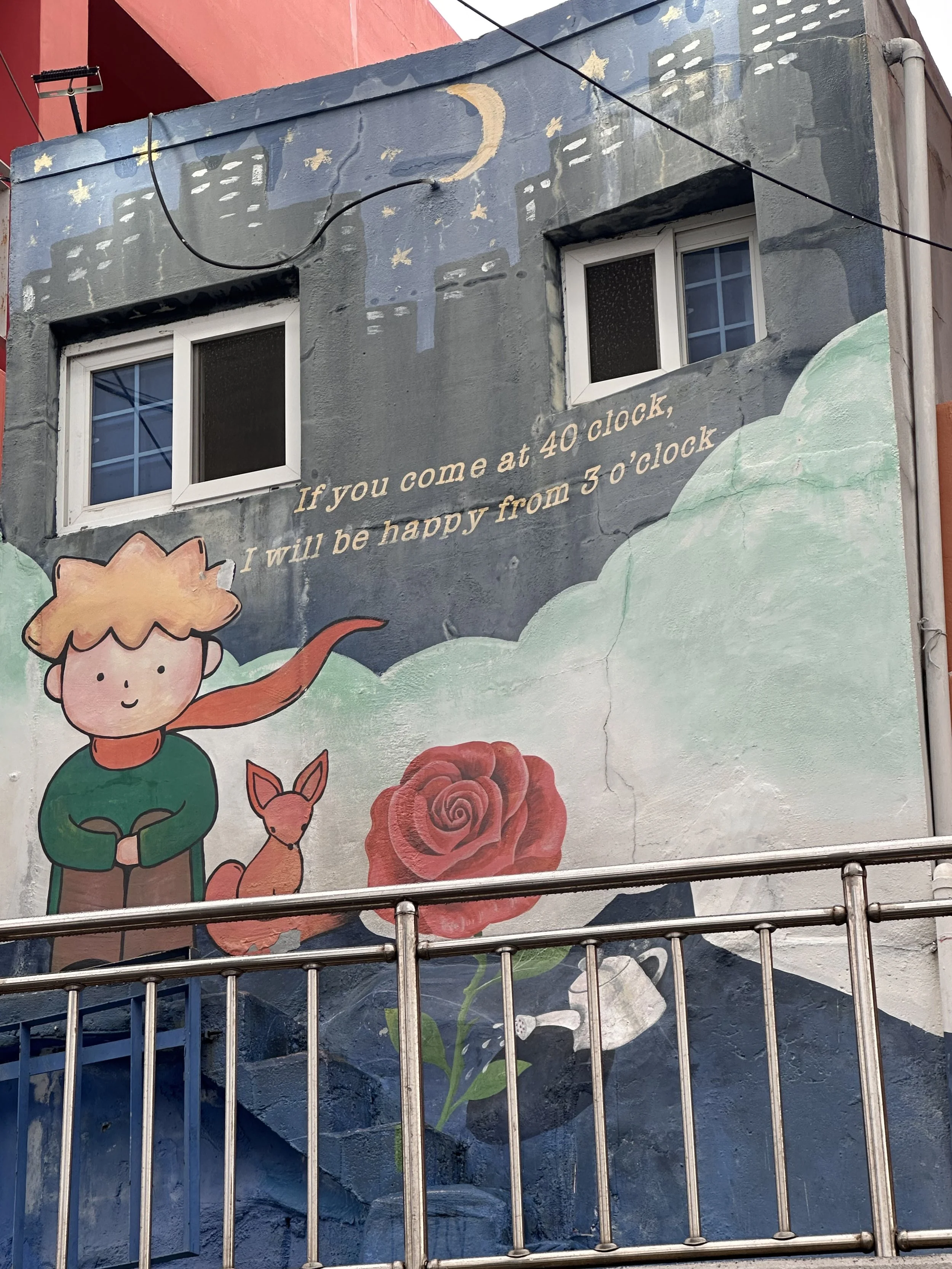
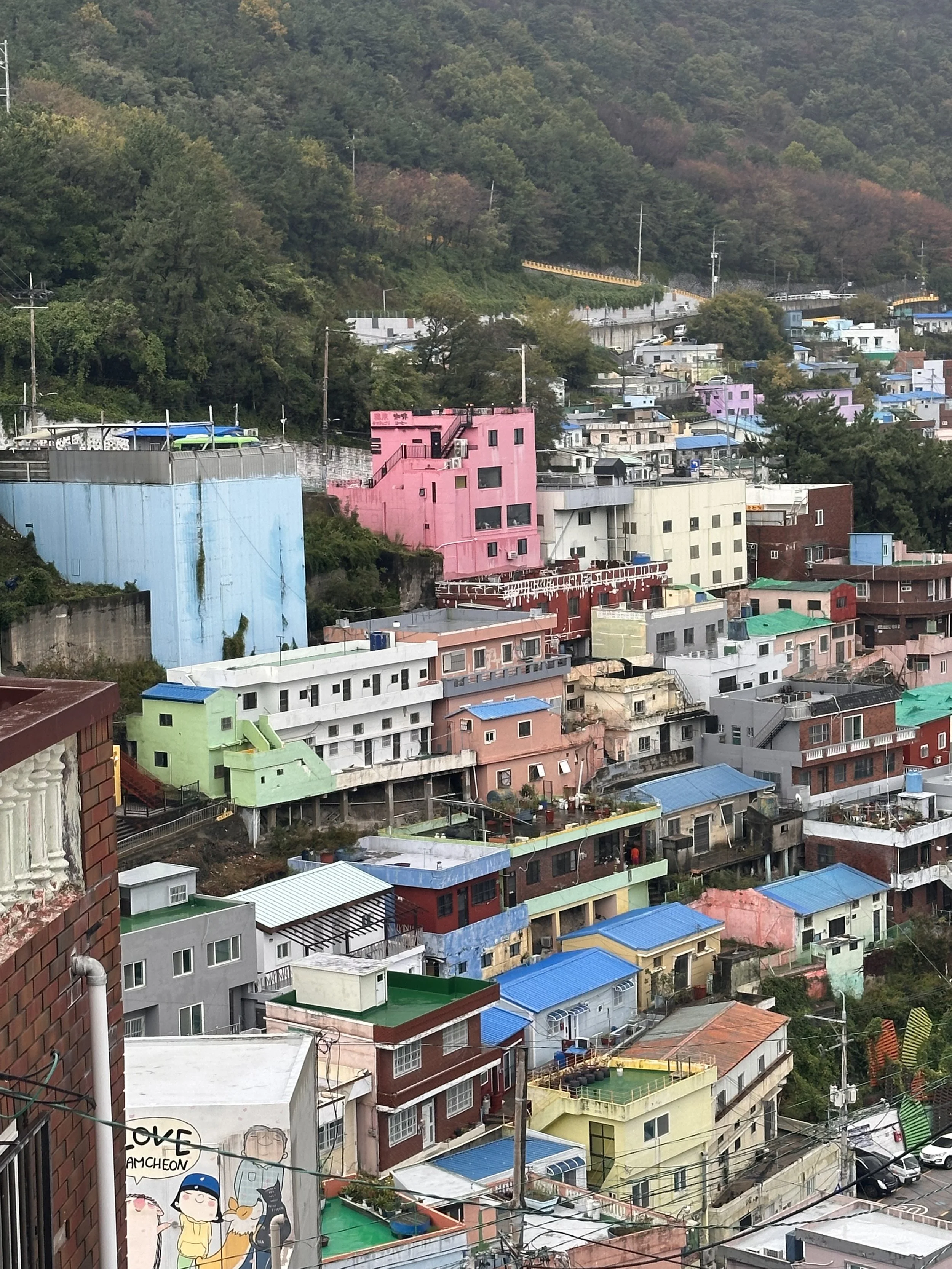
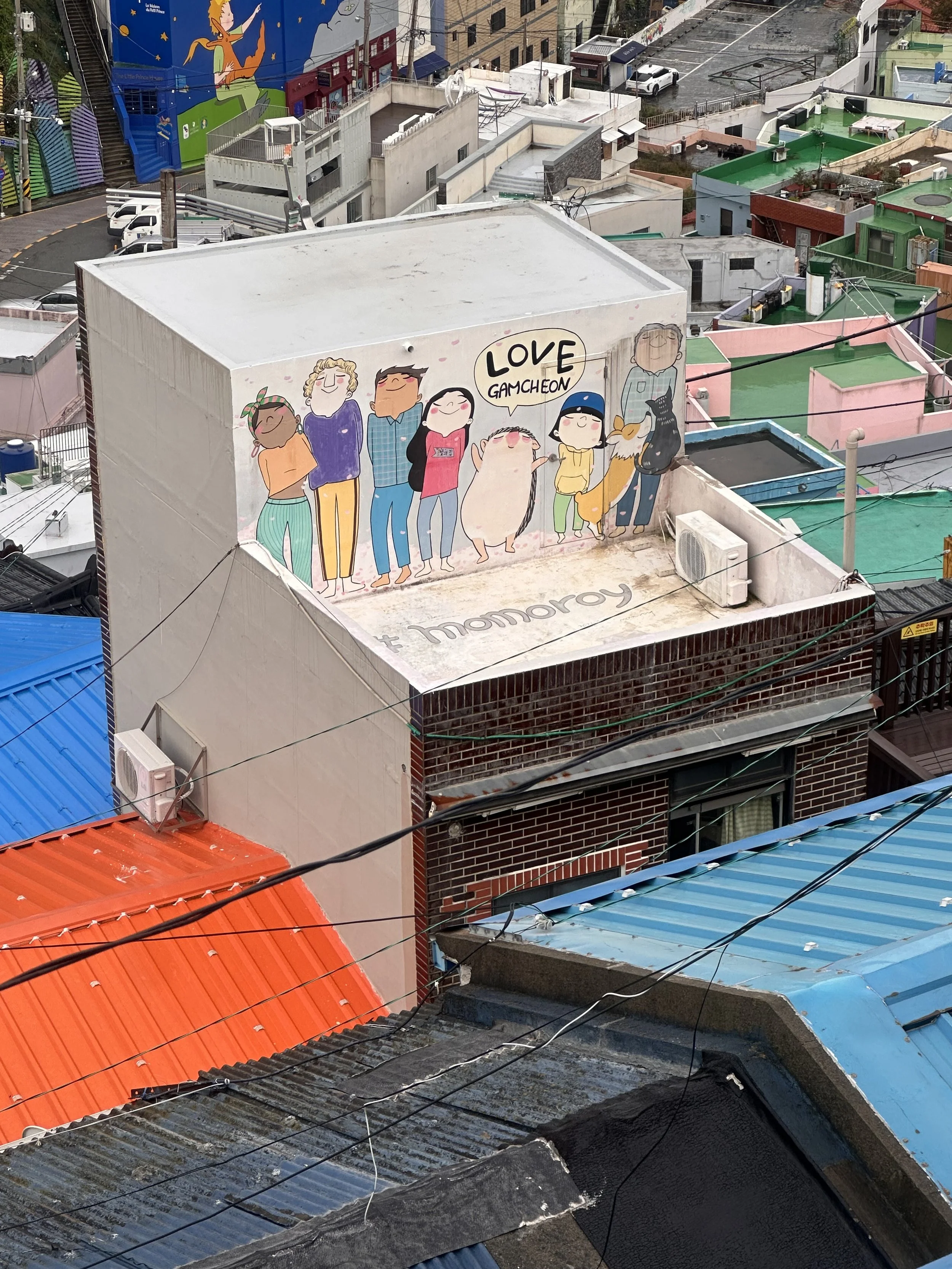
Now I’m conflicted… everywhere you look… bright, colorful and cheery. But behind the facade is a population that is being run out of their homes. With the younger generation leaving and the elderly either dying or moving to places easier to get their daily needs taken care of, this village is going in the opposite of the initial intention. In an effort to save a culture, it has managed to replace it with a new, modern photographable … and money-making museum. The beauty is undeniable… whimsical, colorful and joyful but knowing there is an elderly population losing their lifelong home is disturbing, to say the least.