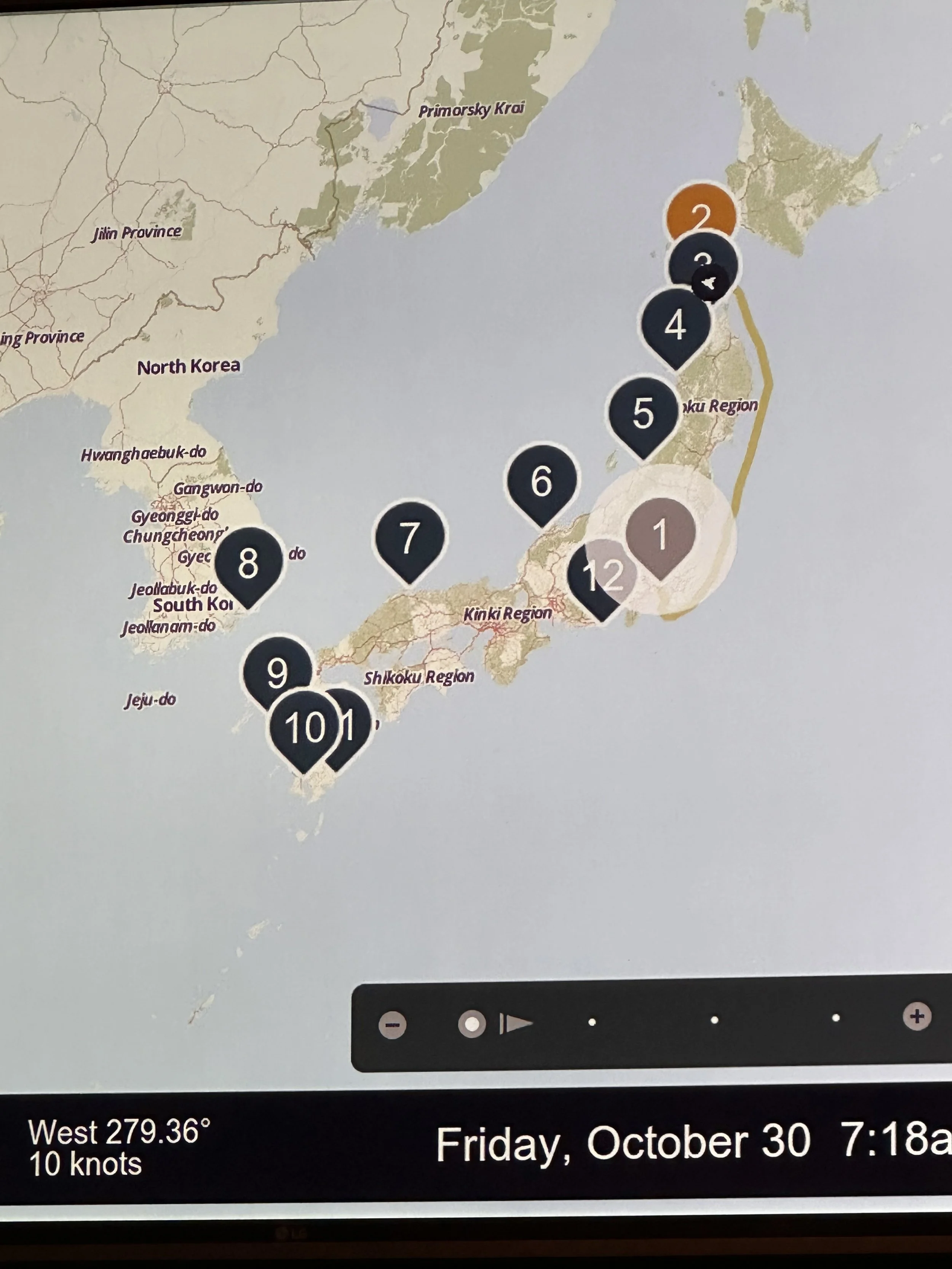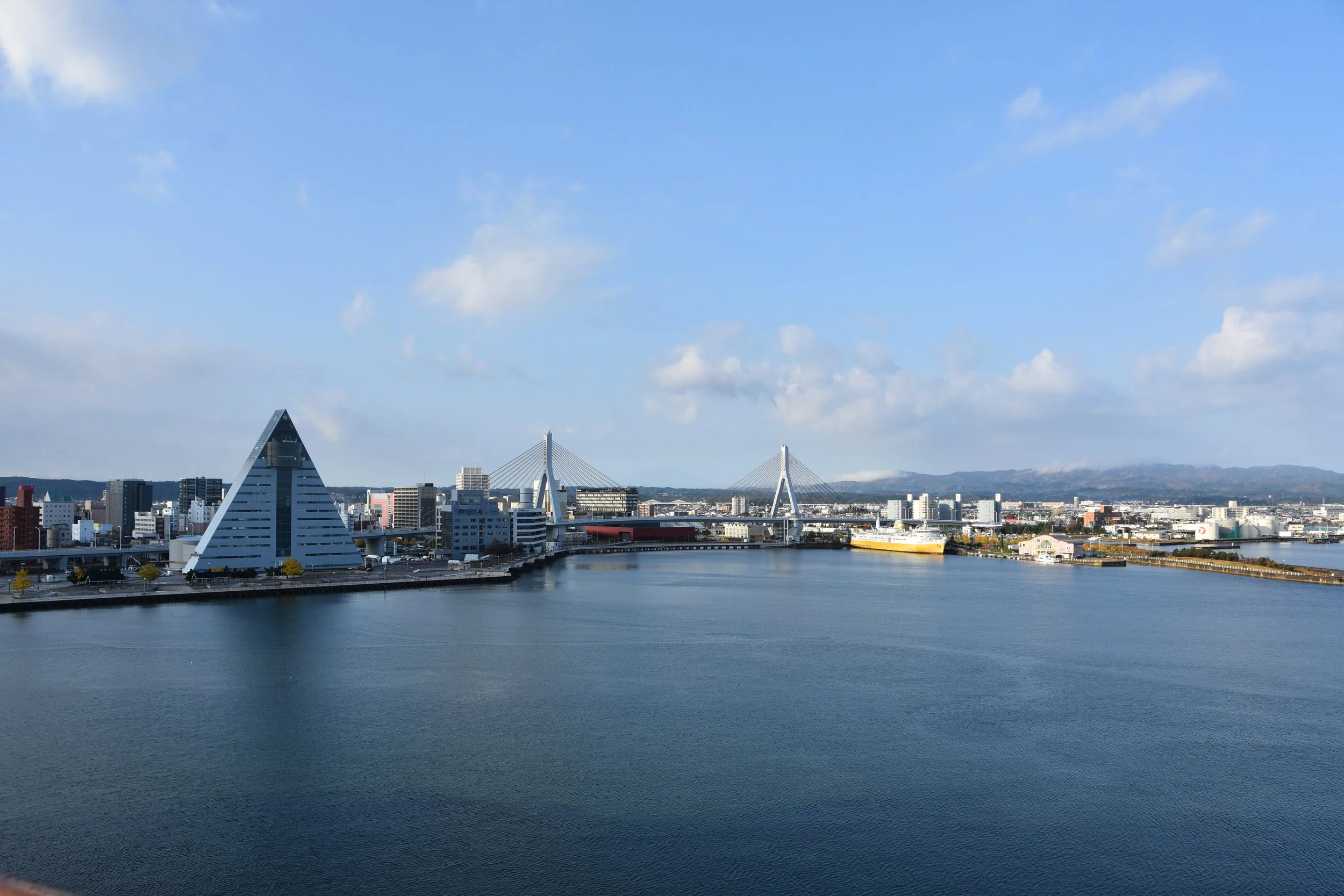
Aomori: Port Stop Two
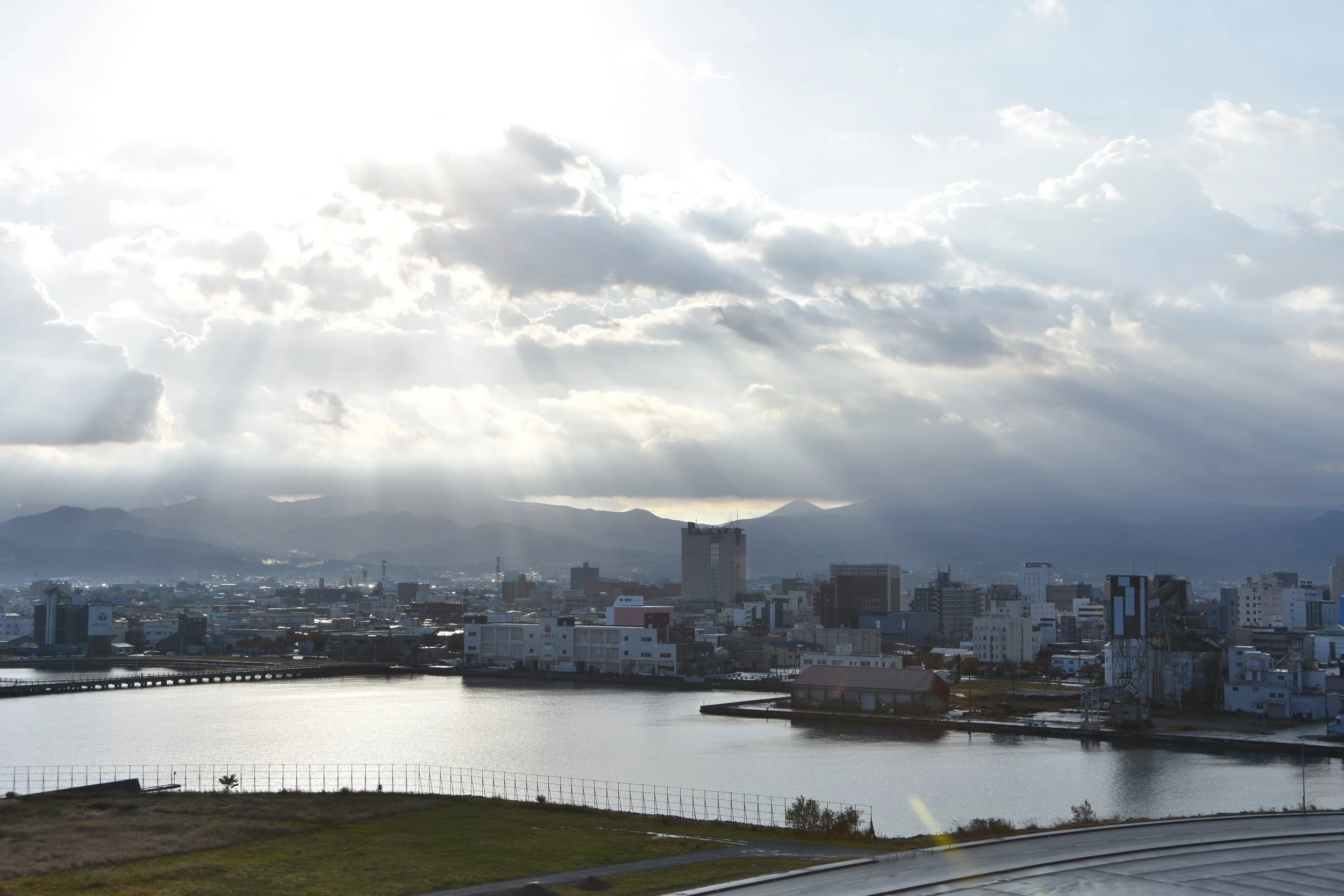
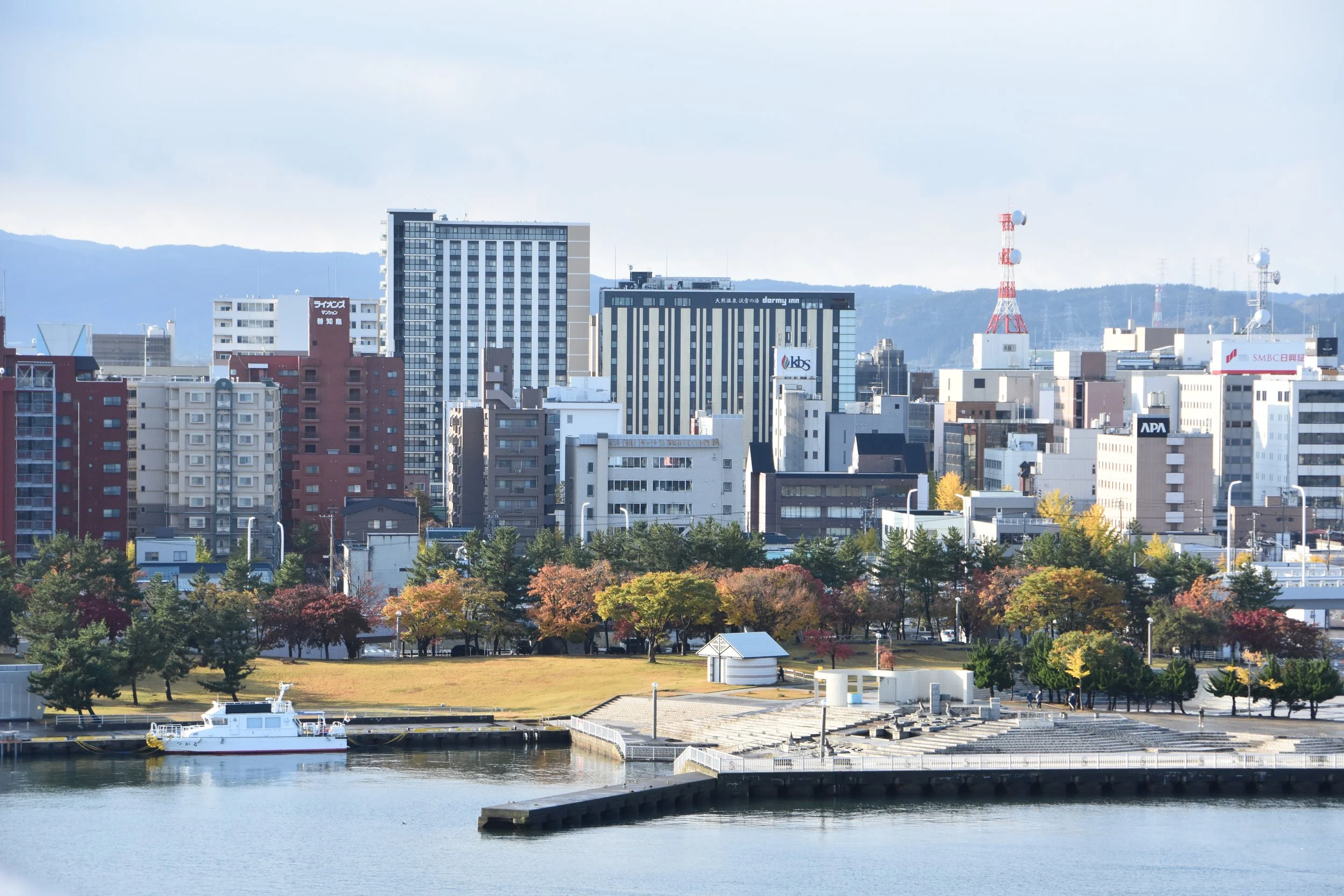
What was predicted to be a day of pouring rain, we were fortunate to see the sun shine brightly through the clouds to start our day! With a population of just over 250,000, this is the capital of the Aomori Prefecture. Broken into 47 Prefectures, the national government has ultimate control of political and economic decision, but the individual areas are otherwise self-governing.
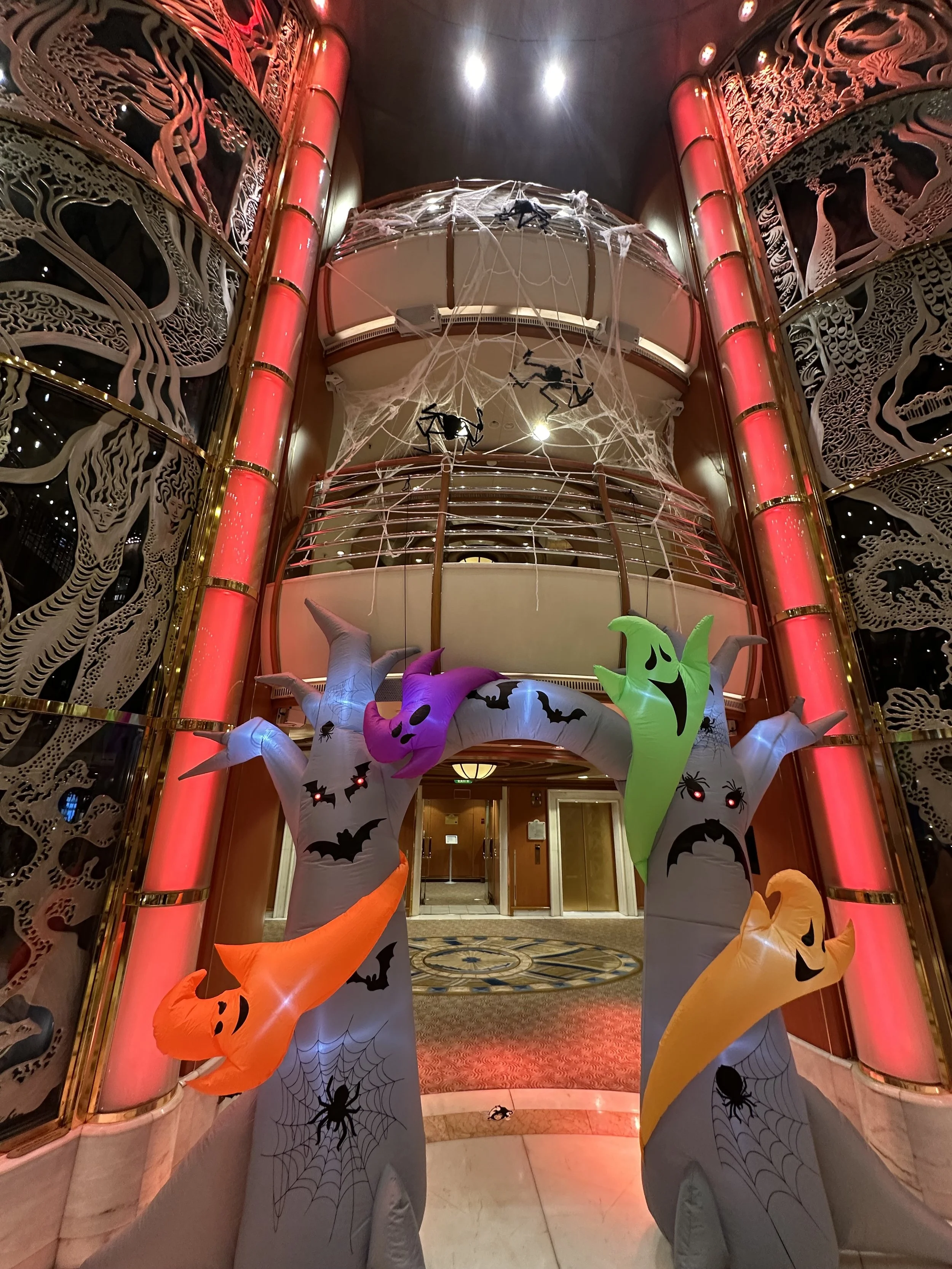
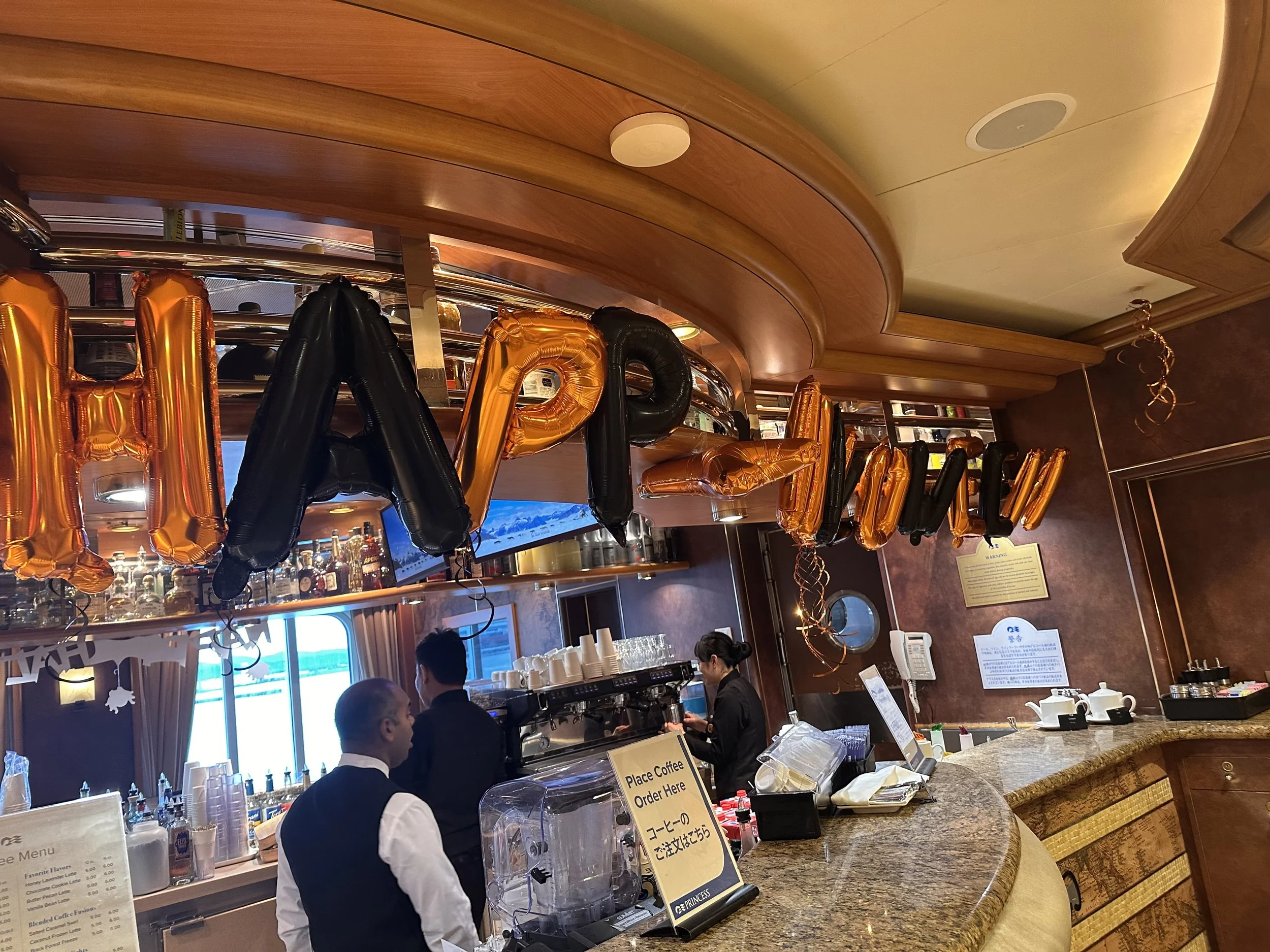
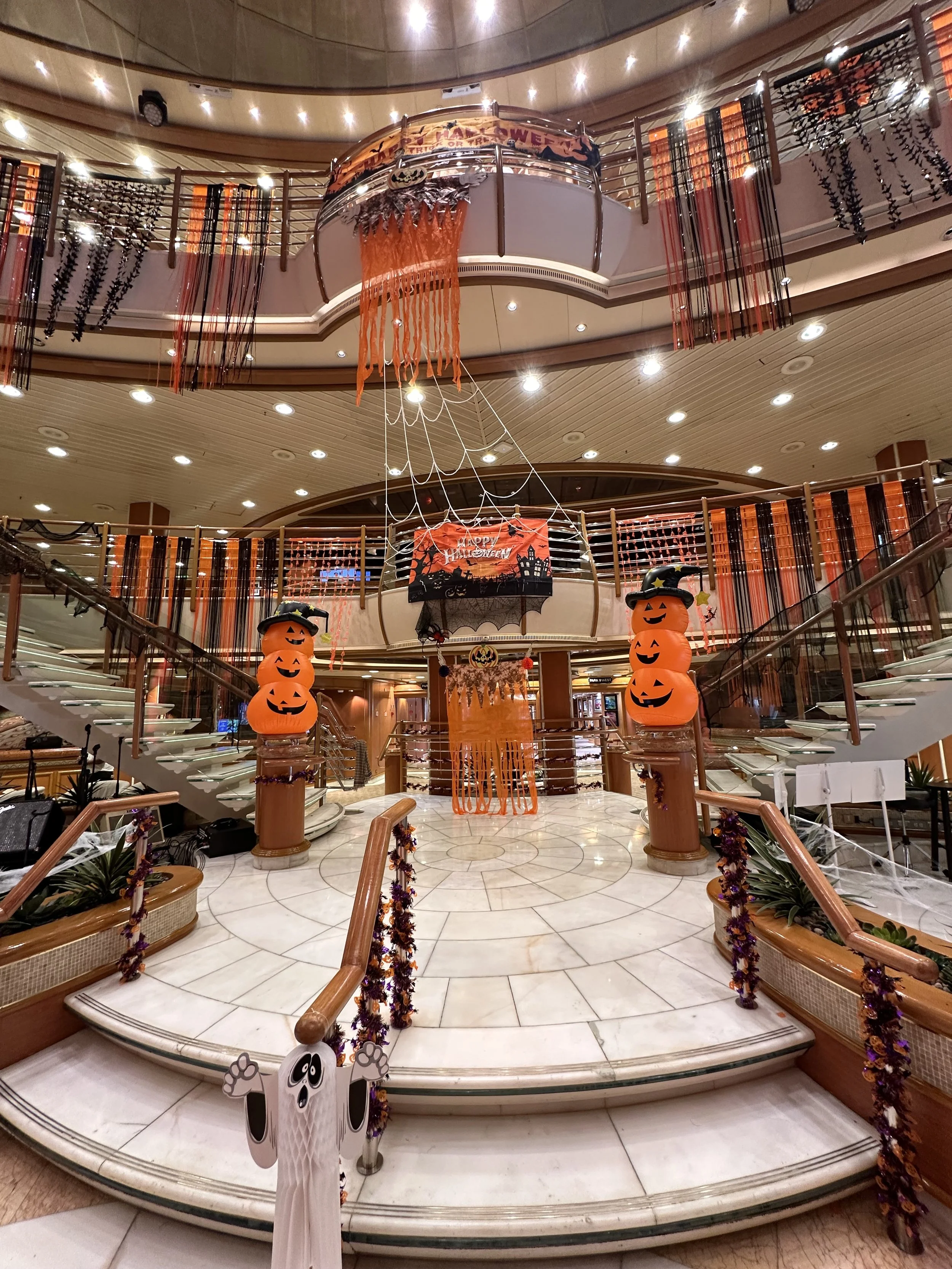
As with every holiday, we woke up to a very festive ship! In preparation for the Halloween parties, every inch of the ship was decorated in black and orange ghosts and goblins. It was interesting to learn that dressing up for Halloween is becoming quite popular around the world. A surprising number of guests dressed up for the day in some very clever costumes!
Installed on the roadways, these protective metal snow walls make driving in a snowstorm safer. Northern Japan’s close proximity to Siberia, the winds can be beyond chilly! Placed on the windward side of highways, these keep the snow from creating blinding whiteouts. It also keeps a good amount of snow from drift obstacles. Very clever… we could use these in Tahoe. So many nights, driving home from work, the snow is blowing so hard that I can’t see where I’m going.
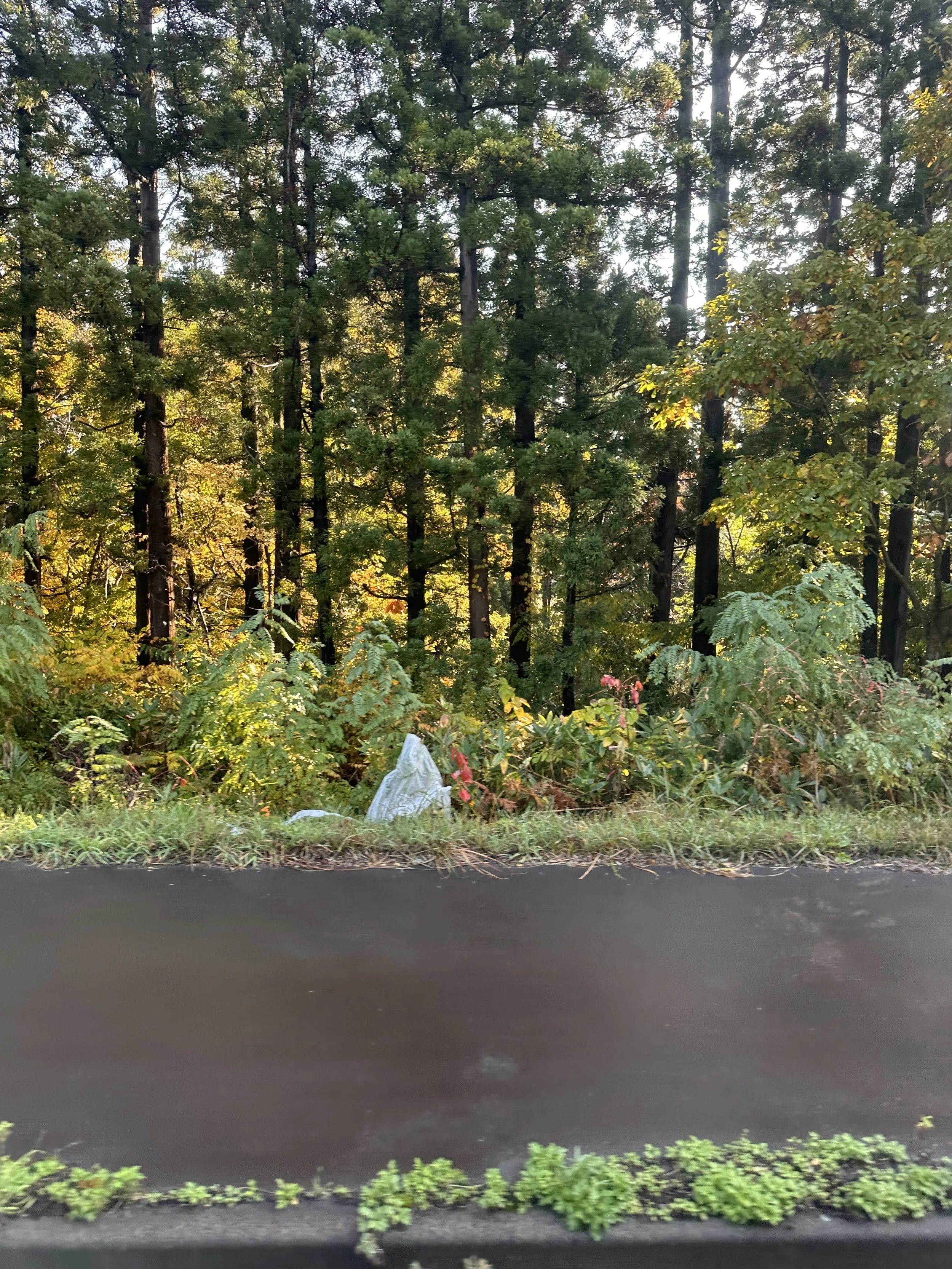
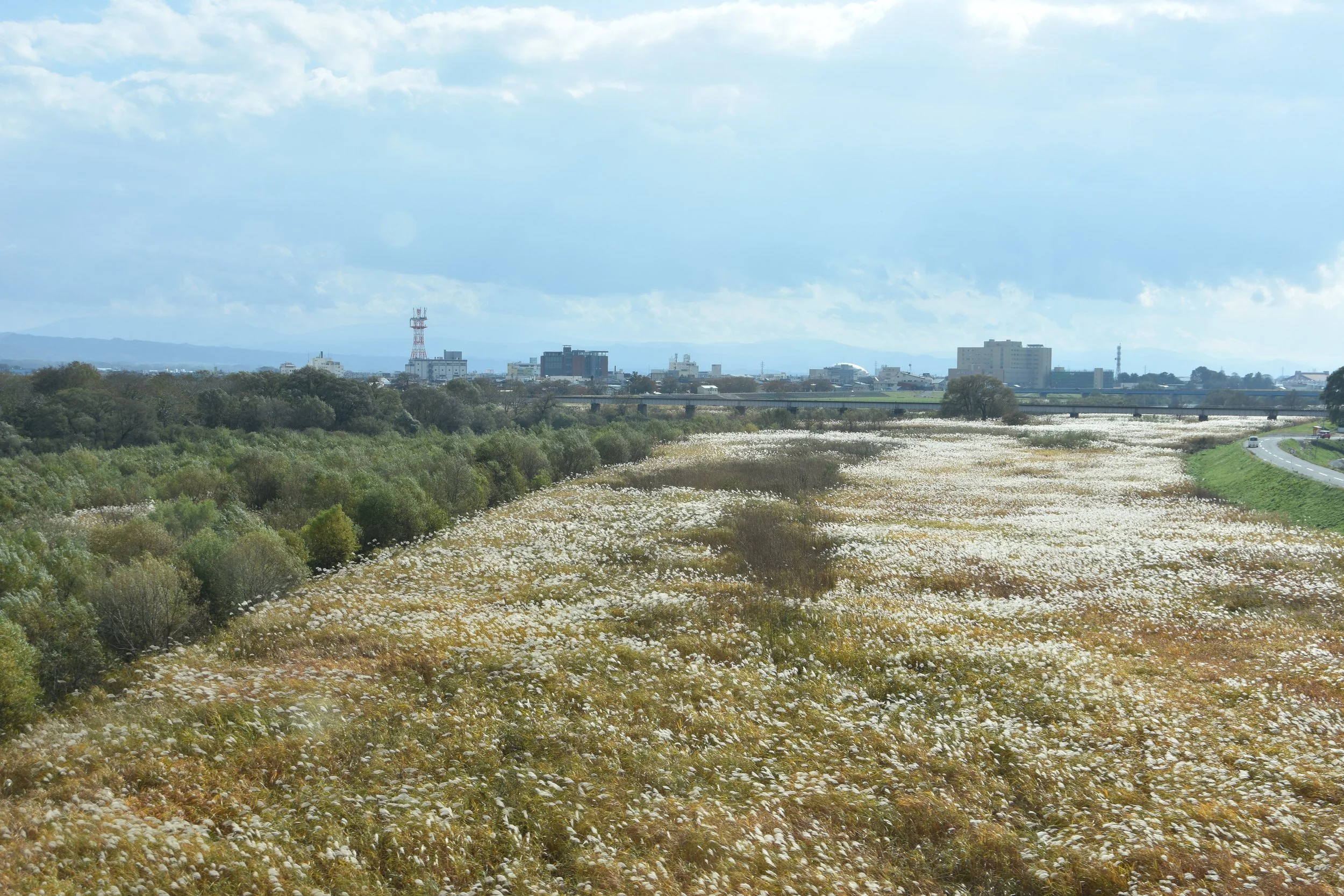
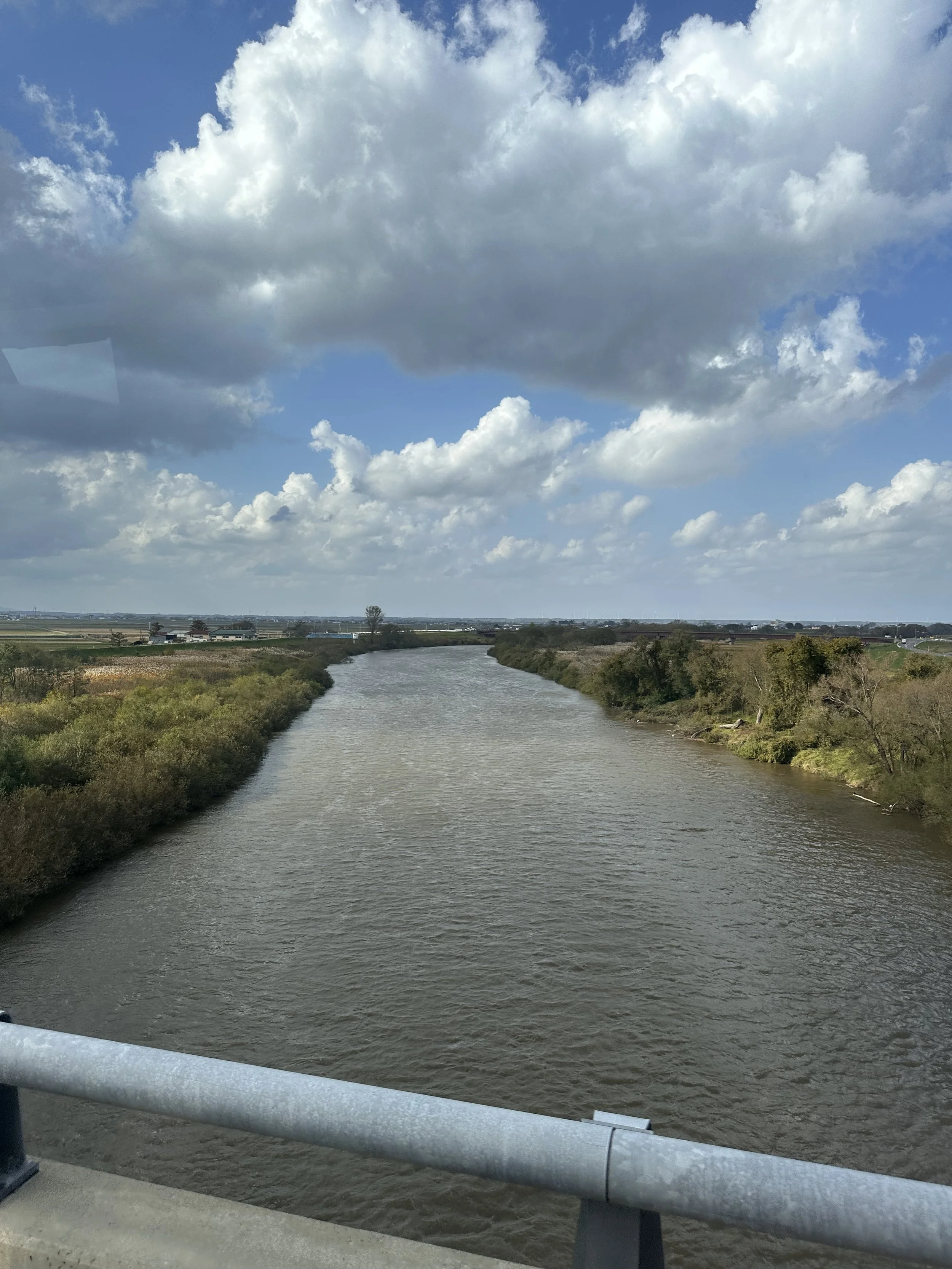
It wasn’t easy getting photos during our drive with the reflections on the window, but I tried. Rice fields, rivers and trees made this a scenic adventure! Most of the roadways had the metal protectors blocking the view on my side. Lesson learned… walking onto the bus, I should have sat in the seats on my left. Everyone adopted their original seats so there was no moving to the other side for me!
Surprisingly, our travels from the cruise port to Tsugaru Kanayama-yaki took 45 minutes! Beautiful scenery on the roadside, we found our way to an old building where pottery is made. The kilns are fueled with wood that is piled under the roof in the first building we entered. All the way on the left, the kiln is heated. Once it reaches the set temperature, the next section of kiln is fired up. This process continues until all the sections are heated.
Right on property, a yakimono creates works of art. Using the clay from a nearby Kanayama Pond, nearby apple orchards supply the ash used for the color. Tsugaru Kanayama-yaki is known for not using glaze. As I watched this lady form bowls from clay, I could not help but think this must be very therapeutic! Maybe it should be part of a relaxation treatment. Making pottery has never been on my radar until watching this for at least twenty minutes.
In the gallery, bowls, plates, cups and home decor were sold. In the upstairs section, there were many unique lamps. They also sold chopsticks, chopstick holders, trinkets and serving items. Luckily, I have no room at all for making any purchases so I saved a good amount of money. Though reasonably priced, I found so many things I liked.
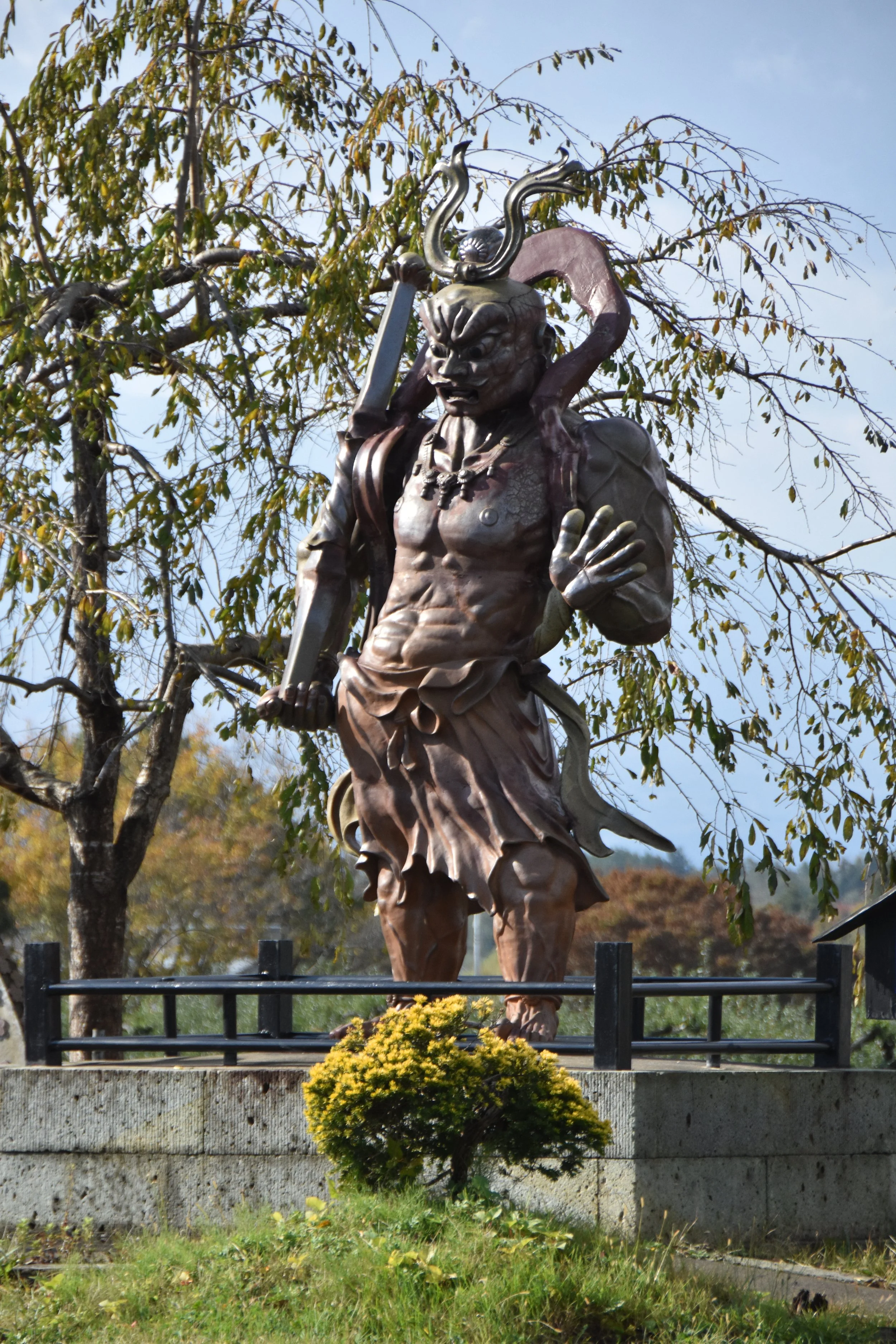
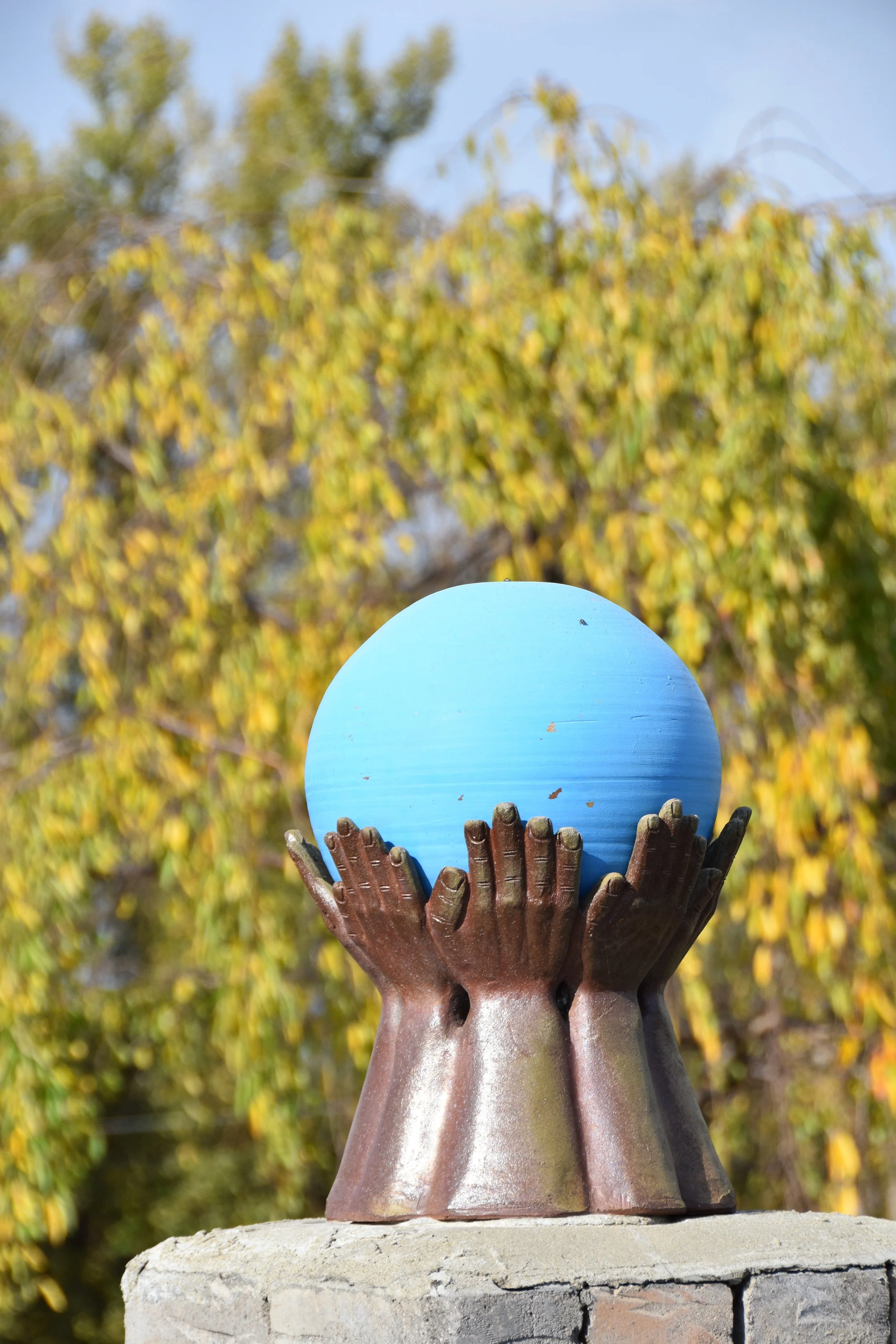
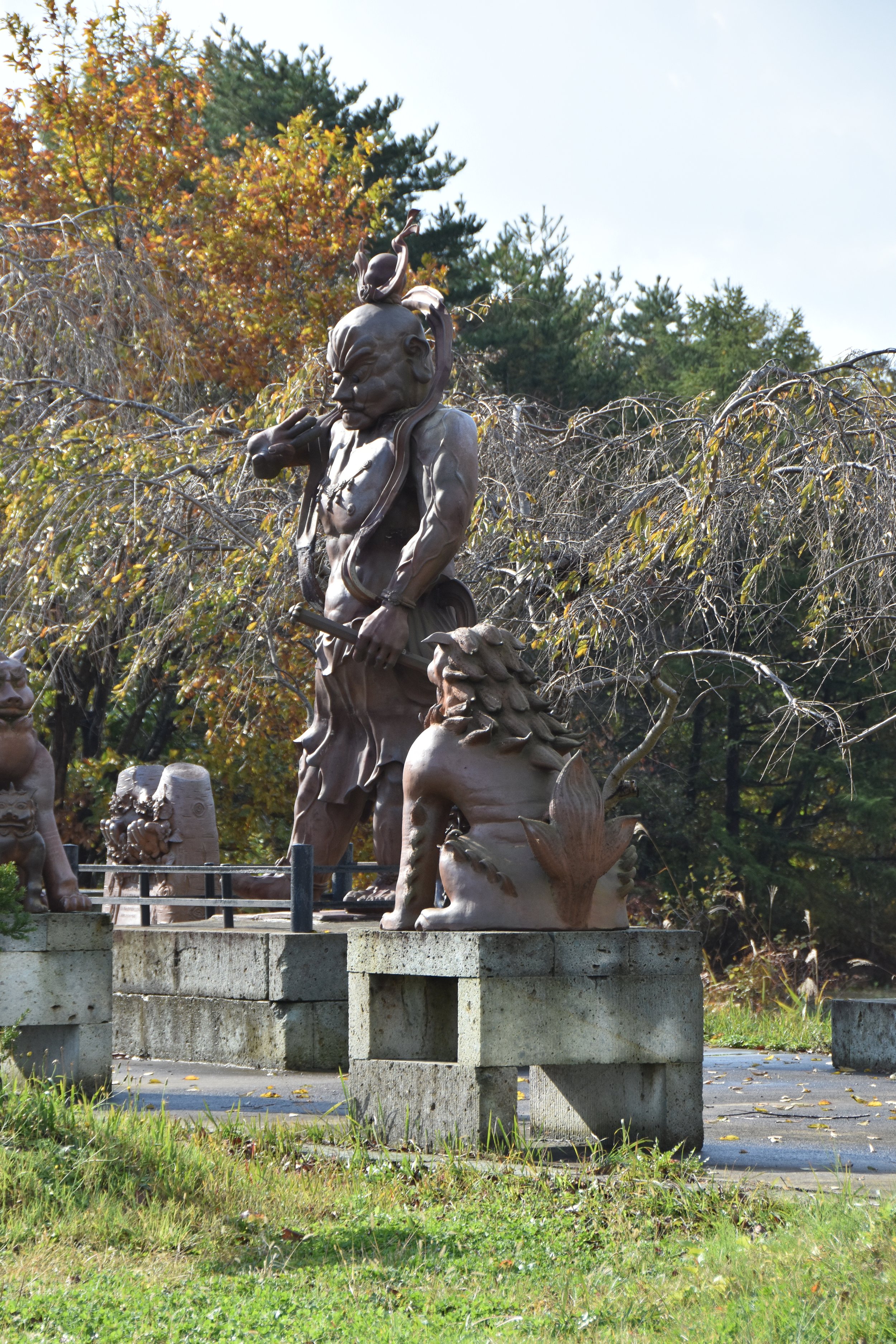
Around the grounds of the gallery, several sculptures decorated the area. No pictures were taken but there was also an international “garden” with many interesting works of art. This location is often used to teach aspiring artists how to form creations on the potters wheel.
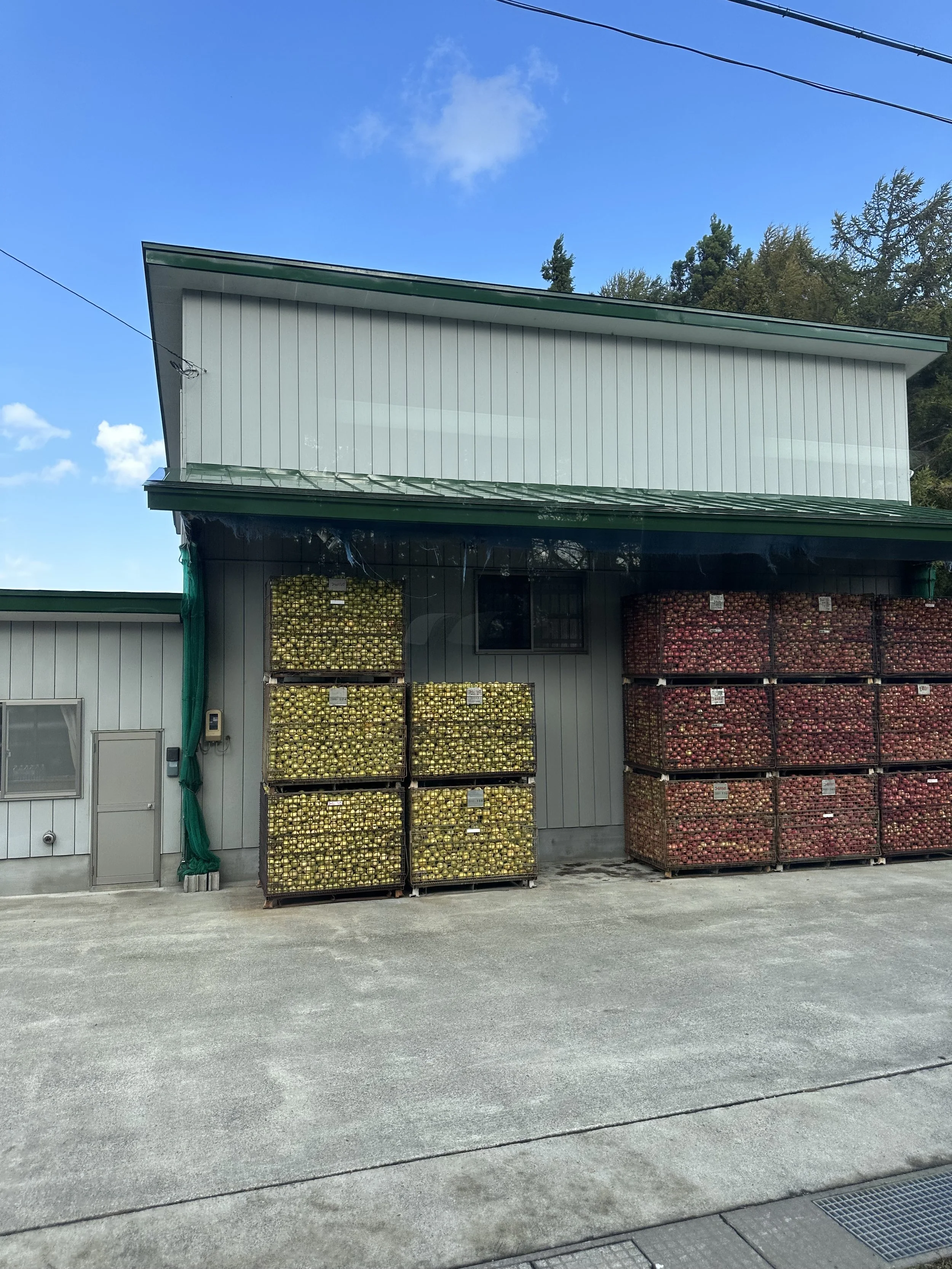
Across the street, an old building with lots of character was used to sell apples that grew in the orchard. Housing some of the 50 varieties of apples grown in Aomori, orchards could be found everywhere! Fuji and Orin are the most notable types grown in the area.
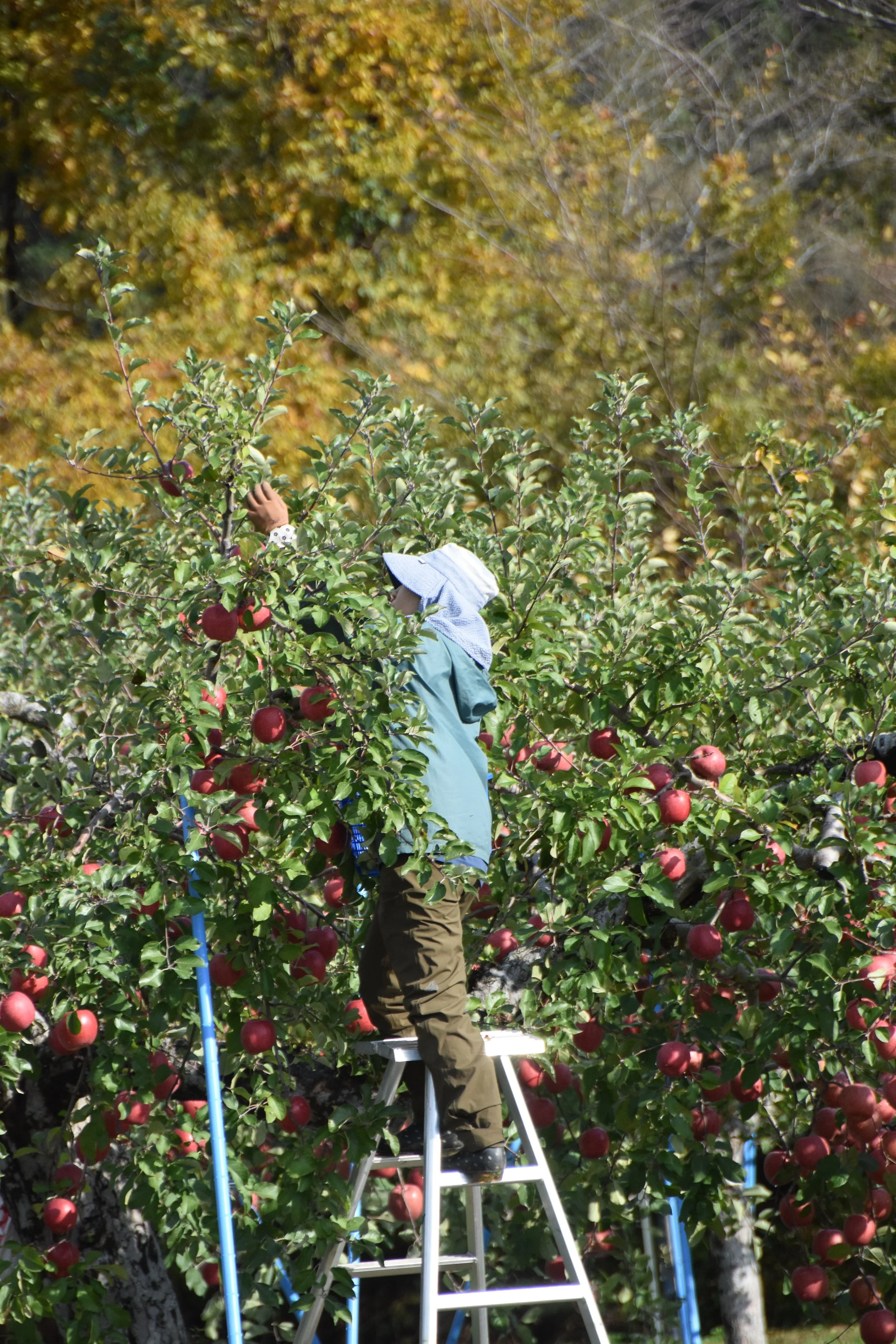
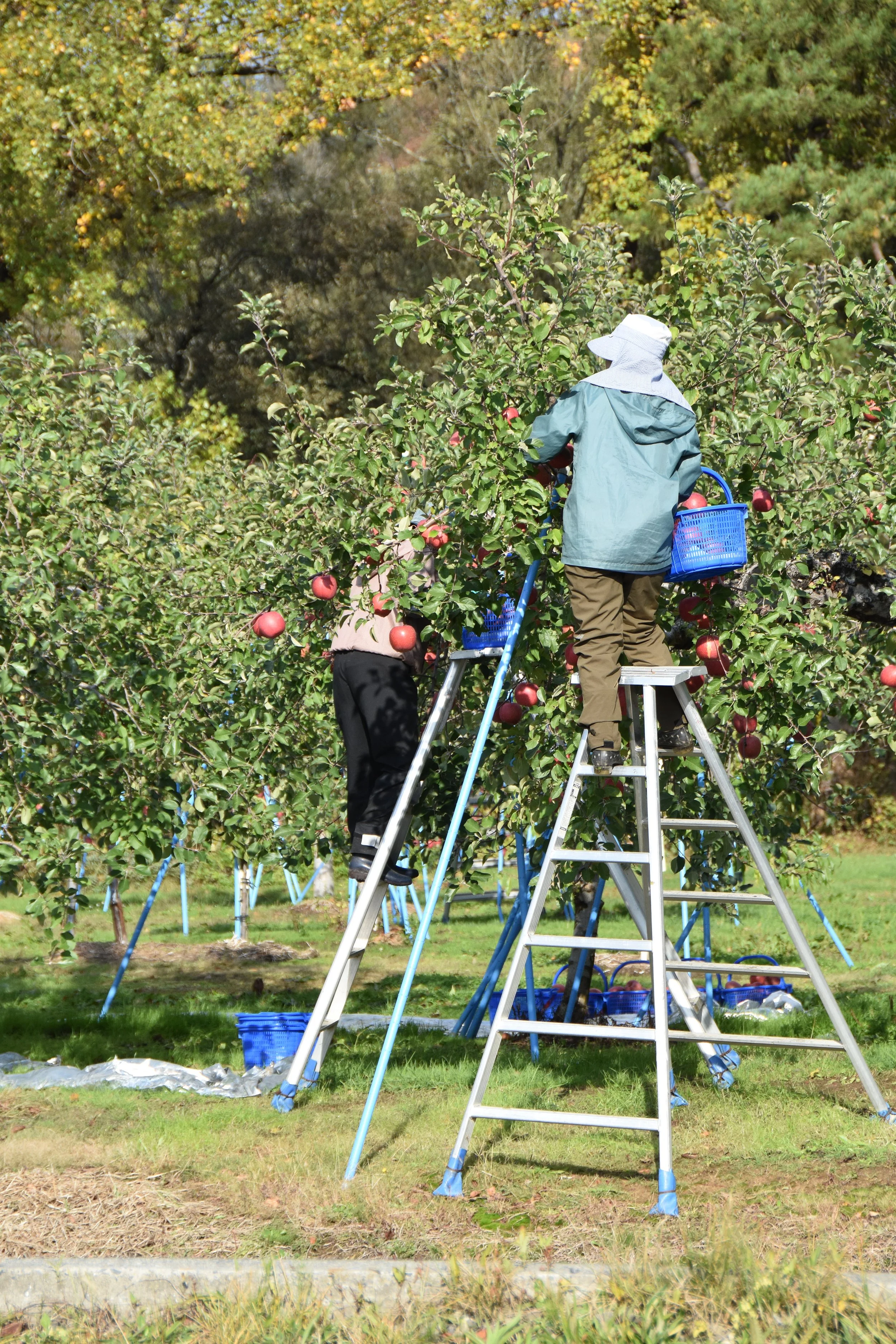
Sometimes my choices of photos are odd… I know… in this case, I felt fortunate to be seeing the countryside. This was a different part of Japan than I expected to experience. Aside from the apple pickers, there was a man driving a cart with buckets full of apples. He loaded them into the back of a truck and took them to the building to sell.
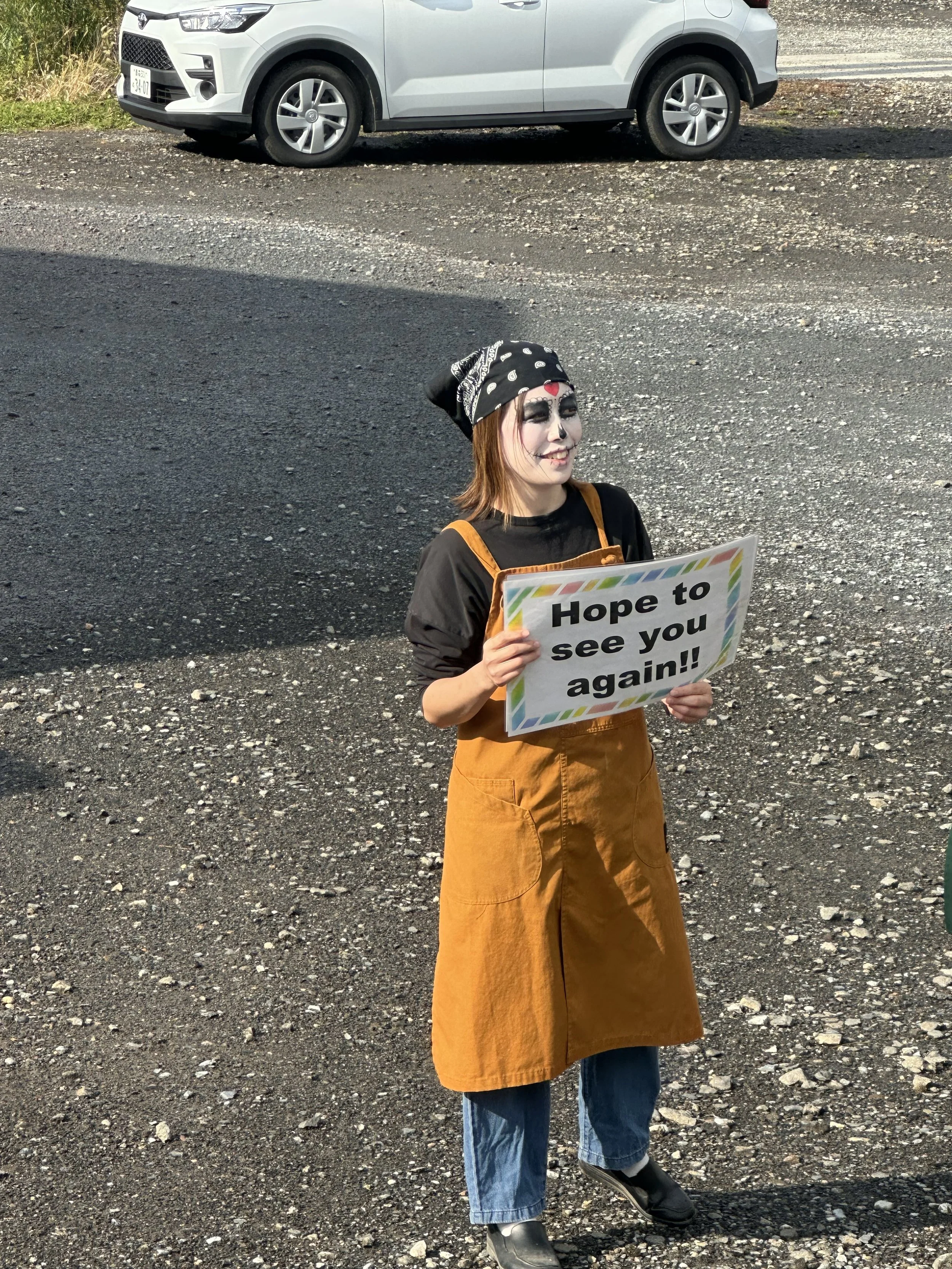
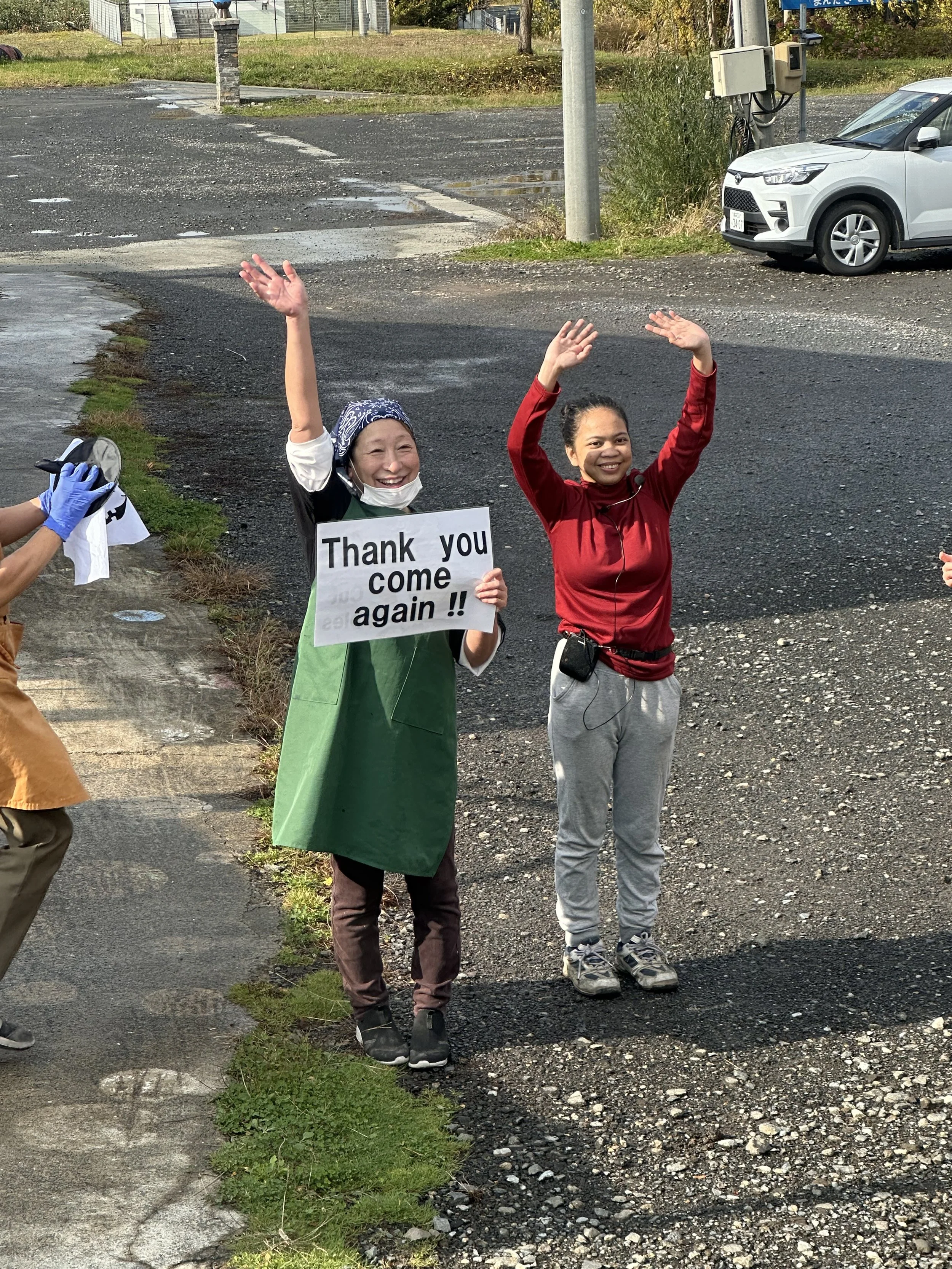
Back on the bus, we prepared to drive away. The entire staff from the gallery, art studio and attached restaurants and stores came out to wave goodbye. Dressed in Halloween costumes, they were so sweet! Happy fun…In all sincerity, they gave us a heartfelt invitation to return one day. It was very special…
Proof that I am the one traveling… haha. This next stop was very interesting. With Mount Iwaki as a backdrop, the Tsuru no Mai Bridge is a picturesque and iconic landmark. Credited with being the longest wooden bridge in Japan, this 300 meter, all-wooden structure has three arches.
Built entirely of Aomori Cypress, this bridge is considered a marvel of wooden architecture. With heavy rain predicted, we were fortunate to see this three arched bridge during a clear time. Others on our ship were not so lucky. So far, we have been able to see the view off of Mount Hakodate and this bridge with a clear view… others tell us they did the tours in reverse and had no view from the top and they did not have a full view of this bridge. Half of it was socked in with clouds.
Just so you can see the intricacy of this structure, I have taken a close up shot of the Aomori Cypress. Most bridges have metal/steel pilings or braces. The choice of wood used was based on its pleasant smell, durability and resistance to rot. It was a relief to learn this because from this perspective, I thought it might be rotting and therefore dangerous.
Walking across one “wing” of the bridge, I felt very secure. There was no creaking or loose feeling slats. Quite amazing. Crossing the Tsuru-no-Mai, which translate to “The Crane’s Dance” was a scenic way to cross the Tsugaru Fujimi-ko. At this time of year, the water level is low. It was explained that the lake fills with snow water… at the end of summer, the lake reaches its lowest level. By mid-winter and spring, the levels rise substantially. Despite being low, it was still stunningly beautiful!
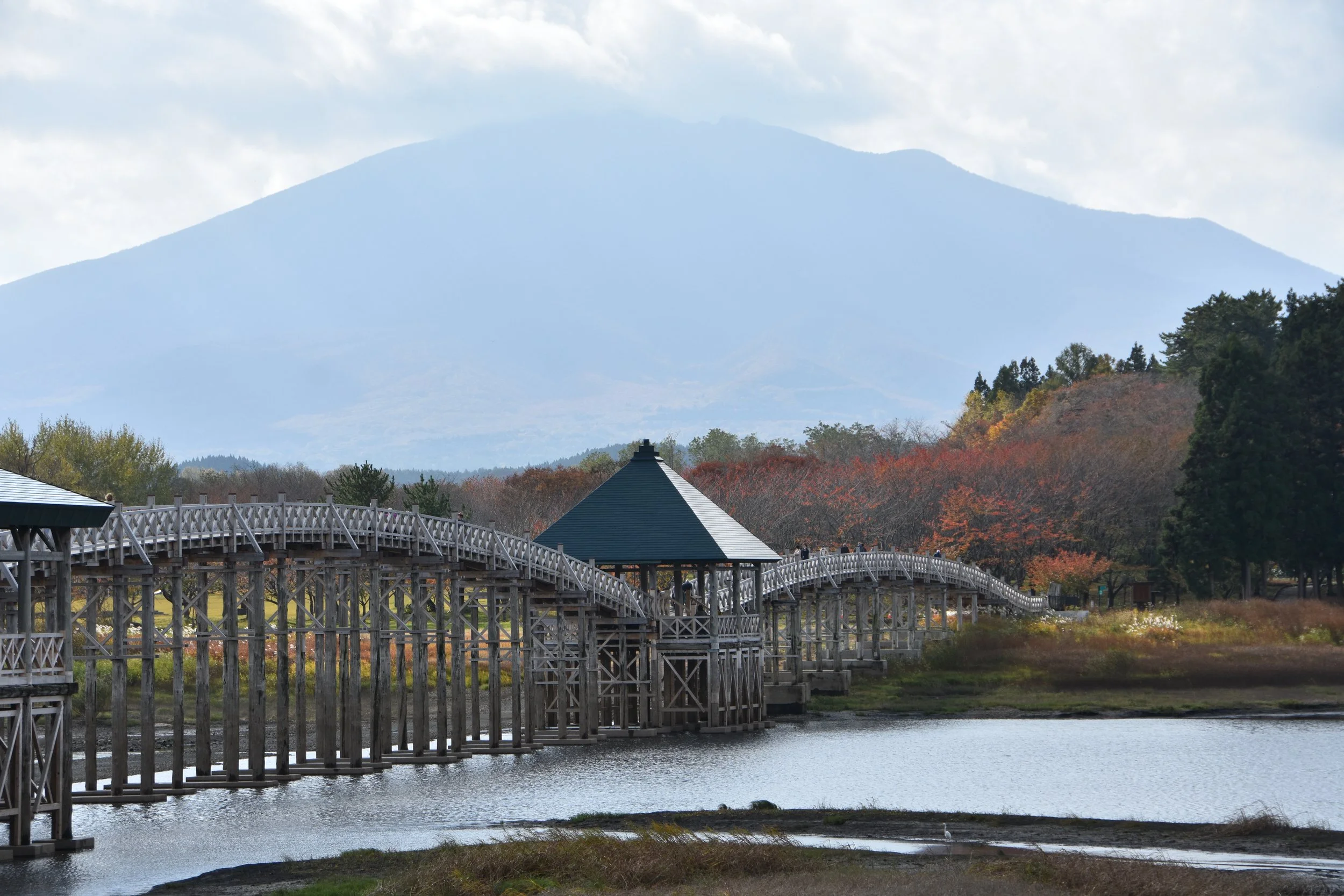
What made this day even more special is that this clear day allowed us a nice view of Mount Iwaki. Usually, this mountain is hidden by clouds, but we were lucky enough to see it with only a cloud floating at the very top. Often referred to as the Mt Fuji of Aomori, this bridge offers a nice view that can be reflected in the waters on a calm day. Fall colors made the experience complete!
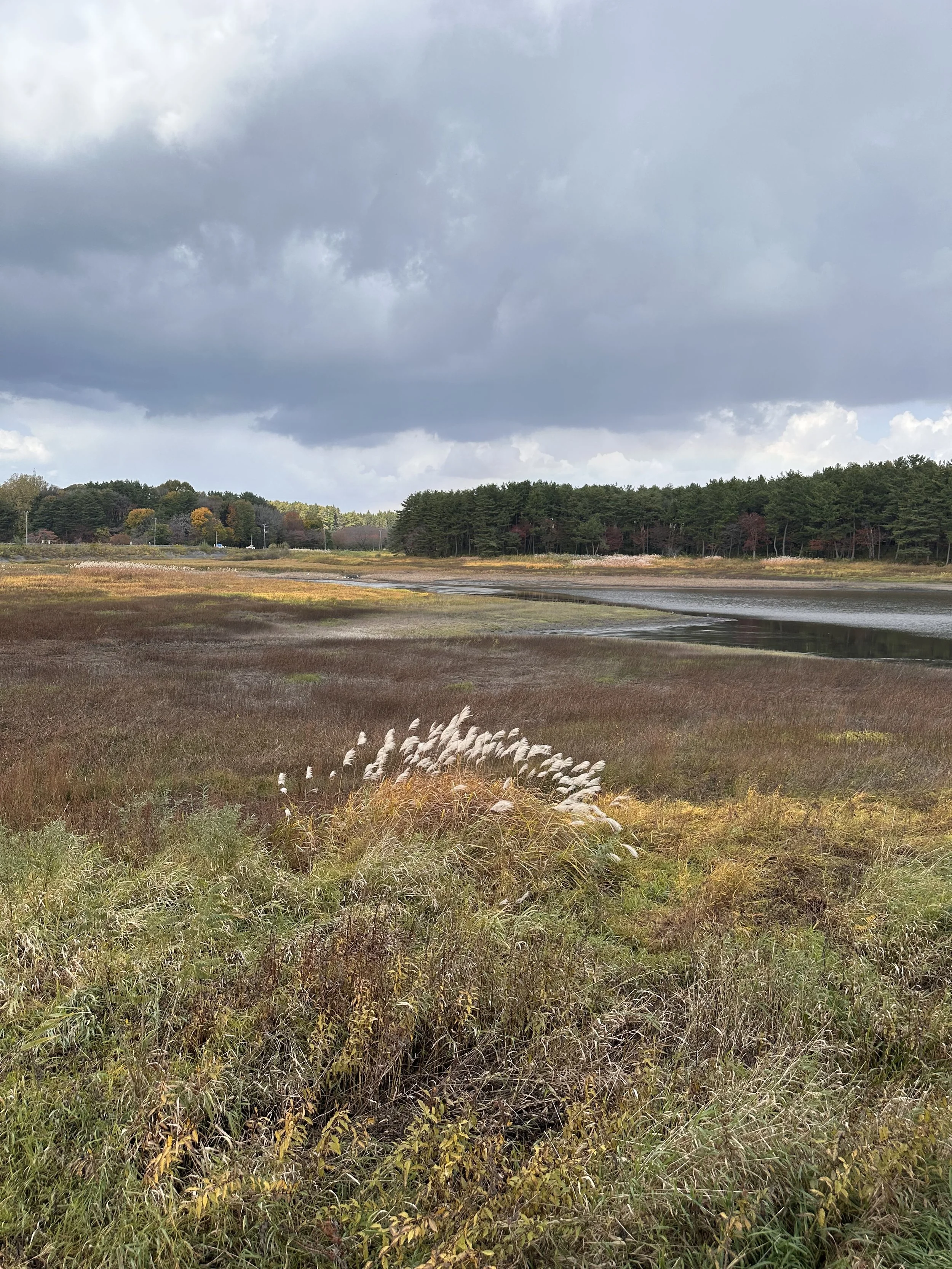
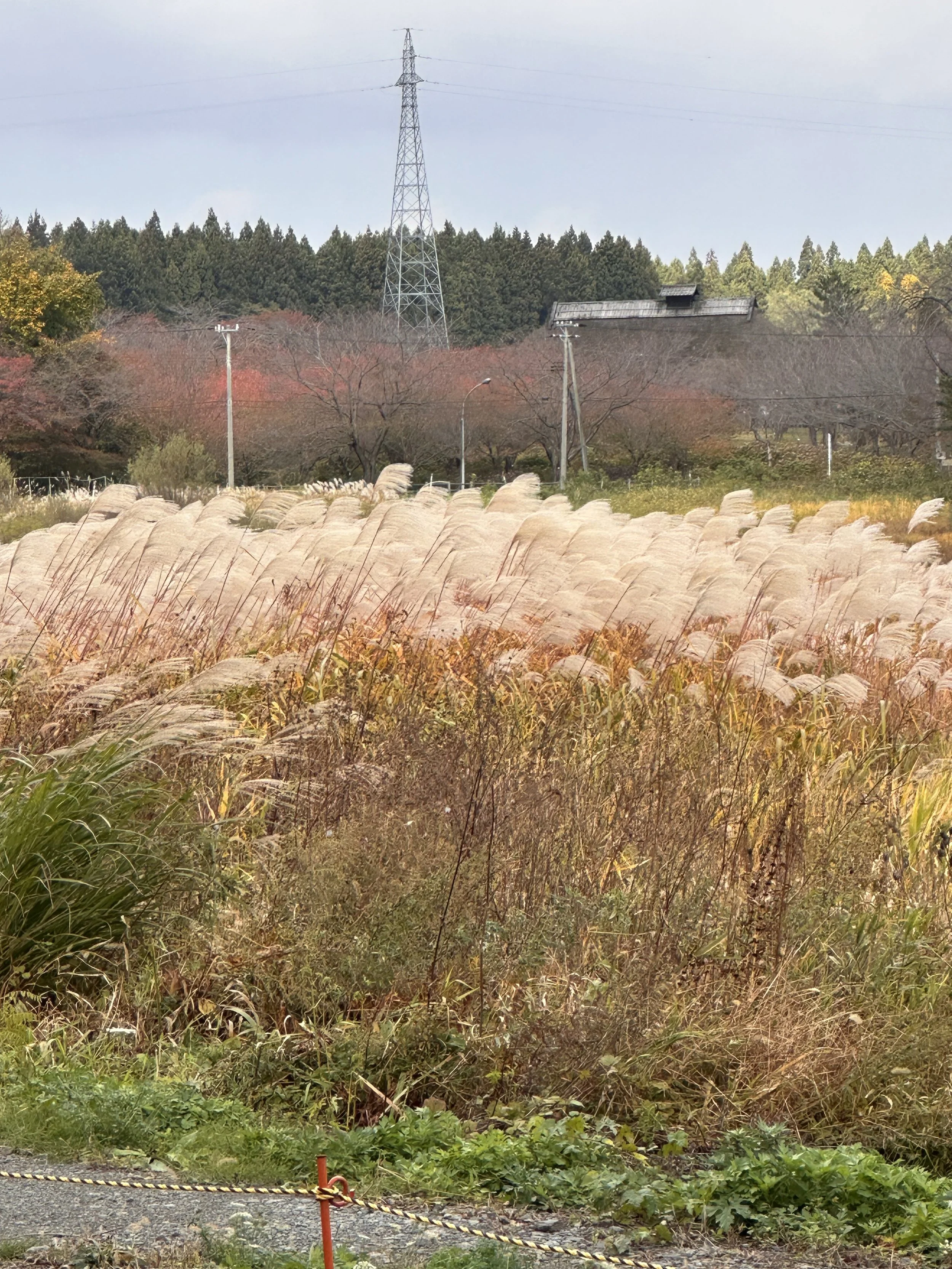
From this perspective, it is obvious how low the waters are. Still beautiful, the swaying Japanese Pampas Grass add to the serenity of the area. With the park setting, many locals visit to relax and be with nature. One of the most amazing things about Japan, in general, is that the people are quiet. Unlike the Unite4d States, I have not seen attention-seeking people at touristy locations. Everything feels calm…
For a weekday, it was quite busy… but still did not feel crowded. It was a very enjoyable afternoon… but we still had one more stop.
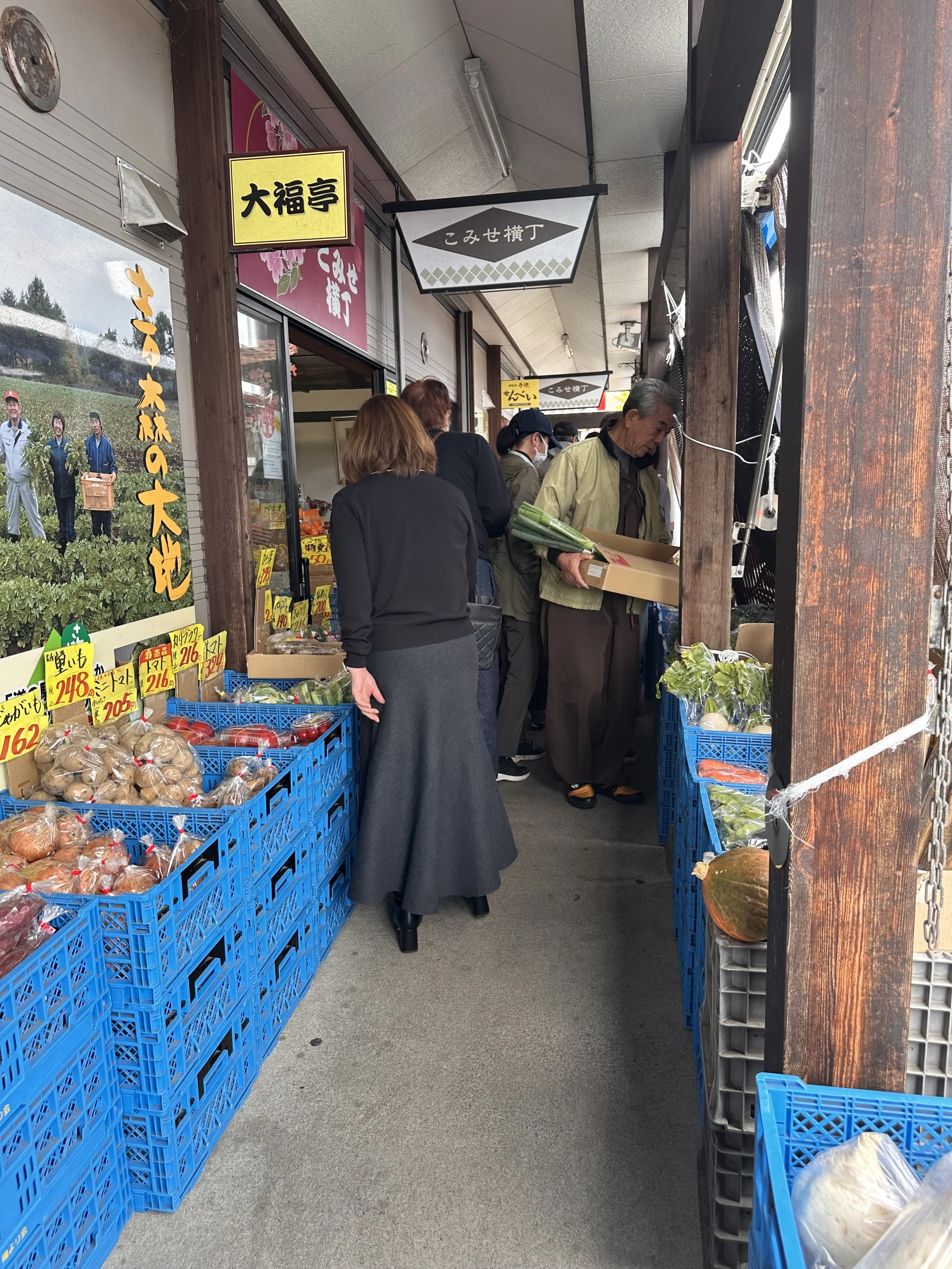
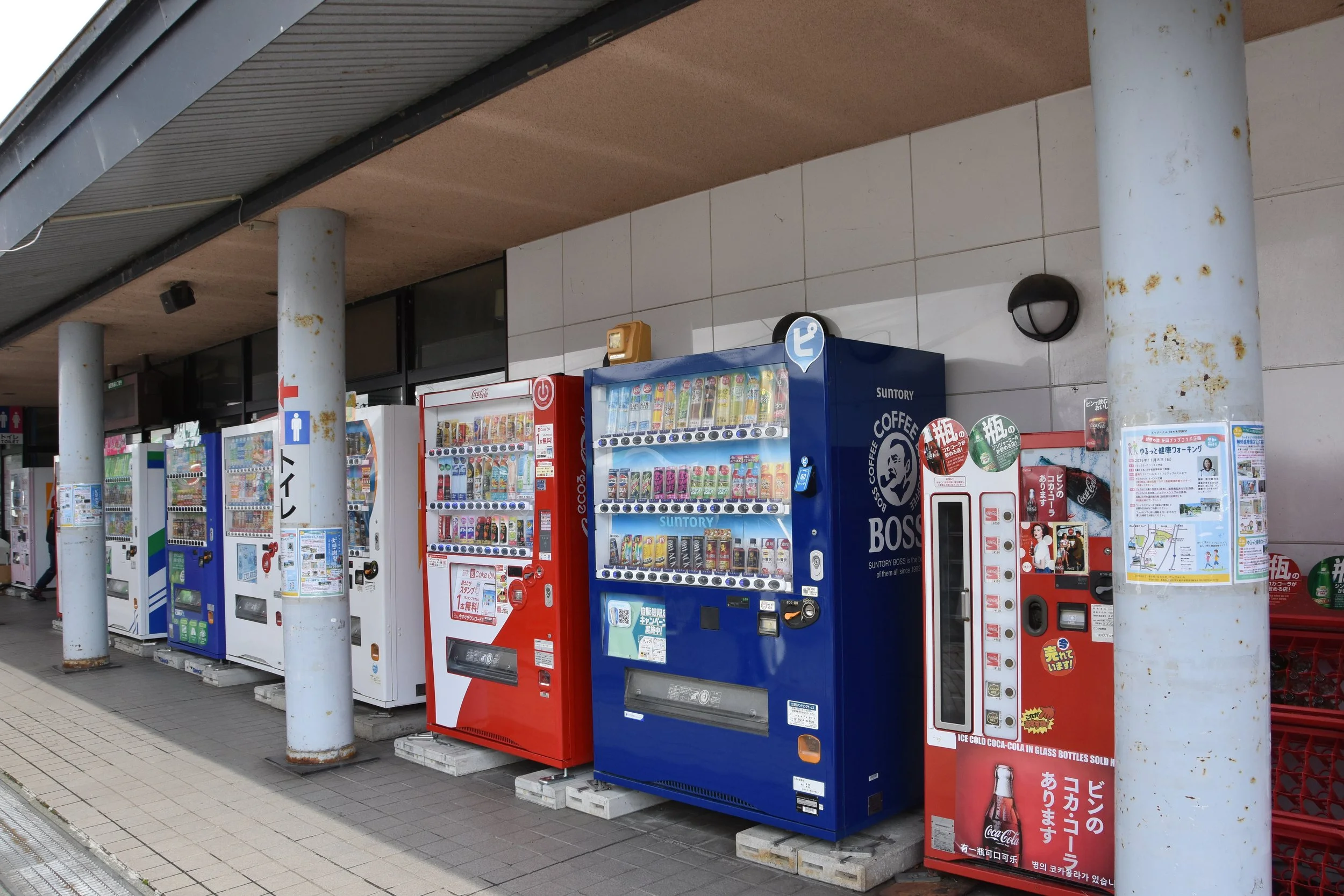
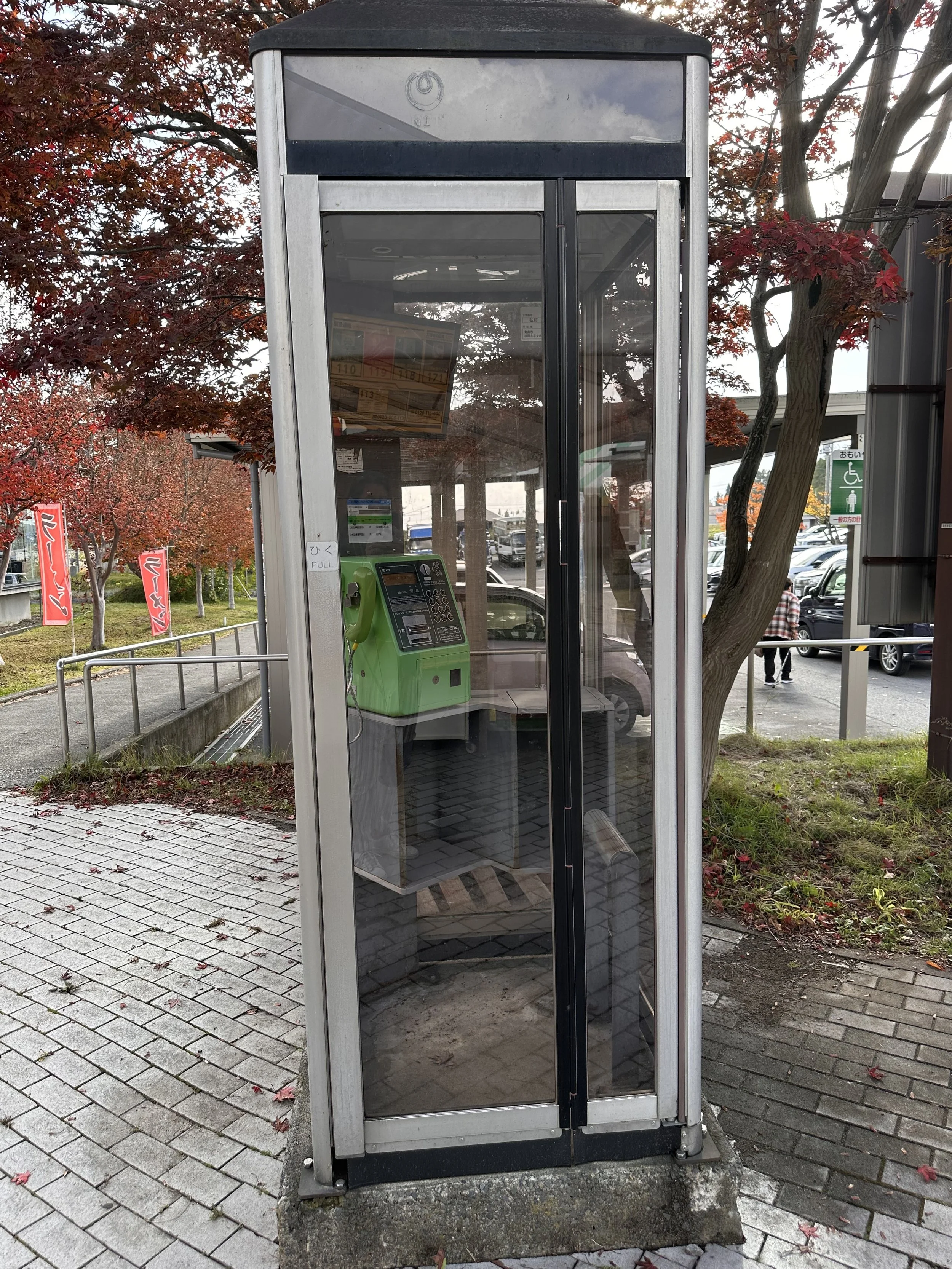
Our final destination was a Michi-no-Eki, which translates to a roadside station. All over Japan, these rest stops aid weary drivers. Restrooms, wifi, restaurants and a grocery store provide pretty much anything you’d need to rejuvenate. Each one is also equipped with a booth to share information about the area. It is like a glorified rest stop, visitor’s bureau all in one!
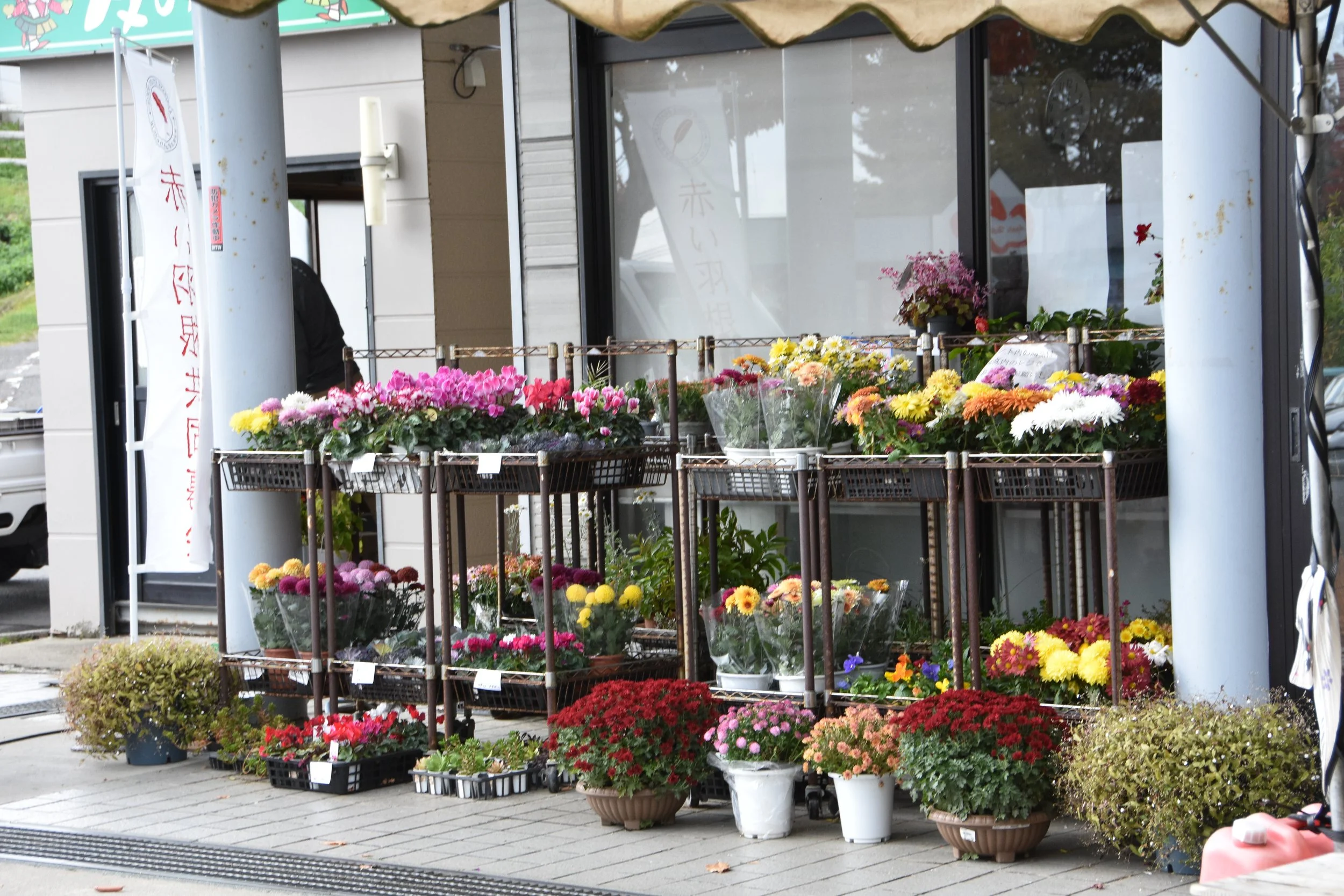
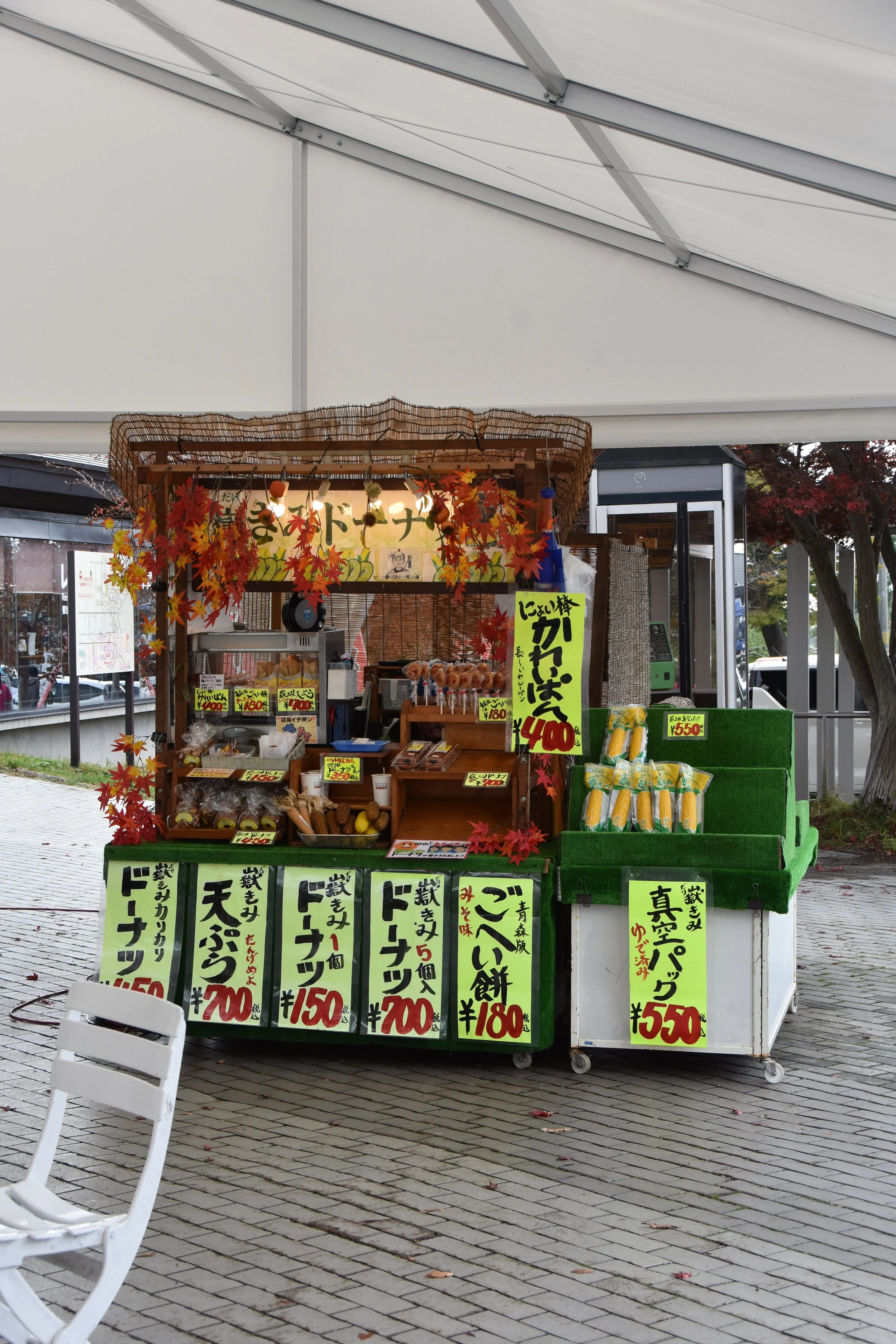
Japan has 1200+ registered roadside stations in 47 prefectures. Years ago, I visited the fanciest roadside station imaginable. Outside of Tokyo, the location even had a children’s bathroom with all the facilities (mirrors, chairs) in a miniature size. It makes the idea of a road trip desirable. Plotting a route that includes well placed stops seems like it would take the pressure off of driving around Japan… food for thought!