Nerja: An Andalusian Gem
Driving from Frigiliana to Nerja, we passed the Acueducto del Aguila (Eagle Aqueduct), which is regarded across the region as a jewel of Spanish architecture. Built in 1879, this has been used continuously by the local community to irrigate the farmland. Four stories high, the structure consists of 37 arches. Copied from the earlier centuries style used by Muslim craftsmen. During the Civil War, the aqueduct experienced quite a bit of damage from shell fire. It was eventually repaired in 2011.
Nerja! So quaint… energetic… full of charm! Upon our arrival, we were greeted by a church full of friends and family celebrating a wedding. Laughter, clapping and cheering… this was one festive group! Church bells were clanging. Due to the location of the church, many tourists and locals joined in with the cheering. Right in the center of town, in the middle of the plaza, the church was in the most trafficked area around.
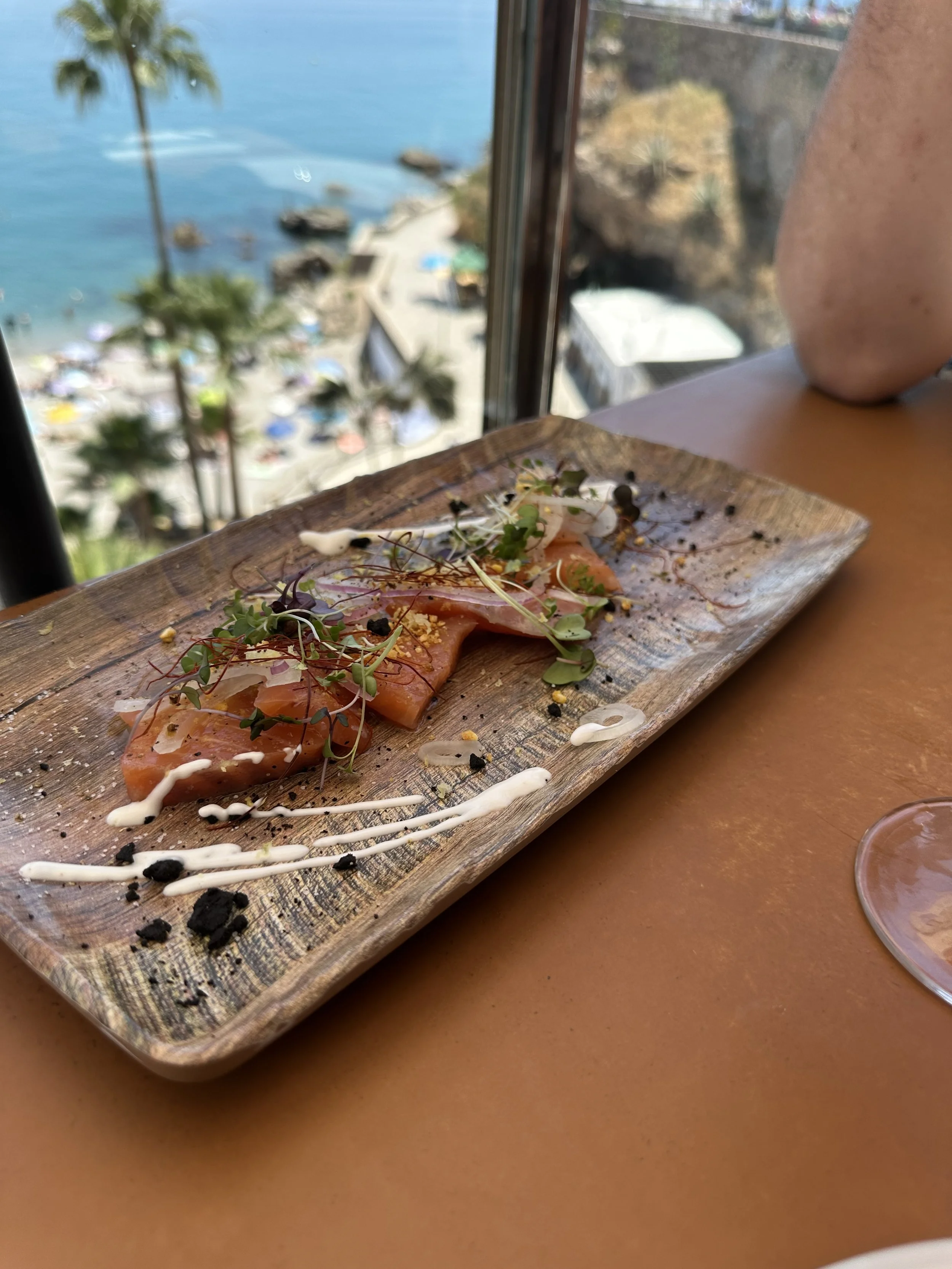
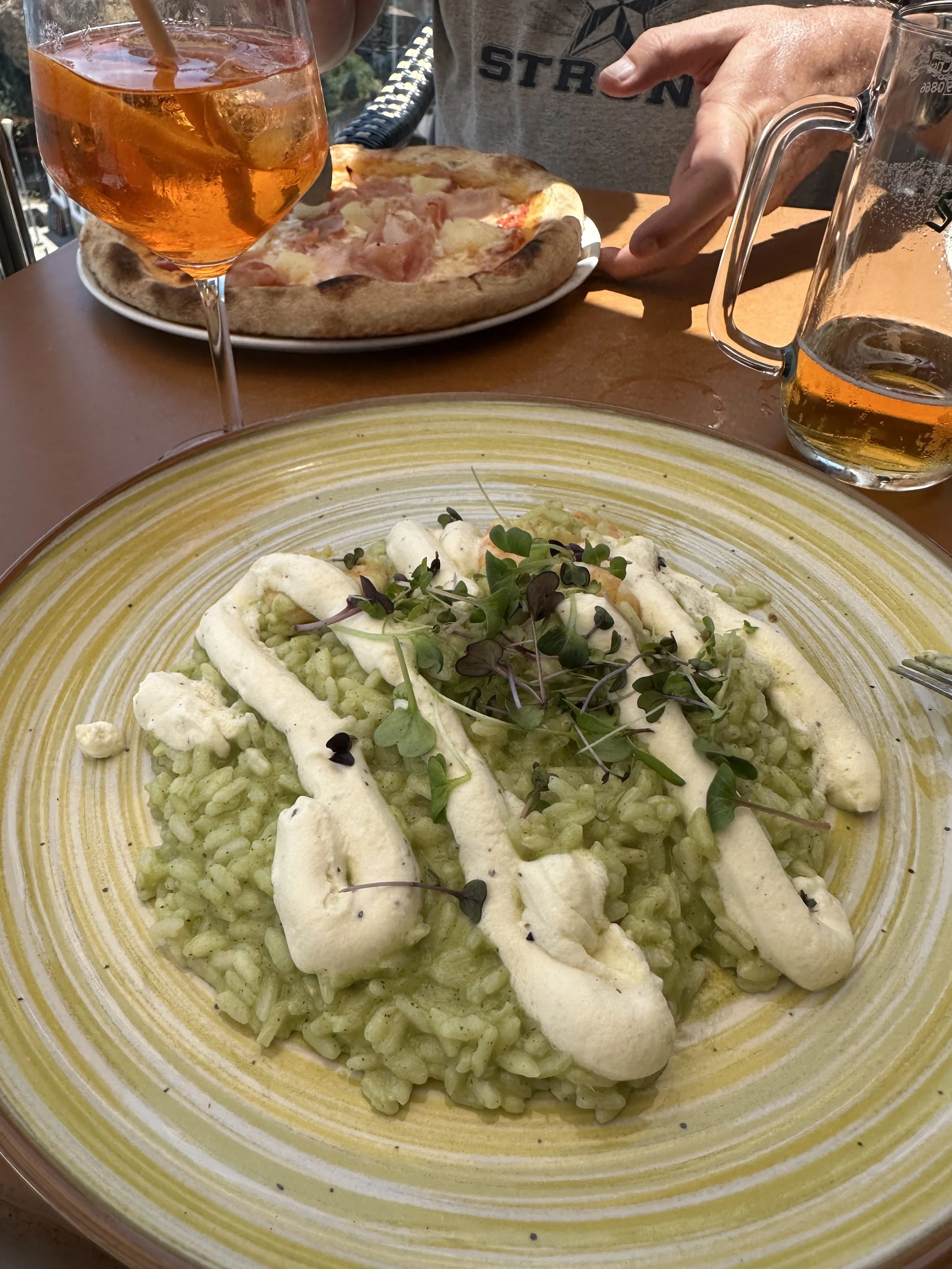
Having skipped breakfast, we were famished by lunchtime. With so many options, we chose a restaurant with a view. Restaurante Portofino was situated on the top of a cliff overlooking everything! Craving seafood, I ordered a marinated salmon. Oh my gosh! Absolutely delicious!!! My main course was a pesto risotto with burrata spread across the top. That too was incredible.
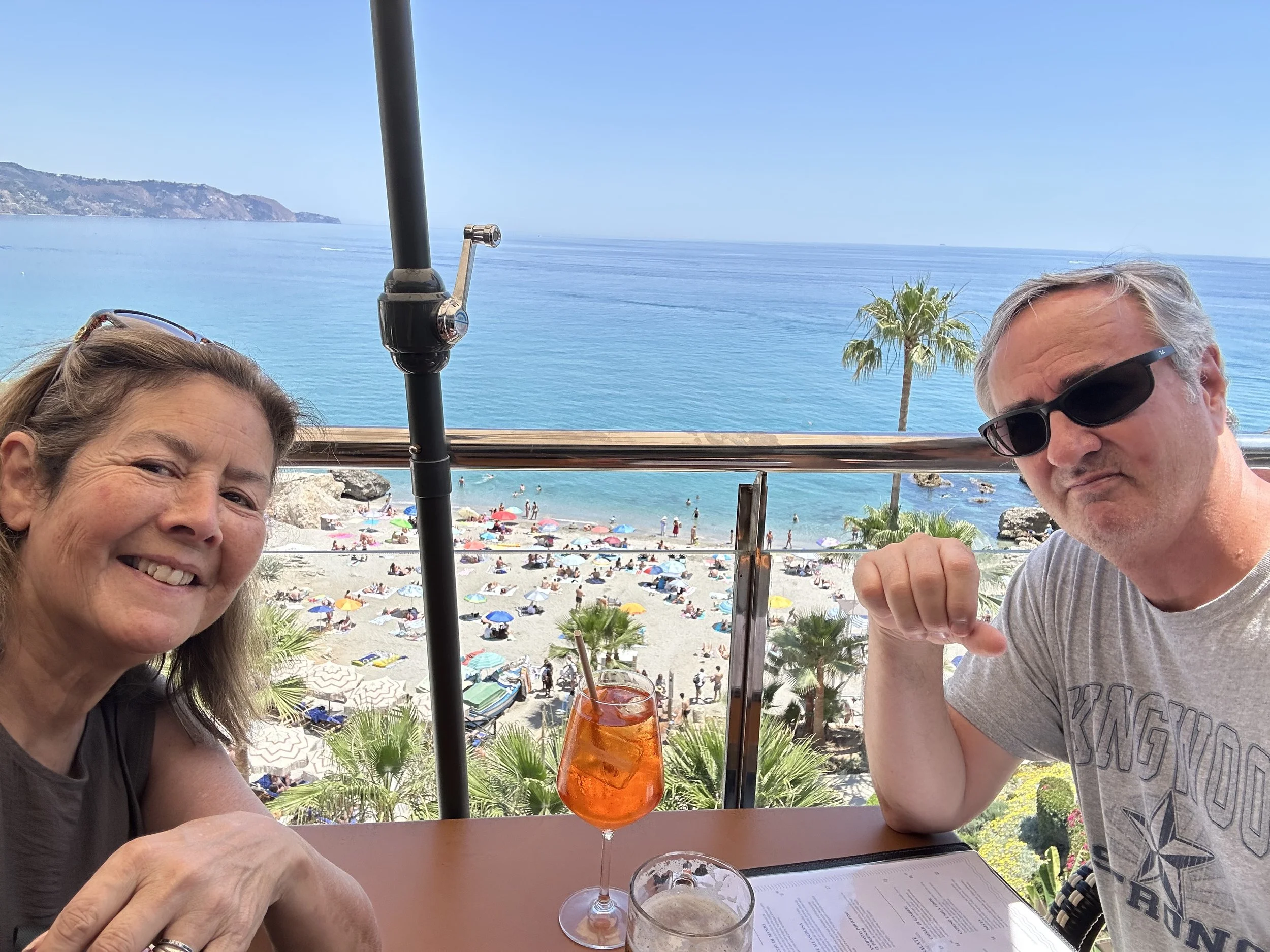
Arriving just as a couple left a table for two at the balcony’s edge, the waiter asked us to wait for two minutes so he could prepare it for us. One of the best seats in the restaurant! Only a half glass wall came between us and a view of the beach below. Deemed a “blue flag” beach, Playa Torrecilla is the second most popular beach in the area. Blue flag means this beach is certified clean, safe, environmental and eco-friendly. Awarded by the Foundation of Environmental Education (FEE), a nonprofit organization based out of Denmark. From our vantage point, we could see that this highly populated beach was extremely clean!
From our little perch in the restaurant, we enjoyed our leisurely lunch. Sipping cocktails and really taking in the view. Not only could we see the famous beach below, but we also had a clear view of the Balcon de Europa (Balcony of Europe). It is the most famous tourist spot in Nerja. You can see many people strolling out to the sea wall to get a stunning view of the Mediterranean Sea. The “Balcony” evolved from a nineth century Moorish fortress into a popular viewpoint. It was on Christmas Day 1884 that a devastating earthquake hit the Nerja area. With the “fortress” sustaining substantial damage, King Alfonso XII decided to rebuild and make it open to the public as a viewing point.
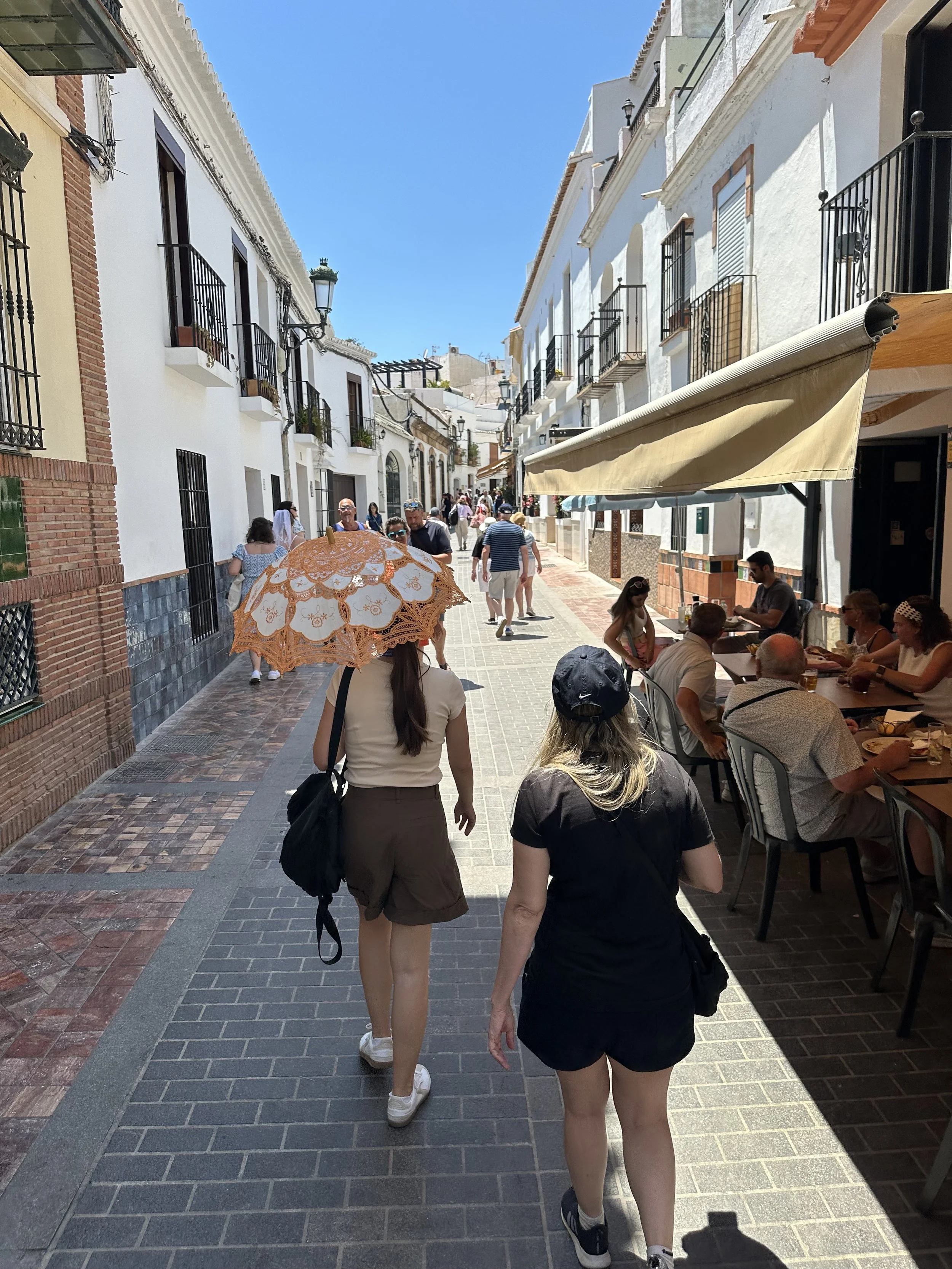
Nerja’s historic center dates back to 1487. Once a humble fishing village, this town evolved into a traditional Andalusian settlement. These arches are indicitive of villages in Andalusia. Also common are the narrow cobbled streets, white-washed houses and small plazas that are the heart of the communities. Plazas are the gathering places.
Through the arches is a spectacular view! The same beach but a slightly more expanded perspective.
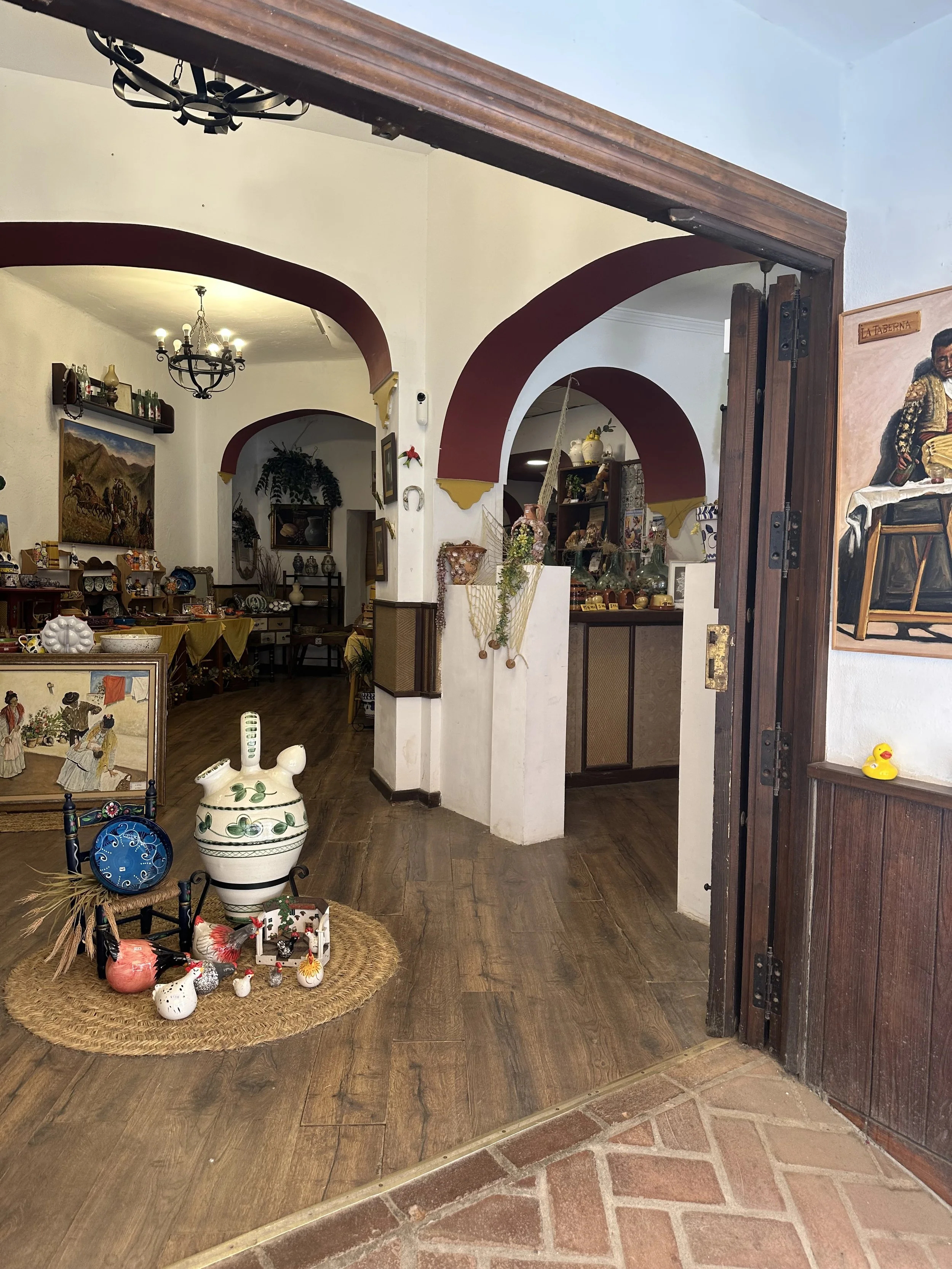
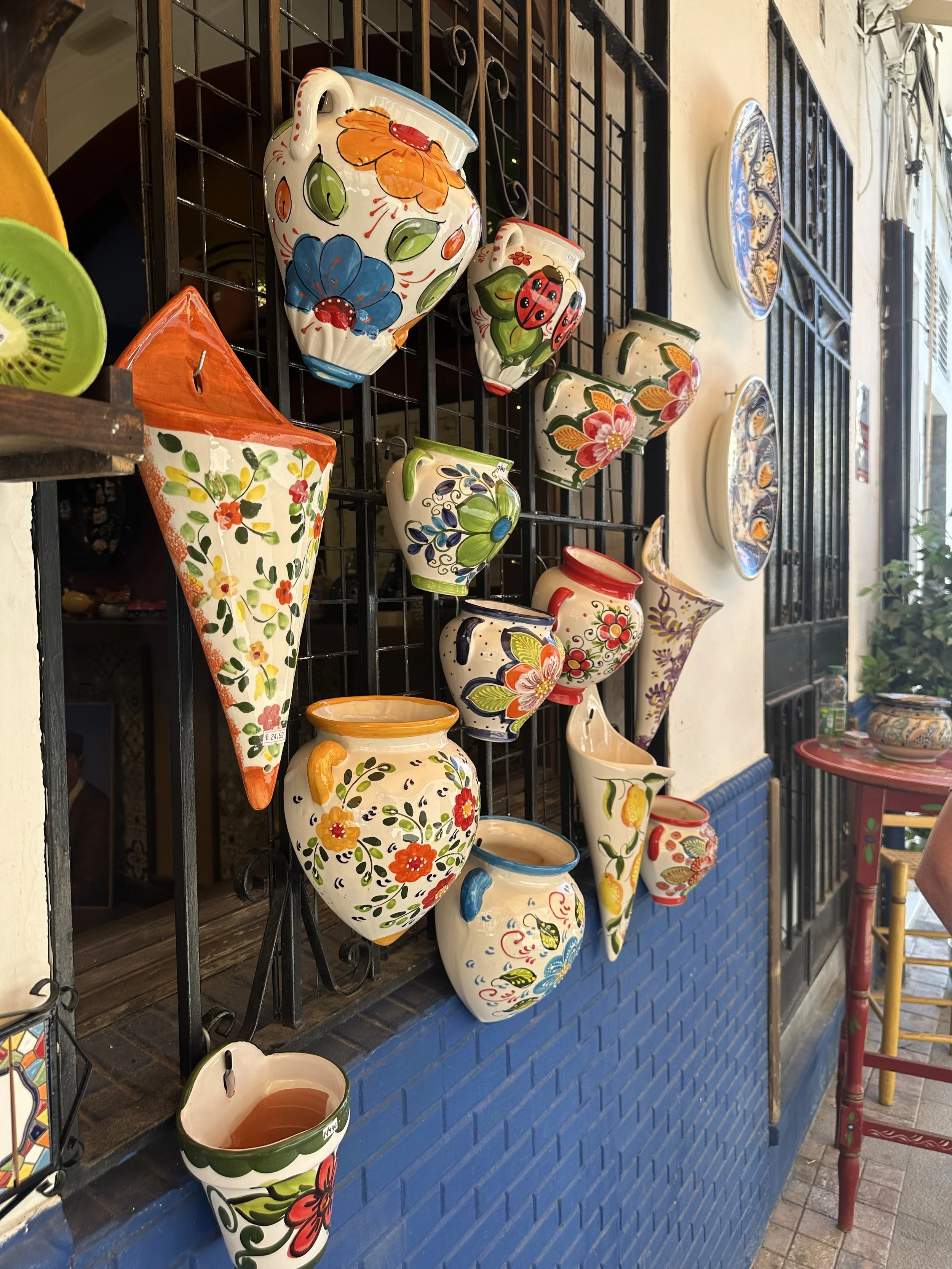
Like all throughout Spain, outdoor restaurants and shops line the narrow streets. Unlike other areas, cheap souvenirs are not the norm. There are a few shops with the typical shot glasses and post cards. However, this town has more ceramic artwork and local made clothing. I love these colorful pieces of pottery that attach to a wall or fence.
Leaving town, we saw another familiar sight… white-washed buildings with colorful potted flowers… I really love this look… Back to Malaga and our flat, we go…