Amazing Andalusia: Frigiliana
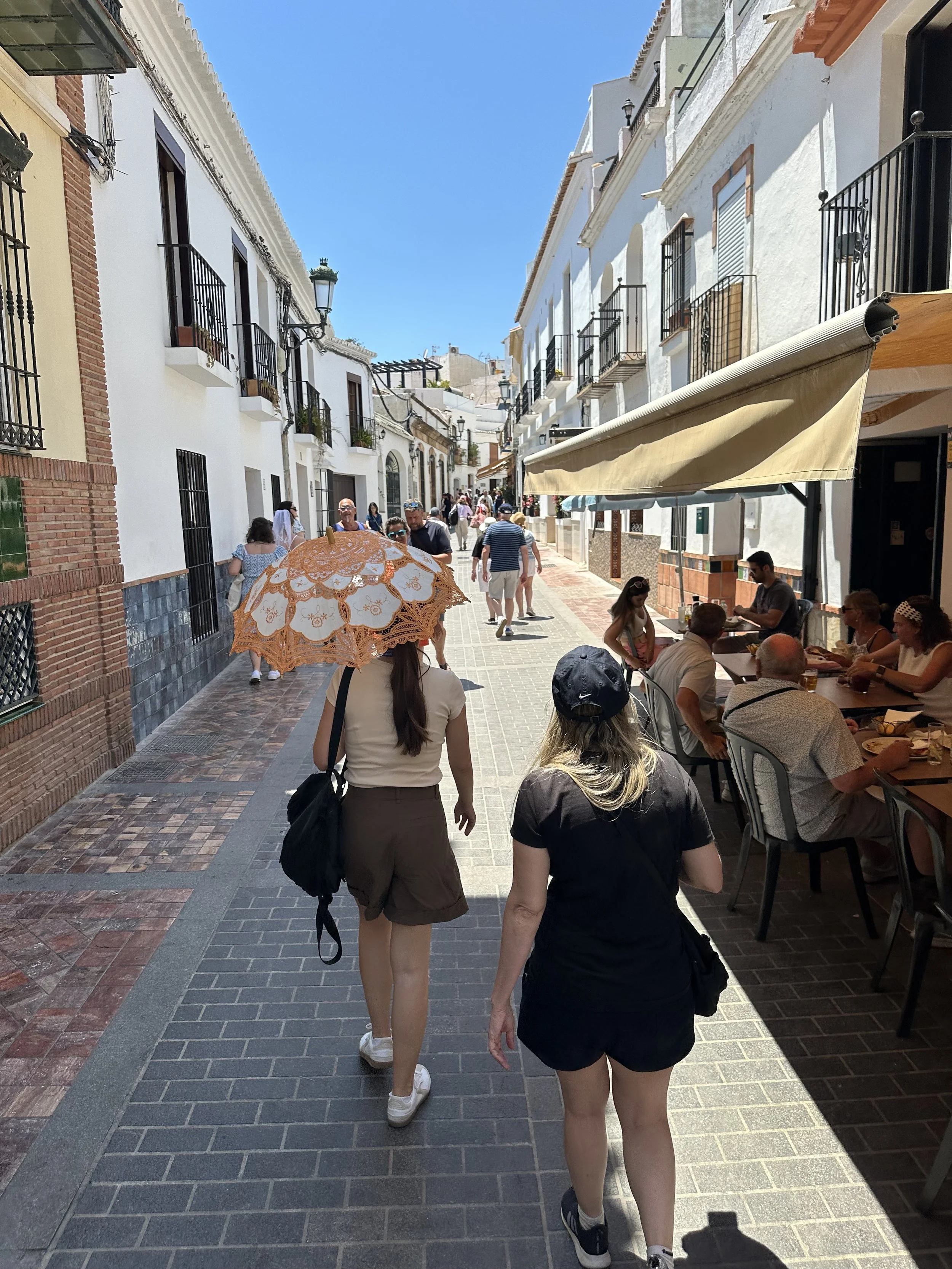
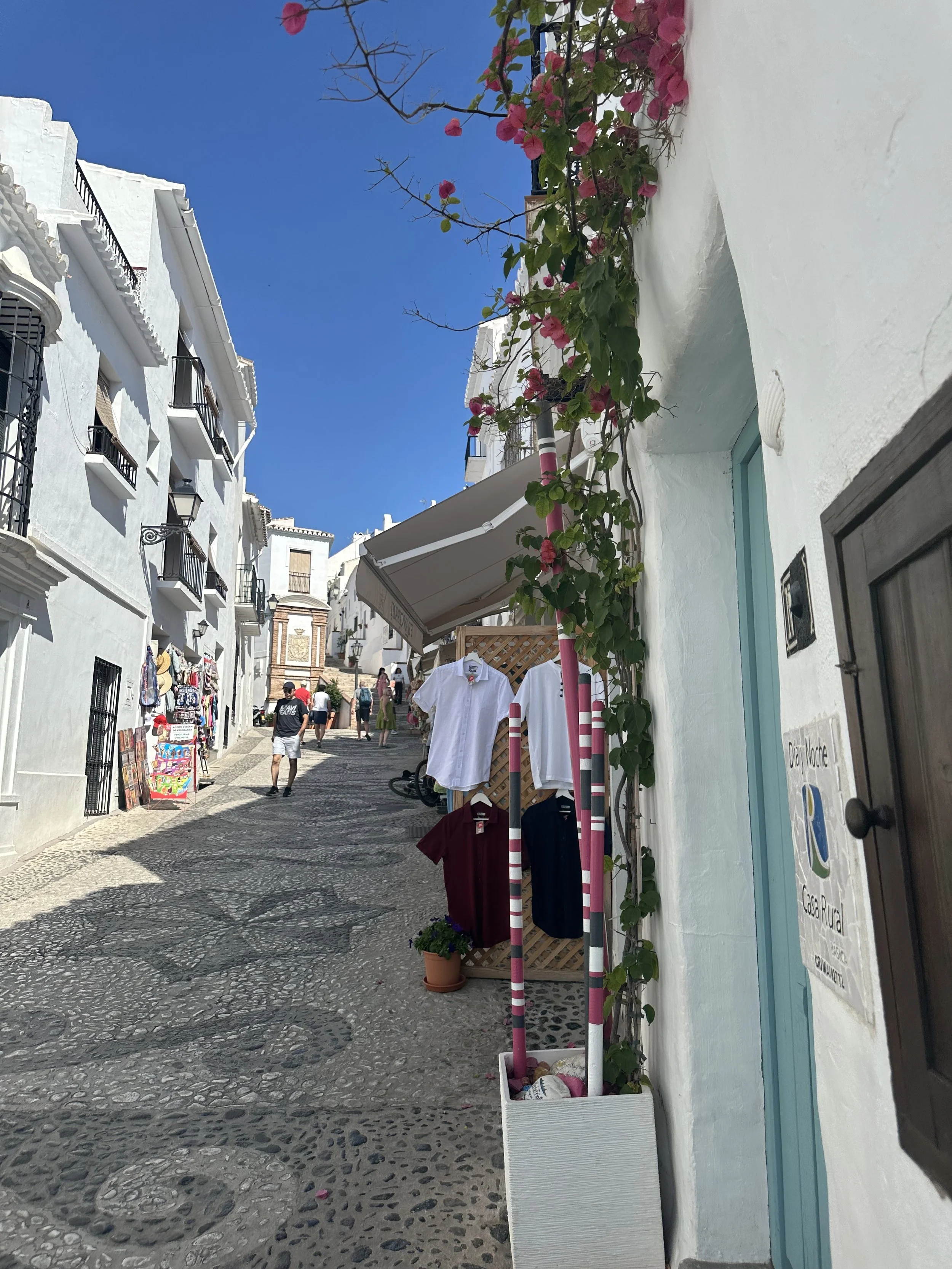
Situated about 44 miles east of Malaga, the town of Frigiliana was easy to reach by bus. Dropped off right in front of this street, our first impression was a good one! Very clean, all white structures which made the many plants and flowers stand out.
White walls, brick around the window and plants on the steps… a familiar sight. It’s very appealing to me because it feels organized and clean. With a population under 4000, this small town fills up when tourists arrive. Being early in the morning, the temperatures were still very comfortable.
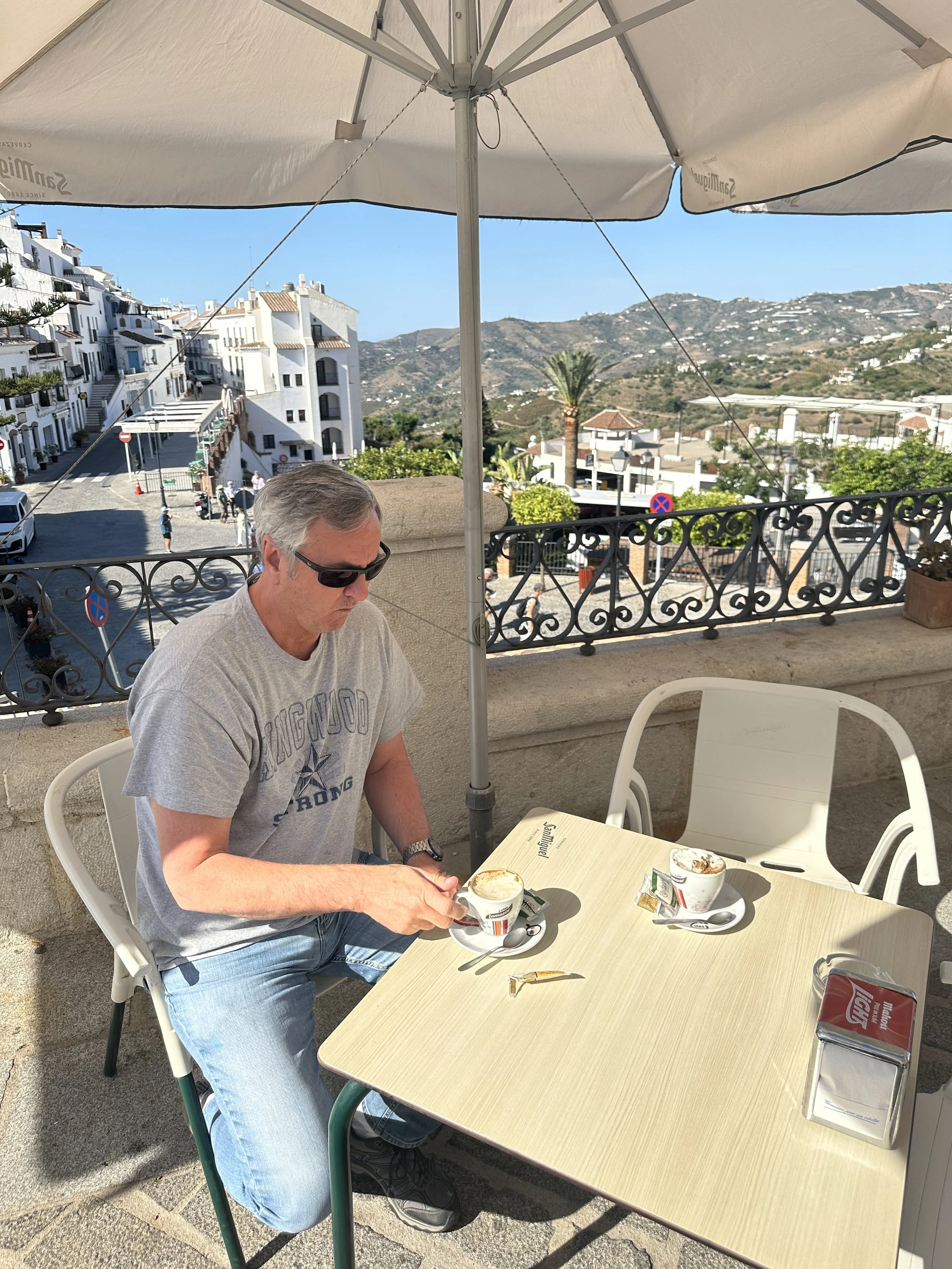
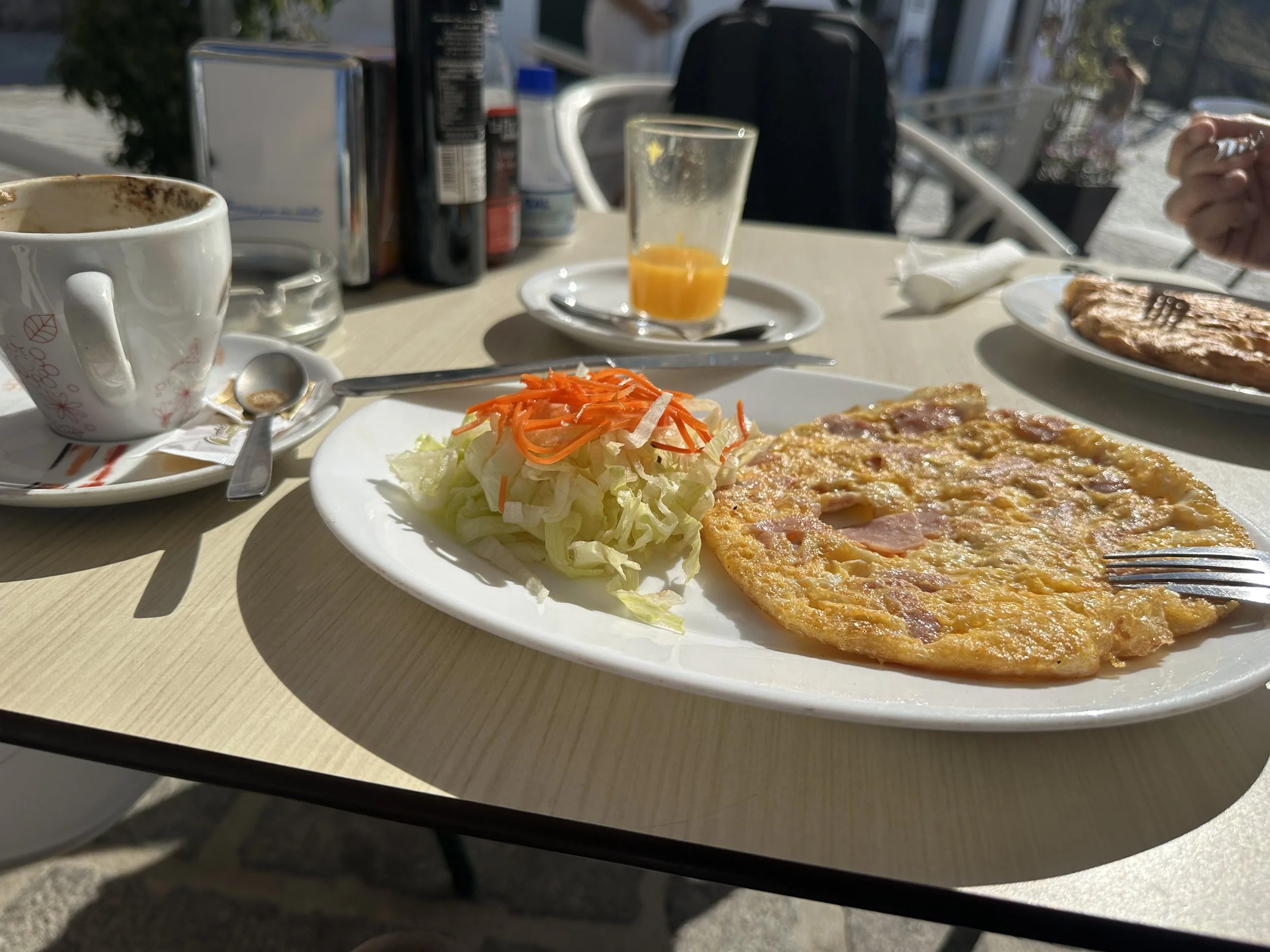
Up the hill… or shall I say, one of the hills (the entire town is built on hills)… to breakfast we go. We found a little spot outdoors. For such a small place, there are so many little eateries. Breakfasts in Spain can be challenging for me. All the good stuff is served on toast… it’s almost like a tradition American breakfast but a thick slice of toast is loaded up with all the goodies. This time, I was able to order a plain omelet… it was perfect. With fresh orange juice and a cup of coffee, I was set for a day of exploring!
Behind us, down the hill, tourists were being dropped off for their time in Frigiliana. The line of white buildings includes a very nice hotel, shops, restaurants and some private homes. Looking up the hotel, it was quite reasonably priced. Nice views, a pool, a restaurant and excellent proximity to town make that an intriguing spot for a future visit.
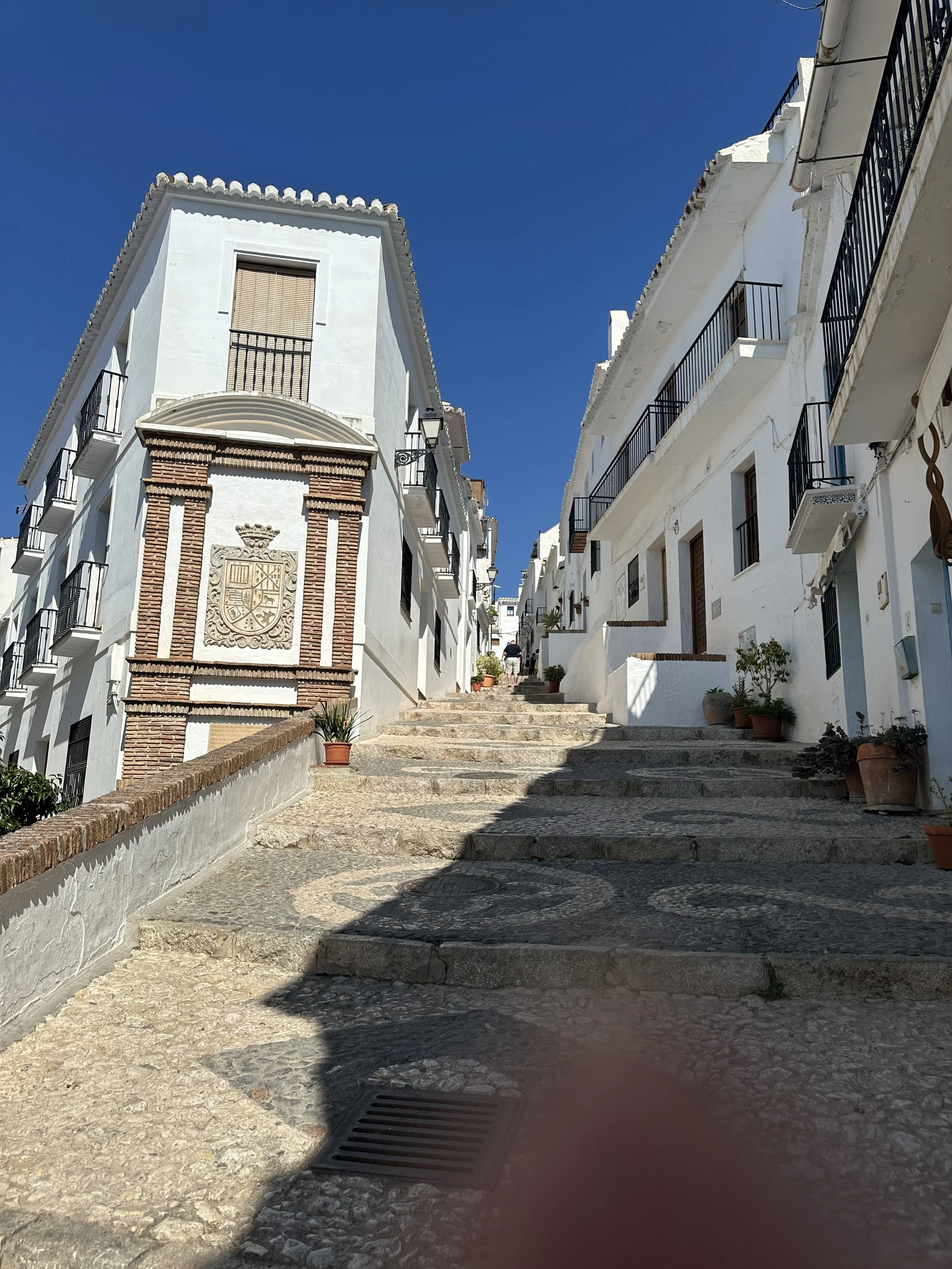
Can you imagine how good of shape we’d be in if we had to navigate these hills and steps every day? It’s hard to imagine that Hard to believe that centuries ago… 3,000BC… primitive people lived in caves and rocky shelters in these hills. There is debate as to whether the name, “Frigiliana” comes from the Roman era or has Greek influences.
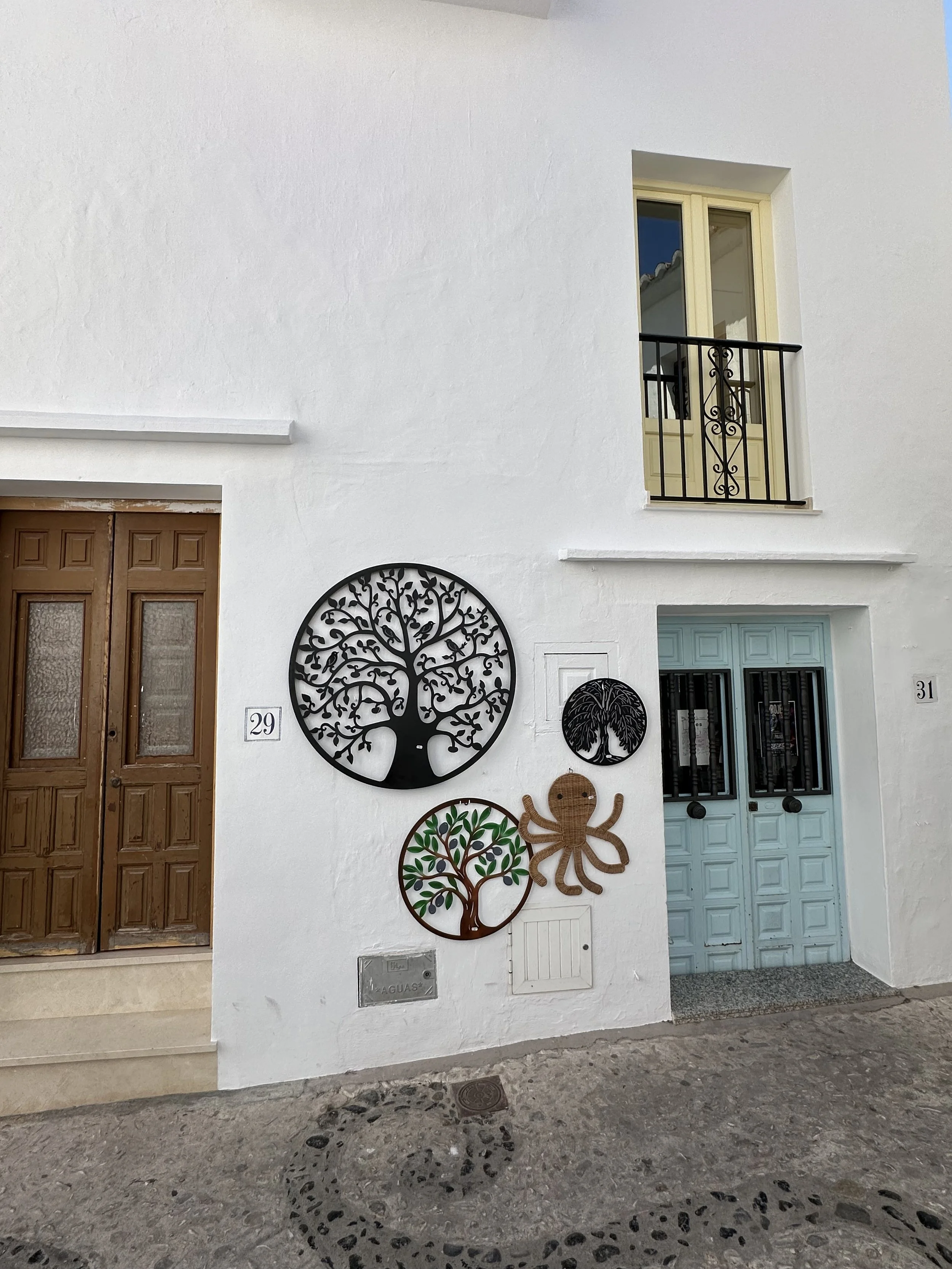
Only six miles north of Nerja (another Andalusian town) and its proximity to the ocean, Frigiliana processed and distributed tuna from the nearby town. In the past, this area also had vineyards that were eventually replaced with fruit trees.
Frigiliana has gone through many changes. Around 711AD, Berber commander Tariq ibn Ziyad landed in Gibraltar had a successful conquest. It was at this point that the area came under Muslim rule. The Arabs introduced agricultural innovations like hydraulic systems of irrigation channels and reservoirs. This made it possible to introduce new crops like sugarcane.
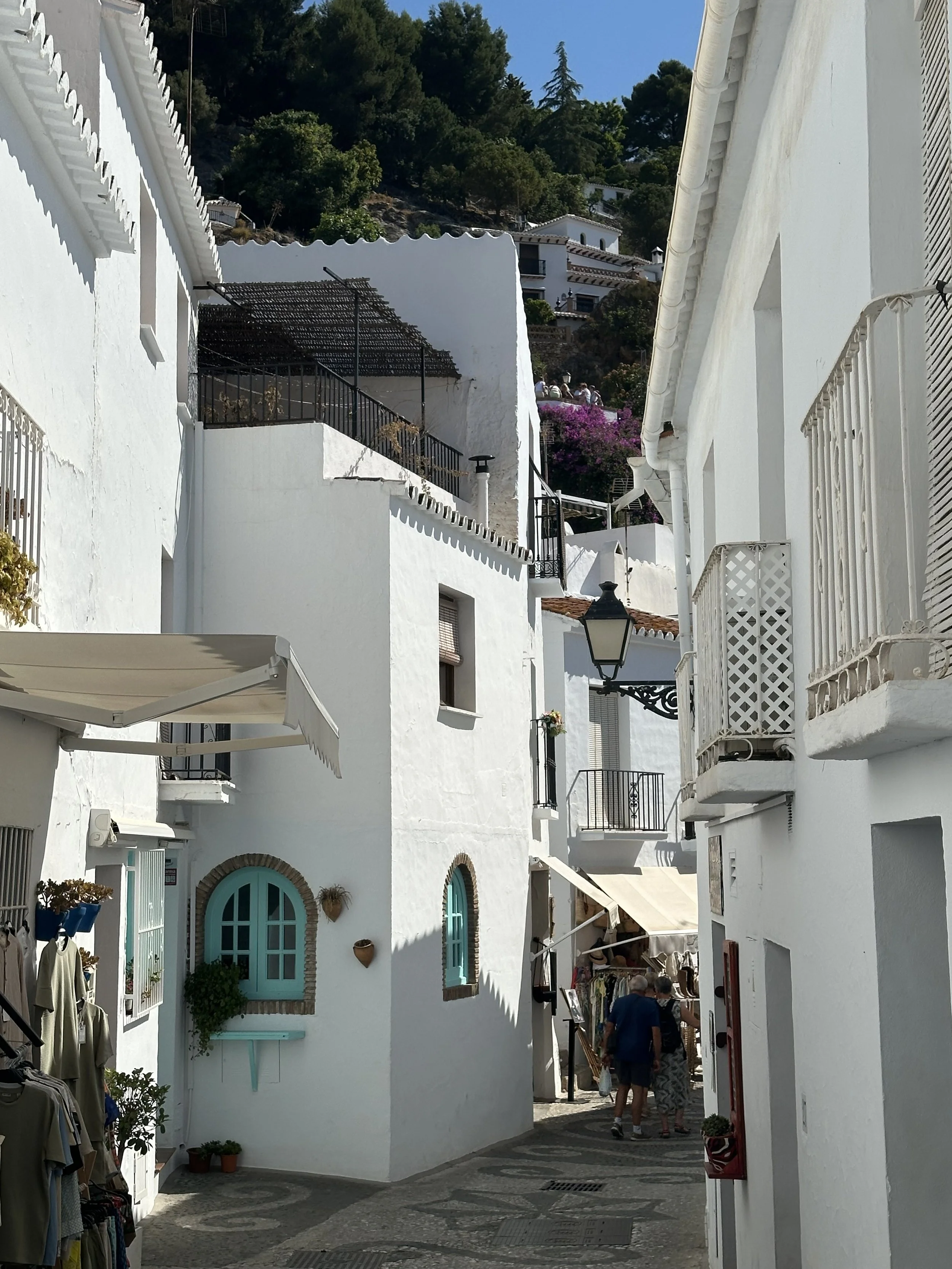
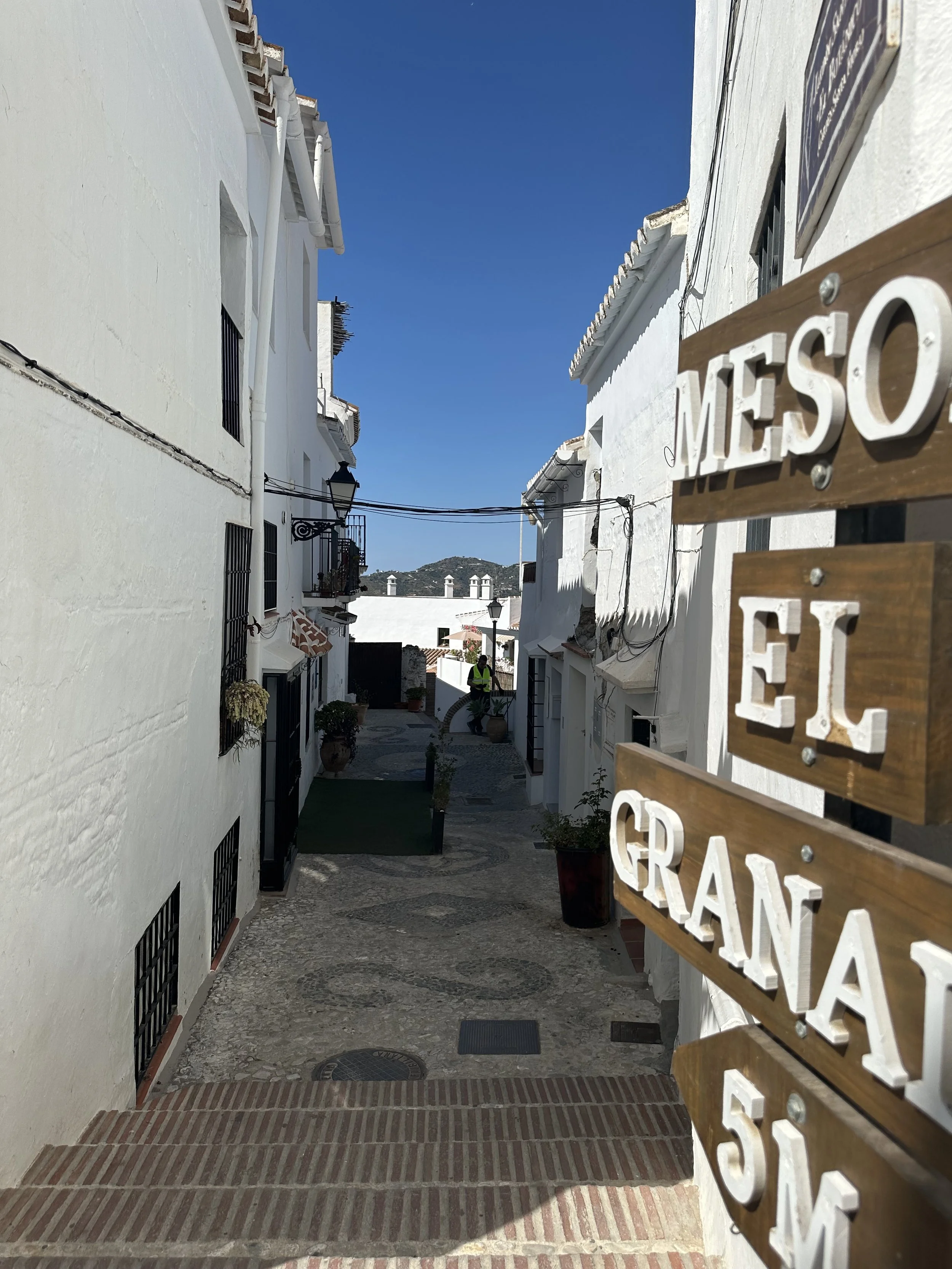
With all the stucco white, any color stands out. Some customized their doors by painting them bright color. This house chose to paint the window frames. I love it! Pops of color here… a splash of color there… along with the tiled walkways made for such a great atmosphere!
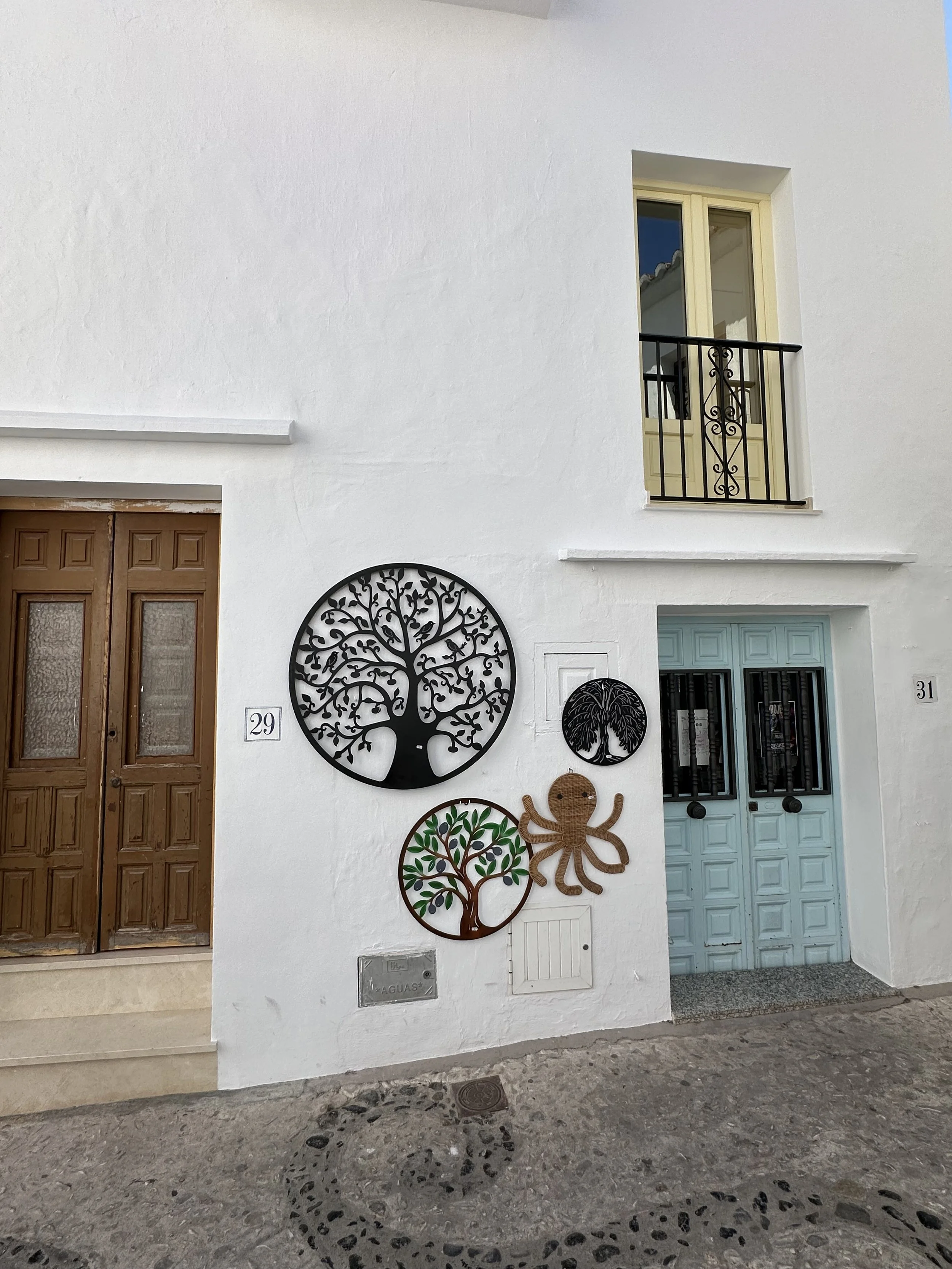
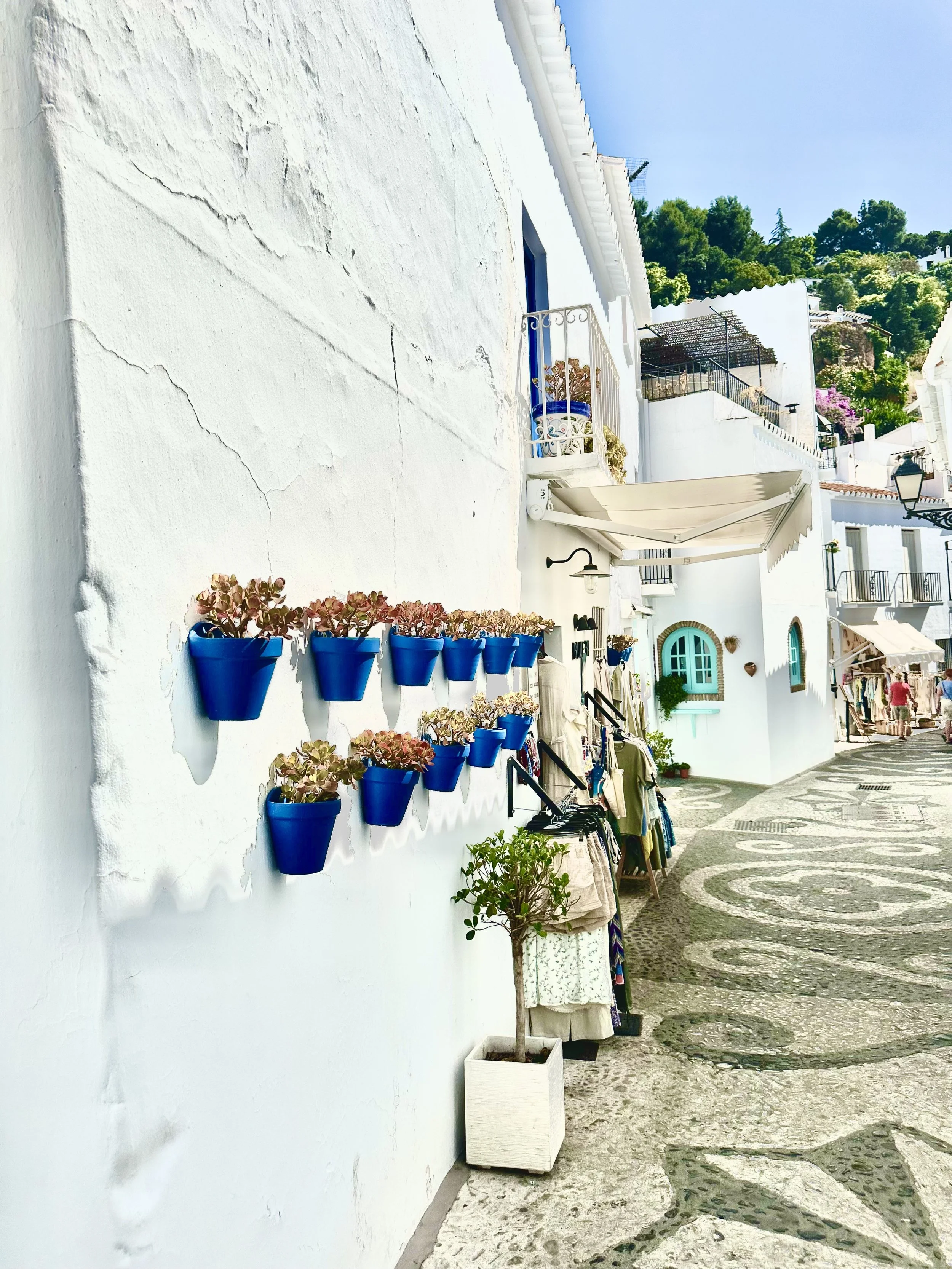
As I mentioned in the previous note, doors are sometimes painted to bring color to an otherwise white building. Backing up from the last photo, you can still see the window frames, but you can also see the colorful pots attached to the walls. This was another common way to showcase plants. By the way, this has been named the “most beautiful and well-preserved village” on several occasions…AKA White Village.
Not surprising with this view, Frigiliana is just west of the Sierras of Tejeda and Alhama National Park. Hiking is a popular activity in this area. This is paradise for walkers and hikers. Stunning views of the whitewashed buildings, the valley and the Mediterranean Sea far off in the distance.
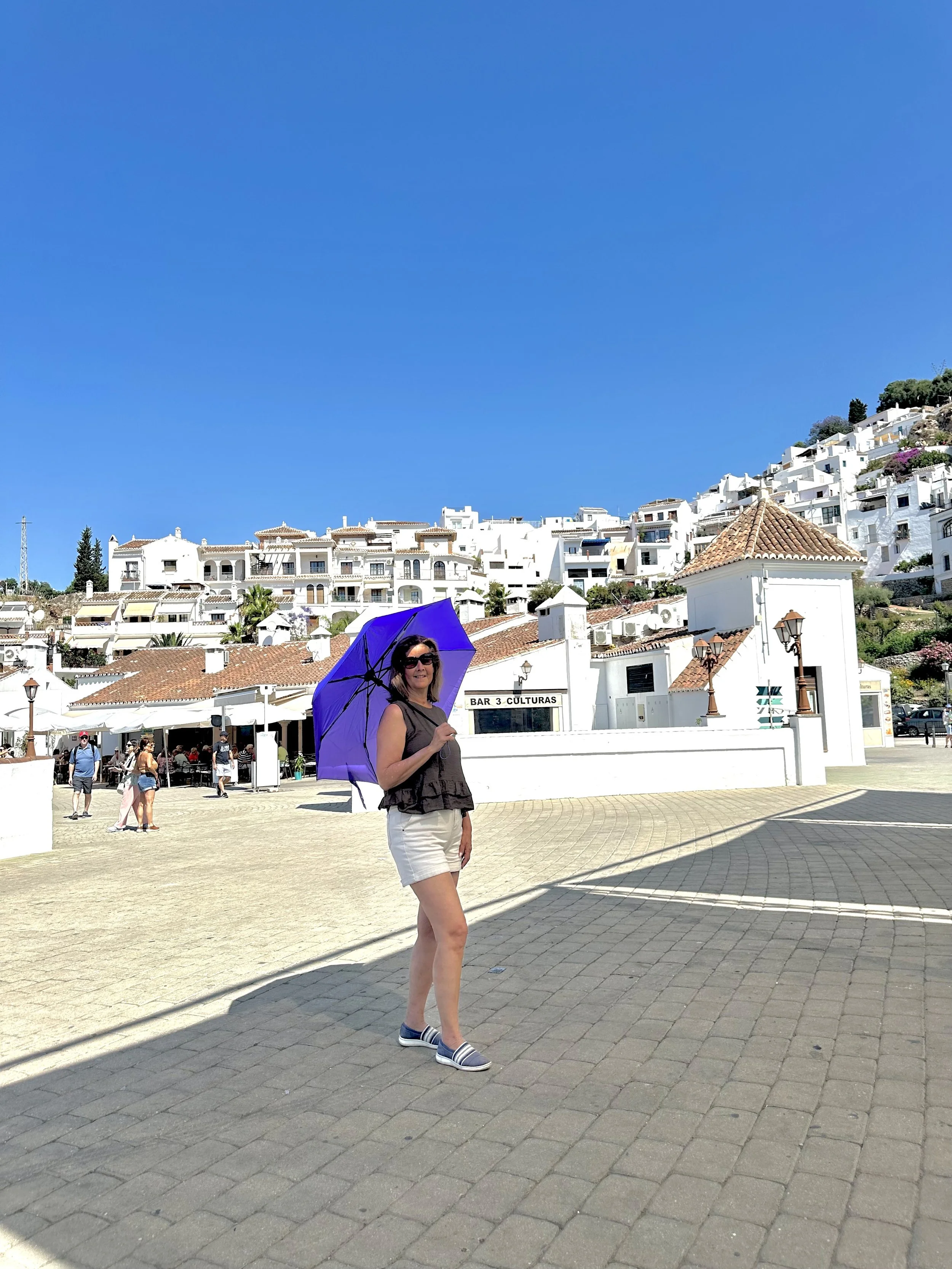
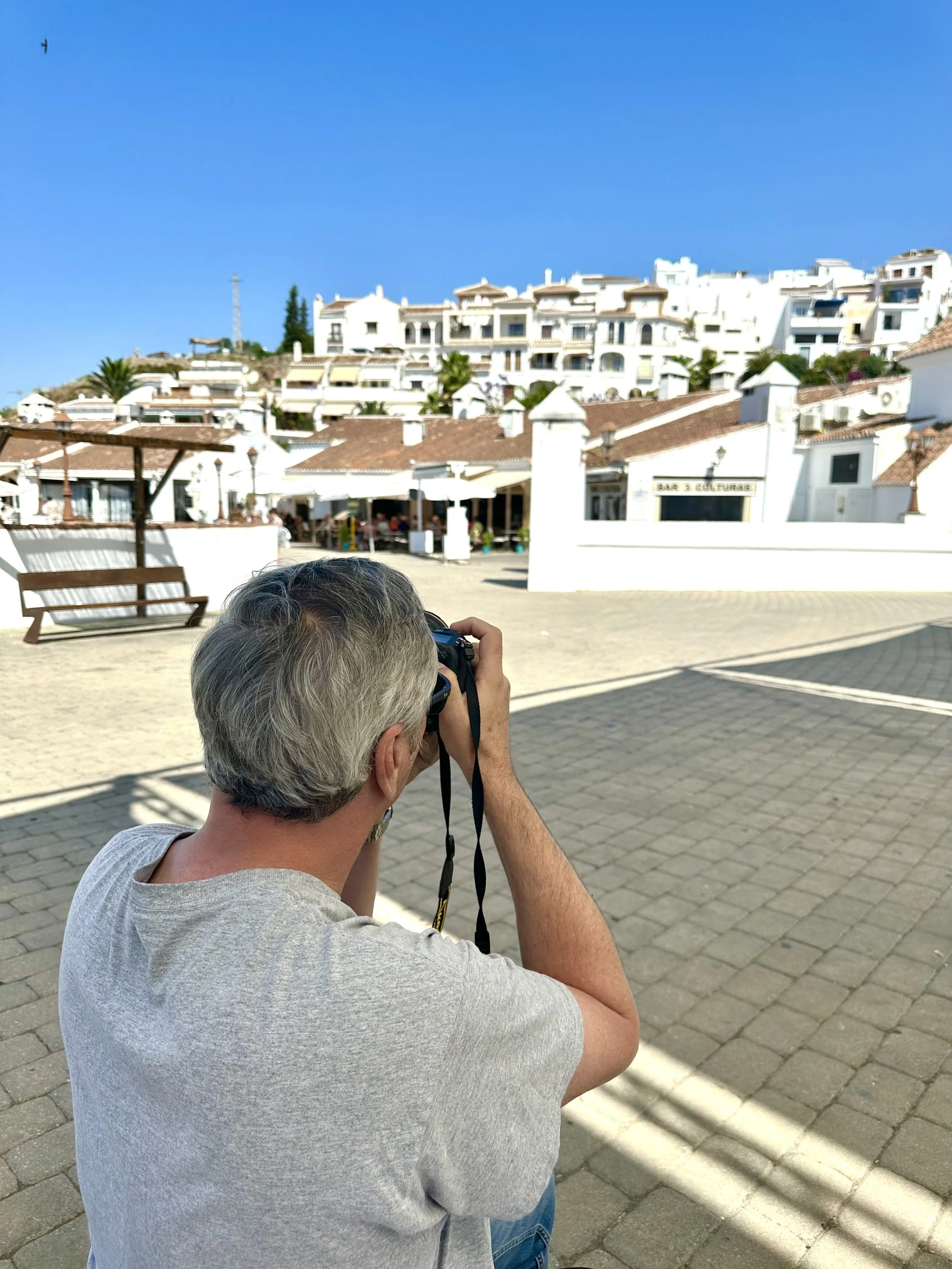
Hoping to not bring on a flare in the heat/sun, I used my umbrella as portable shade. When we stopped for a little rest, we realized the purple offered quite a color pop against the white buildings. Barry was taking a bunch of scenic photos and snapped one of me. Sadly, I lost the umbrella shortly after this was taken! No more shade for me!
Each year, for four days at the end of August, a huge festival is held. Festival de las Tres Culturas, which translates to Festival of the Three Cultures celebrates and honors the region’s ability for three distinct cultures to coexist. During the middle ages, Jewish, Muslims and Christians lived in harmony. Together they influenced the architecture, cuisine, language and traditions that makes Frigiliana and surrounding Andalusian area what it is today. The August event runs night and day with music, workshops, interactive activities, markets, culinary experiences and nightly light shows. The restaurant in this photo honors the three cultures!
Sin
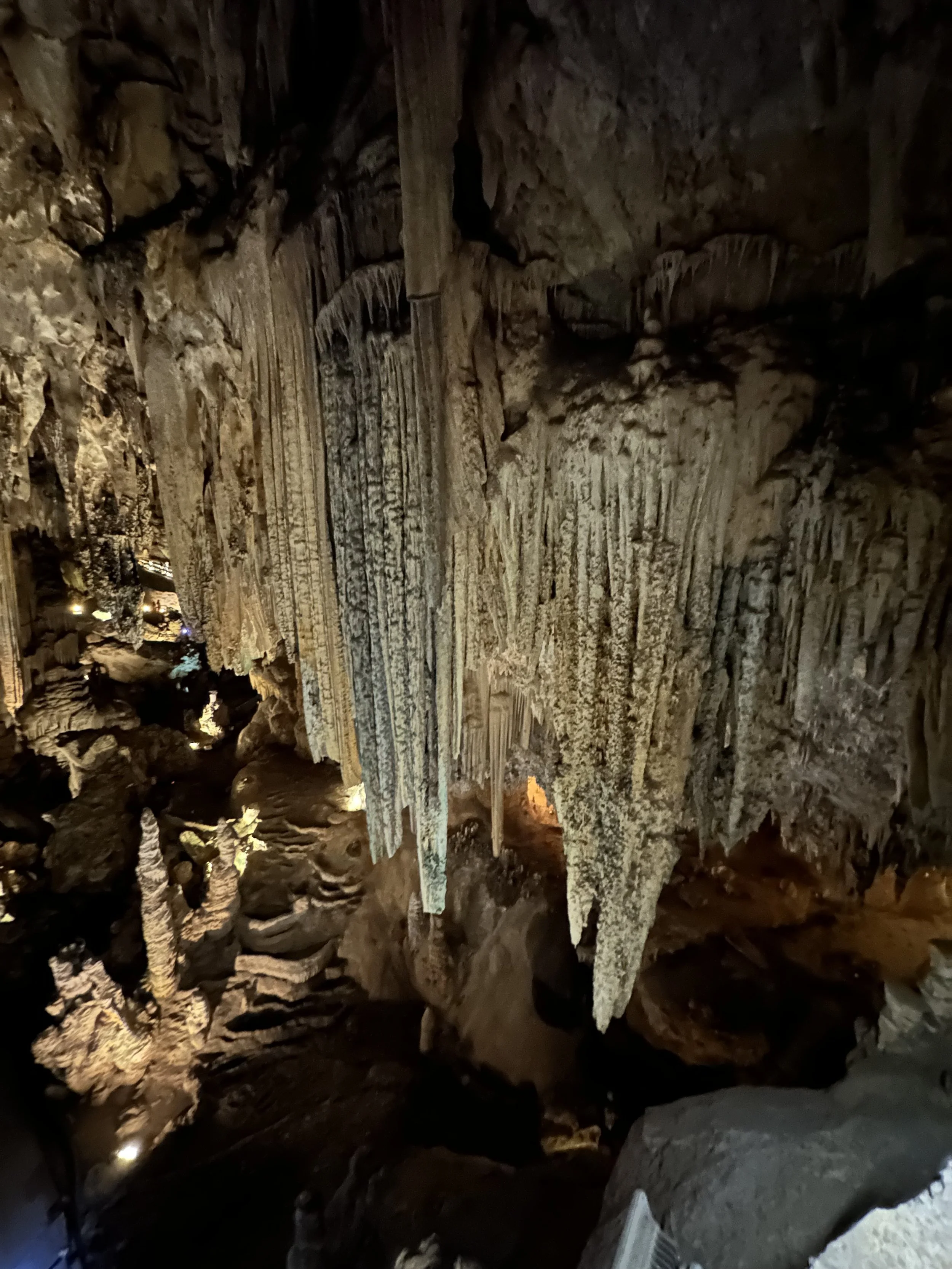
Since we were only about six miles away, we decided to visit the Cueva de Nerja (Caves of Nerja). It is believed that these caves were inhabited for over 35,000 years and formed naturally over millions of years. Information provided to us said that five million years ago, water penetrated marble rock fissures. This dissolved the limestone creating vast caverns. Walking through these giant open “rooms” was unbelievable.
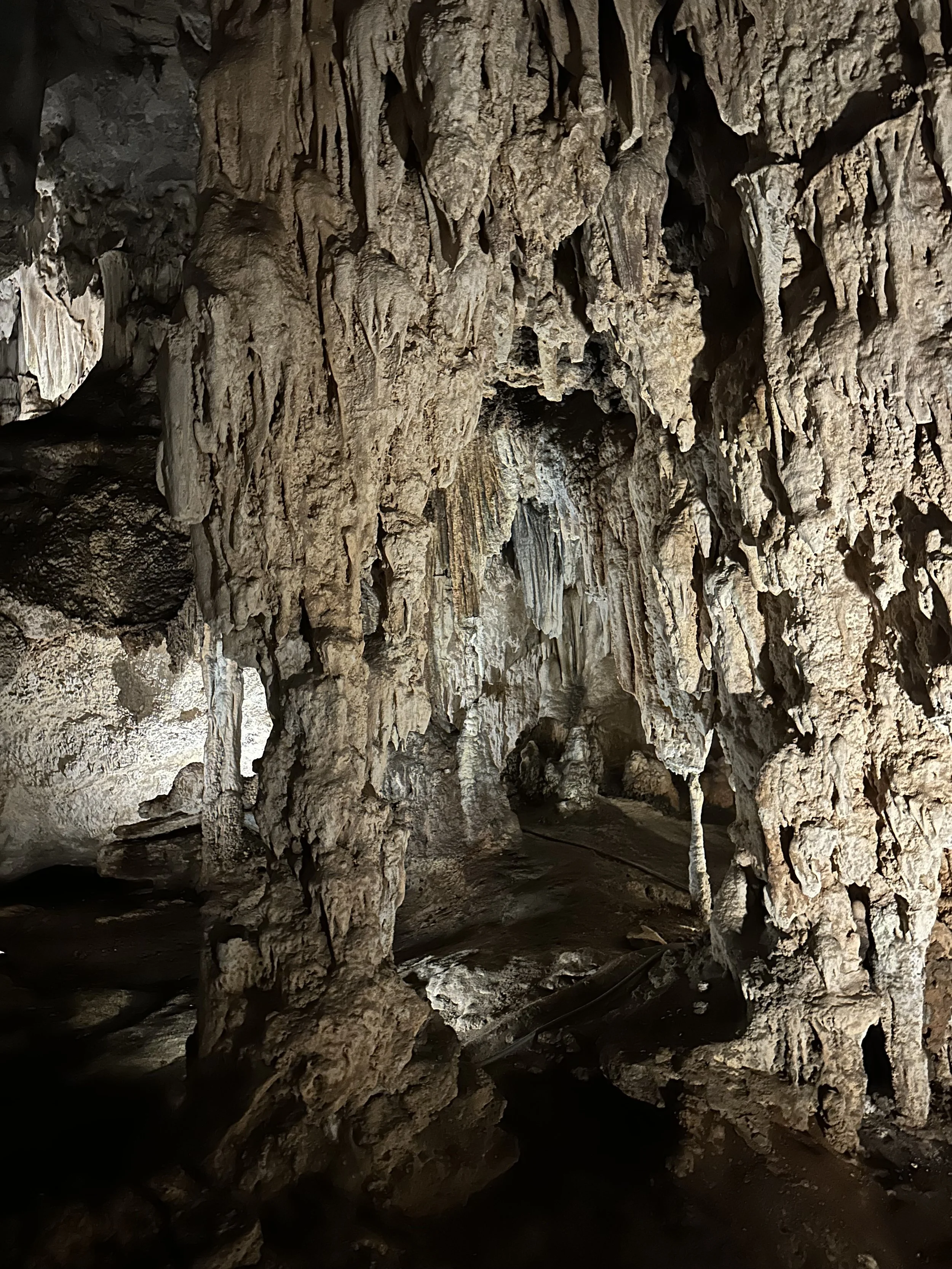
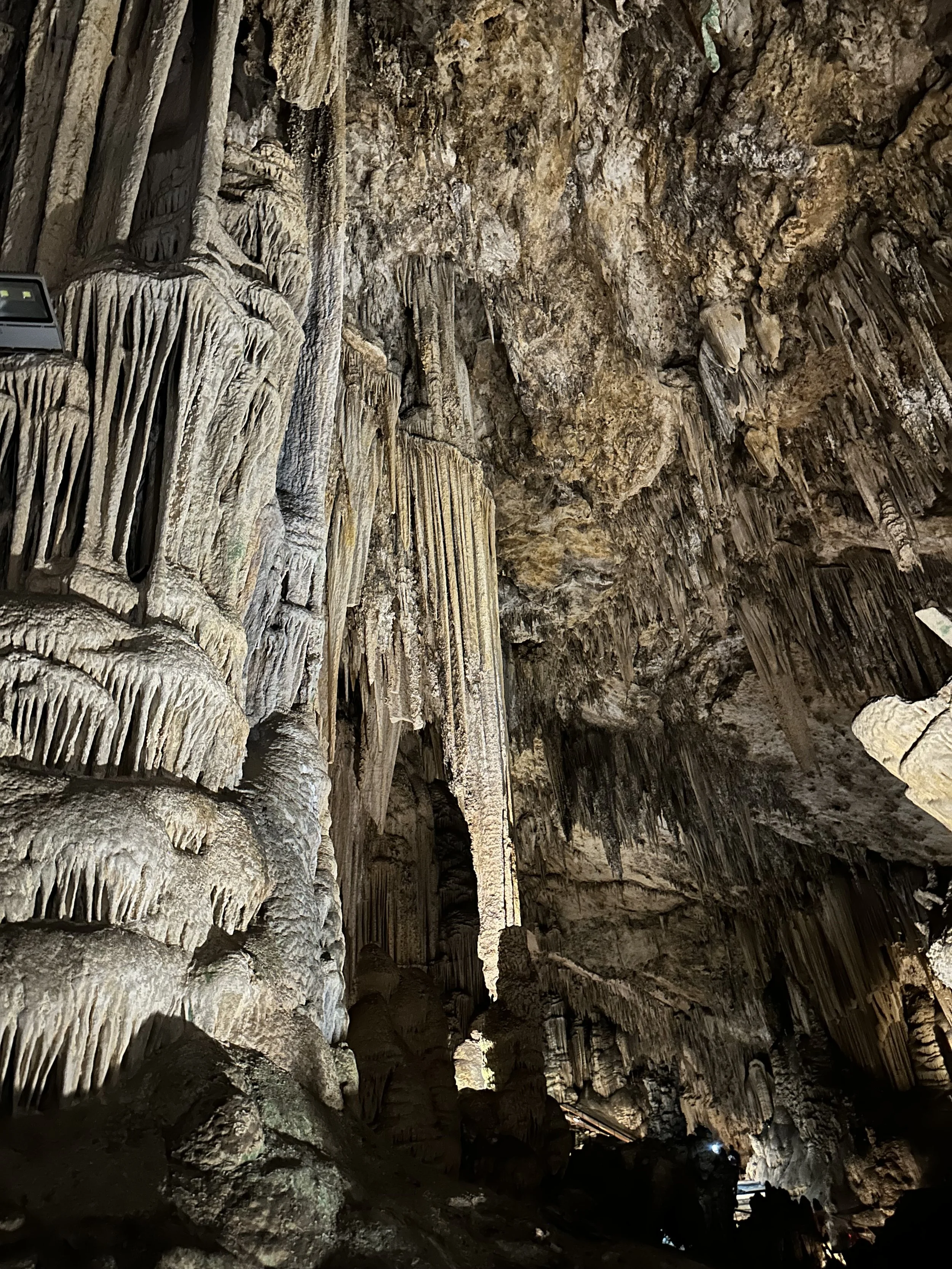
Evidence shows that up until 3,500 years ago, the caves were used shelter, living spaces and burial sites. Reserved areas deeper in the cave were for cave painting and engravings. Traces of evidence were found throughout the 5 miles of cave system. Stone and bone tools, body ornaments and items created for food preparation have been places in museums.
The audioguide told us that “not so long ago” on January 12, 1959, the caves were rediscovered. I agree… that is not so long ago. It is rumored that five friends were out exploring and saw birds coming out of a hole in the mountain. Heading in further, they found prehistoric human remains and ceramics. Can you imagine???
About a year after the boys discovered the caves, a third entrance was made to allow tourists to visit. Paintings over 20,000 years old give insight into those who lived in the caves and their interaction with nature… their lifestyle… their beliefs. What a great experience!
After climbing, what felt like 200 steps… actually four sets of sixteen, we were ready for fluids! Just outside the exit was a big building. This photo is our first view of the restaurant. It is actually the cafeteria section. The Restaurante Cueva de Nerja also has a good sized buffet, dining in meeting rooms and a fancy sit down restaurant that is elegant. All the venues have outstanding, uninterrupted sea views! After that long walk it was definitely time for a meal and a nap! Siesta time!!!