Sevilla... Historical Beauty!
Starting our exploration early is important when temperatures are estimated to be in the high nineties! It has become clear to me the importance of the traditional “siesta”. Best to get out of the heat during the hottest part of the day… but there’s more to it, which I will explain below.
Located on the banks of the Guadalquivir River, this iconic twelve-sided tower stands proudly. It has quite an interesting history! Built in the thirteenth century, its purpose was to protect the river from foreign ships. On a daily basis, the tower was used to monitor and control trade. This was not the original purpose… at the beginning, it served two important functions. At first, it provided a place to house prisoners. It was also used to store gold and precious metals. The Torre del Oro has been very adaptable to the historical and political changes of the region. Currently, it is a Naval Museum… it offers artifacts from Sevilla’s rich history as well as an excellent view of the area.
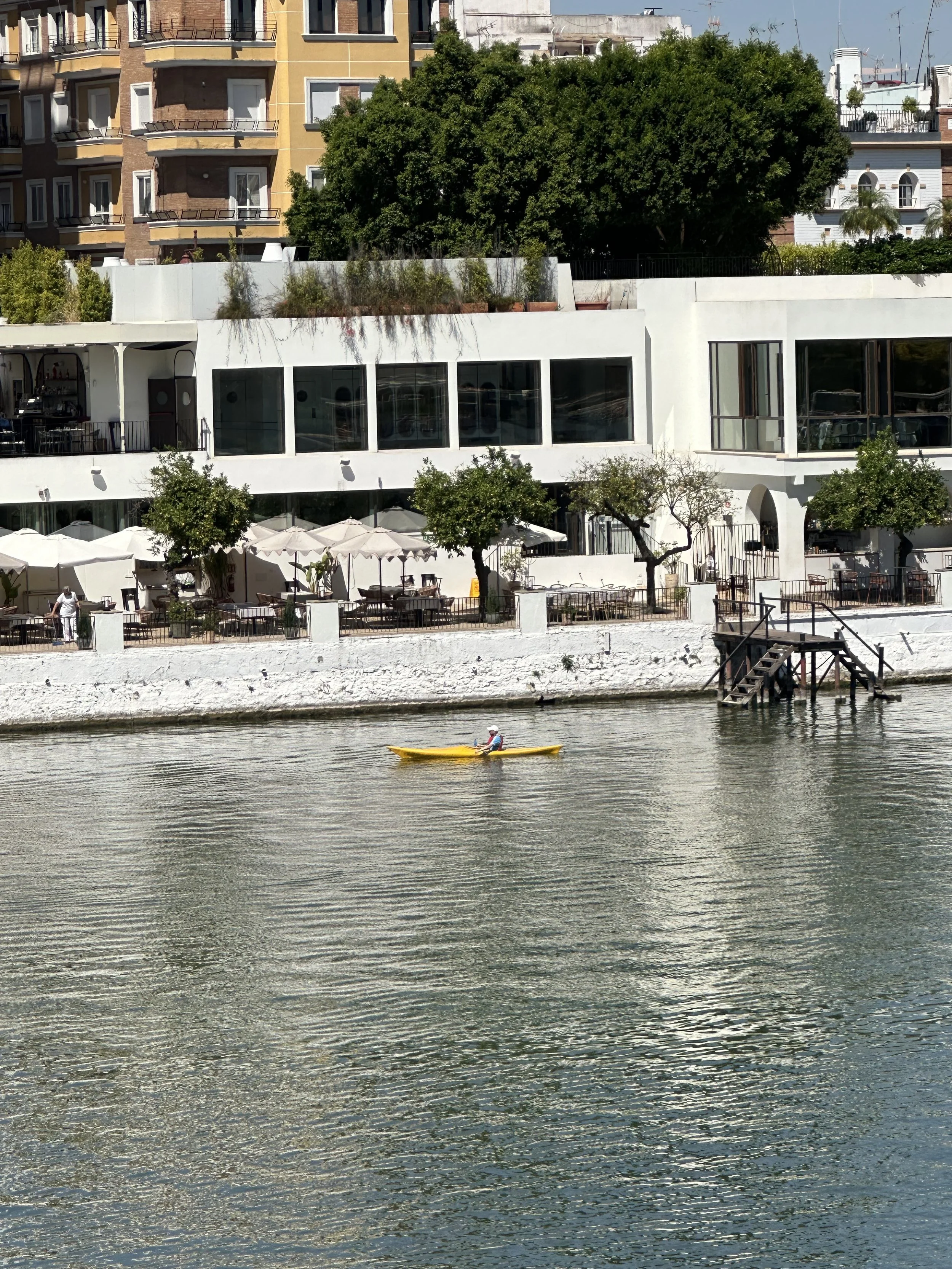
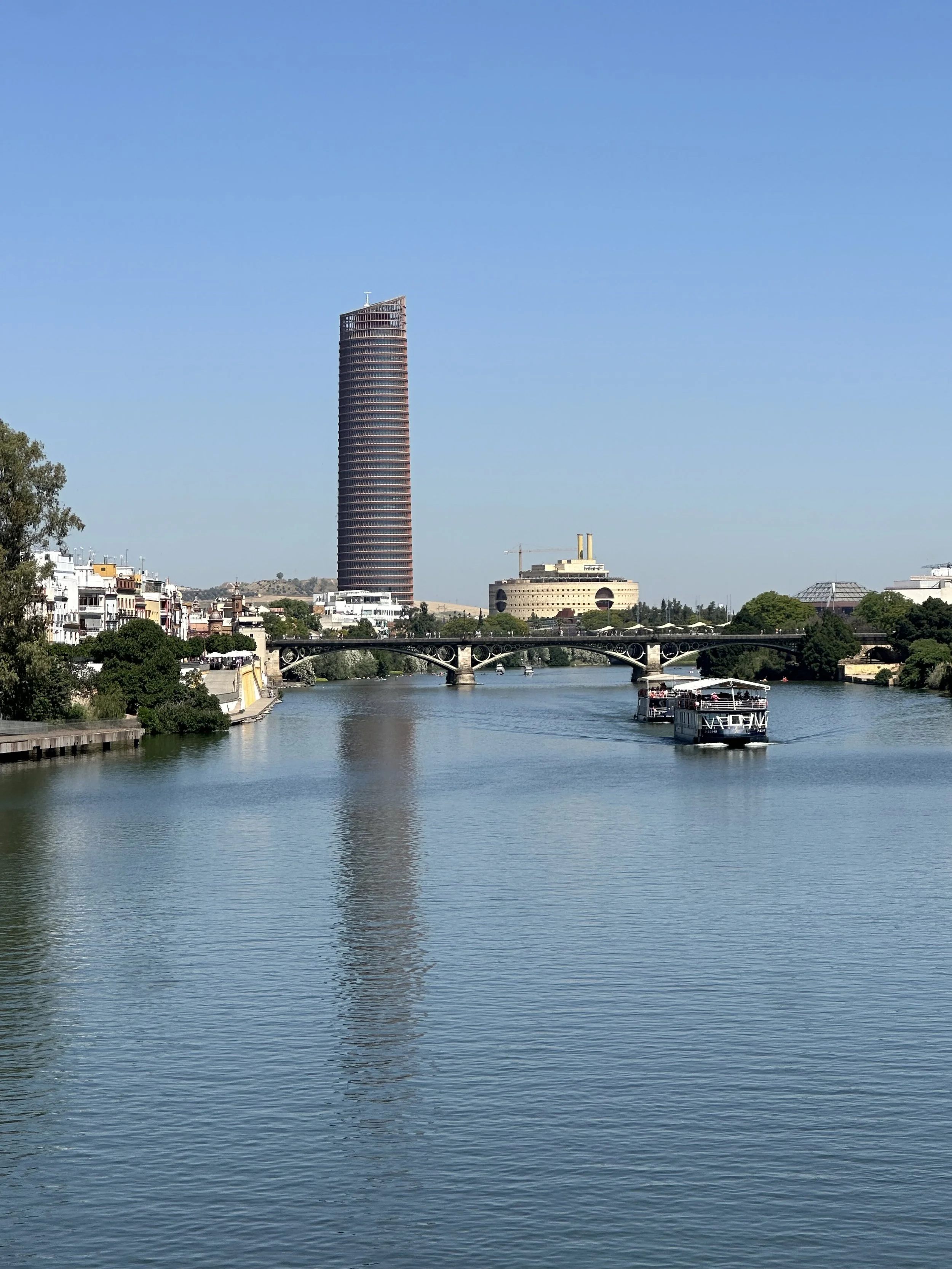
Running over 400 miles through Andalusia, the Guadalquivir River is actually only navigable from Sevilla to the Atlantic Ocean at the Gulf of Cadiz. In the upper areas, dams have been installed for hydroelectricity. The cities of Sevilla and Cordoba owe their existence to this river. It is a major transportation hub, allowing trade to occur. In addition to hydroelectricity, the river is crucial to irrigation and navigation. For tourists, it is used for rowing, canoeing and river cruises.
Walking by, I didn’t pay too much attention to the McDonalds because … who would eat there with all the food in Spain?!?!? What stopped me was the name of the street… “Paseo de las Delicias”. Kind of ironic…
Taking a respite from the heat, we sat on a park bench. There is actually, no shortage of parks (large and small) that can turn a long walk into a leisurely walk. My love for the Jacaranda tree extends to the leaves dropping off. Even when they fall from the tree, they add a beautiful carpet to the area. Before I move on… a little more about “siesta”… it is an incorrect stereotype to think of the Spanish as lazy because of the afternoon nap. In this day and age, shops might close for a couple of hours to take a quick power nap but it is mostly used for long lunches or to run errands. With many people commuting into the city for work, there would be nowhere to take a nap… but I still love the idea of taking a break in the heat of the day. It definitely makes sense considering the late hours the Spanish eat meals and socialize. The towns we have visited have been nothing short of lively! So fun!
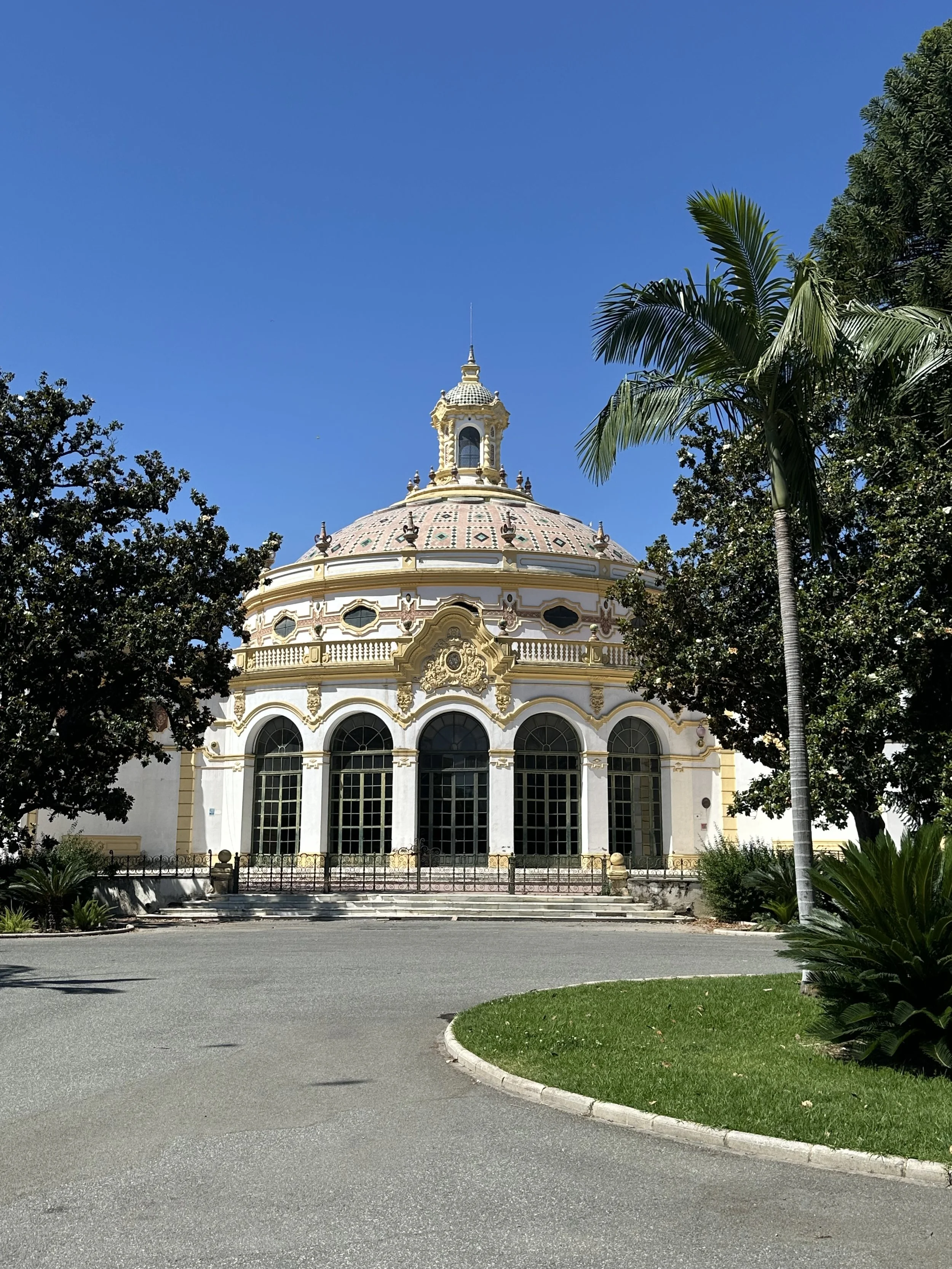
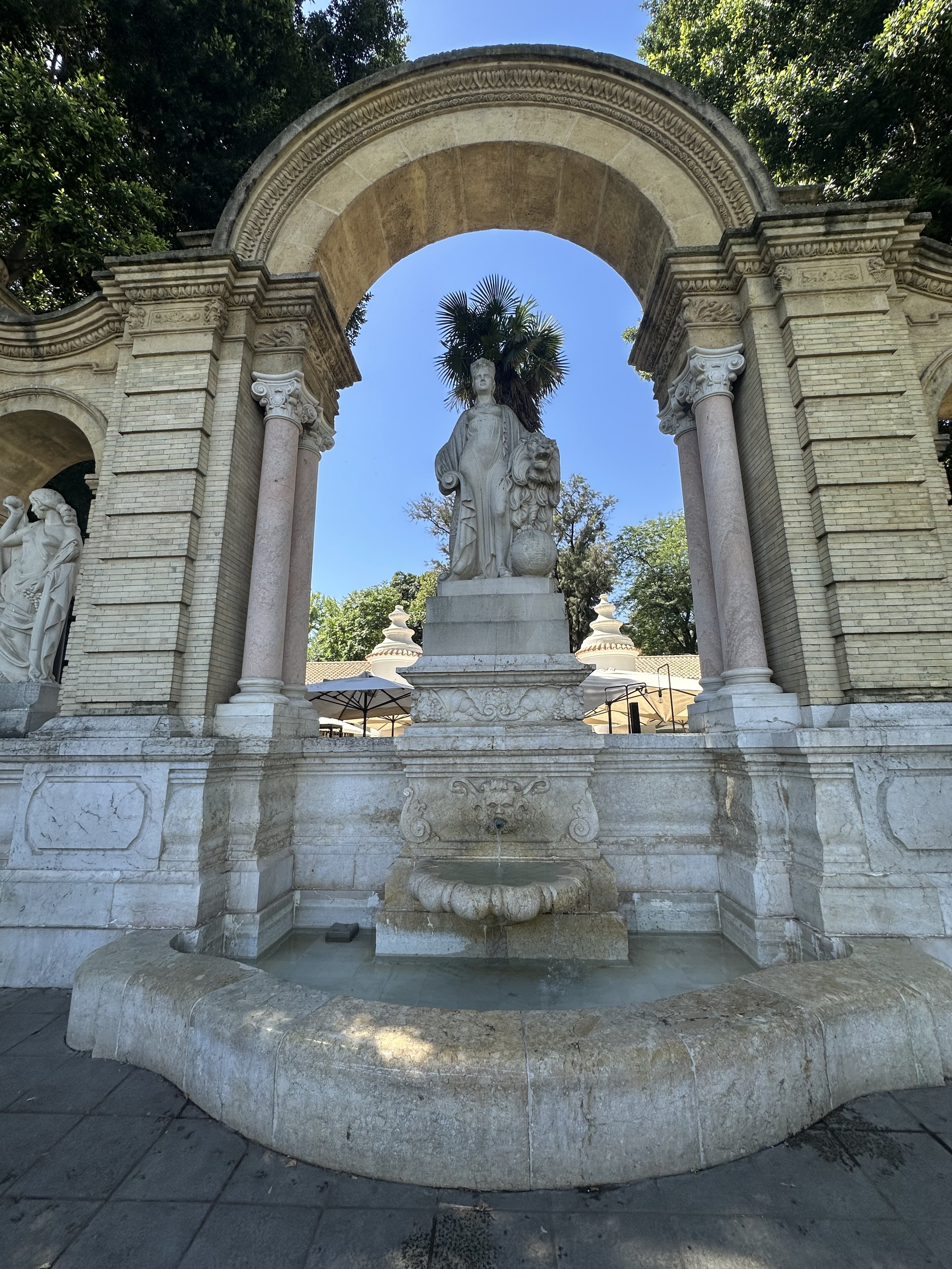
Crossing the river and circling a roundabout, we passed the beginning of Maria Luisa Park. This beautiful building was part of the city development for the Ibero-American exposition. With quite a colorful past, it started out with a dual purpose. Part of this domed building held a casino, while the other section was the Theater of the Exhibition. In 1936, it was transformed into a theater. In more recent times, control of this building has switched hands. In 1977, it was assigned to the Ministry of Culture and in 1985 it returned to the hands of the City Council. Today it is known as the Institute of Culture and Arts of Seville (CAS). Offering a variety of shows, you can attend music from pop to lyric, jazz and flamenco dancing and the circus. It is also home of Seville Film Festival and Flamenco Biennial.
One of the major highlights of Parque Luisa Maria is the Plaza de Sevilla. Built around this approximately 1700 foot canal/moat, our first view was impressive. We entered from two different vantage points. This was first. This perspective focused on the water feature that had quite a bit of wildlife, while being used by tourists for rowing.
Graceful beauty… I could sit all day and watch swans float through the water.
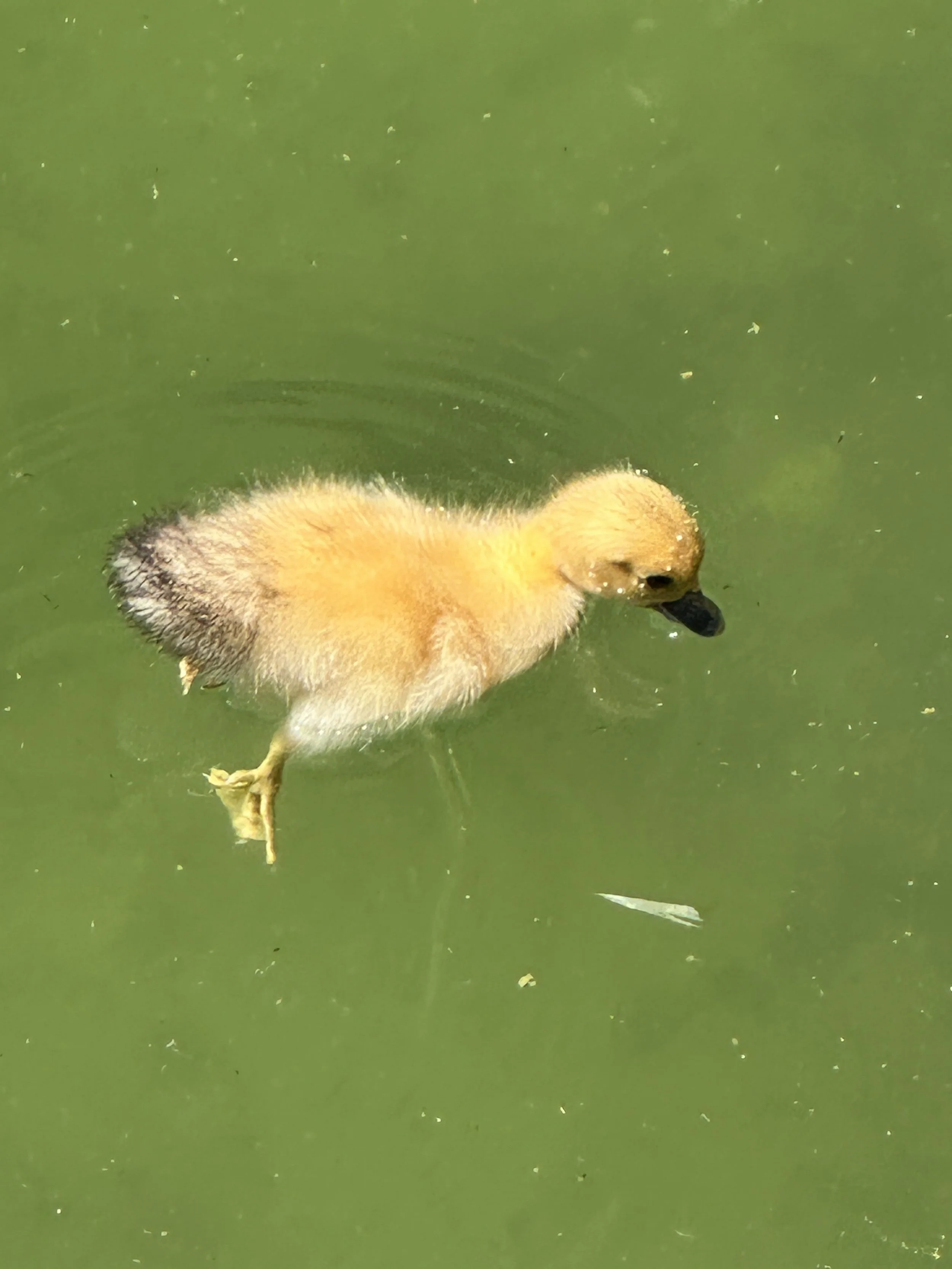
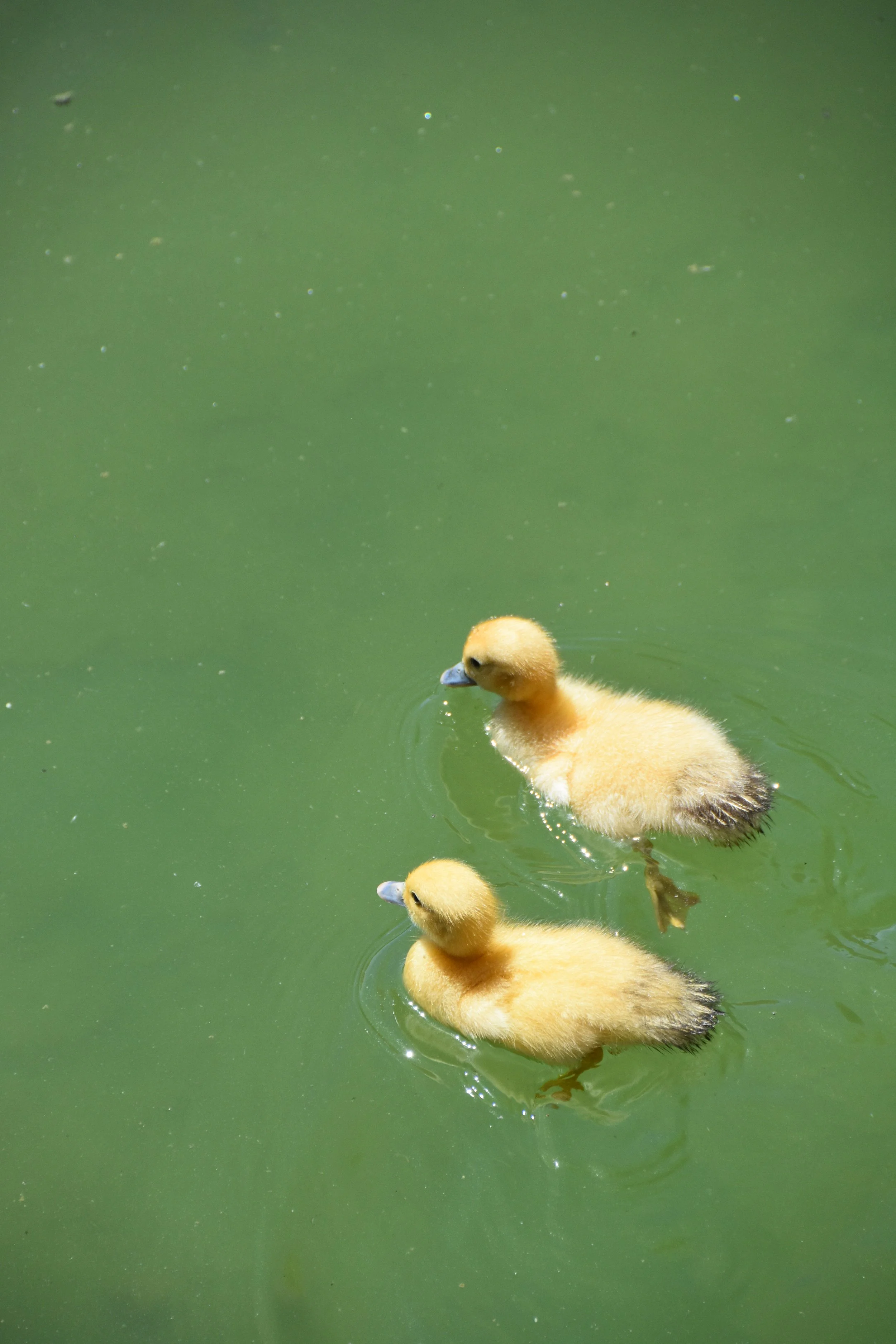
Springtime is baby chick time! We must have seen fifty new babies. Some gathering a bit of independence and venturing off to explore. Others still stuck very close to mama duck. Pretty cute!
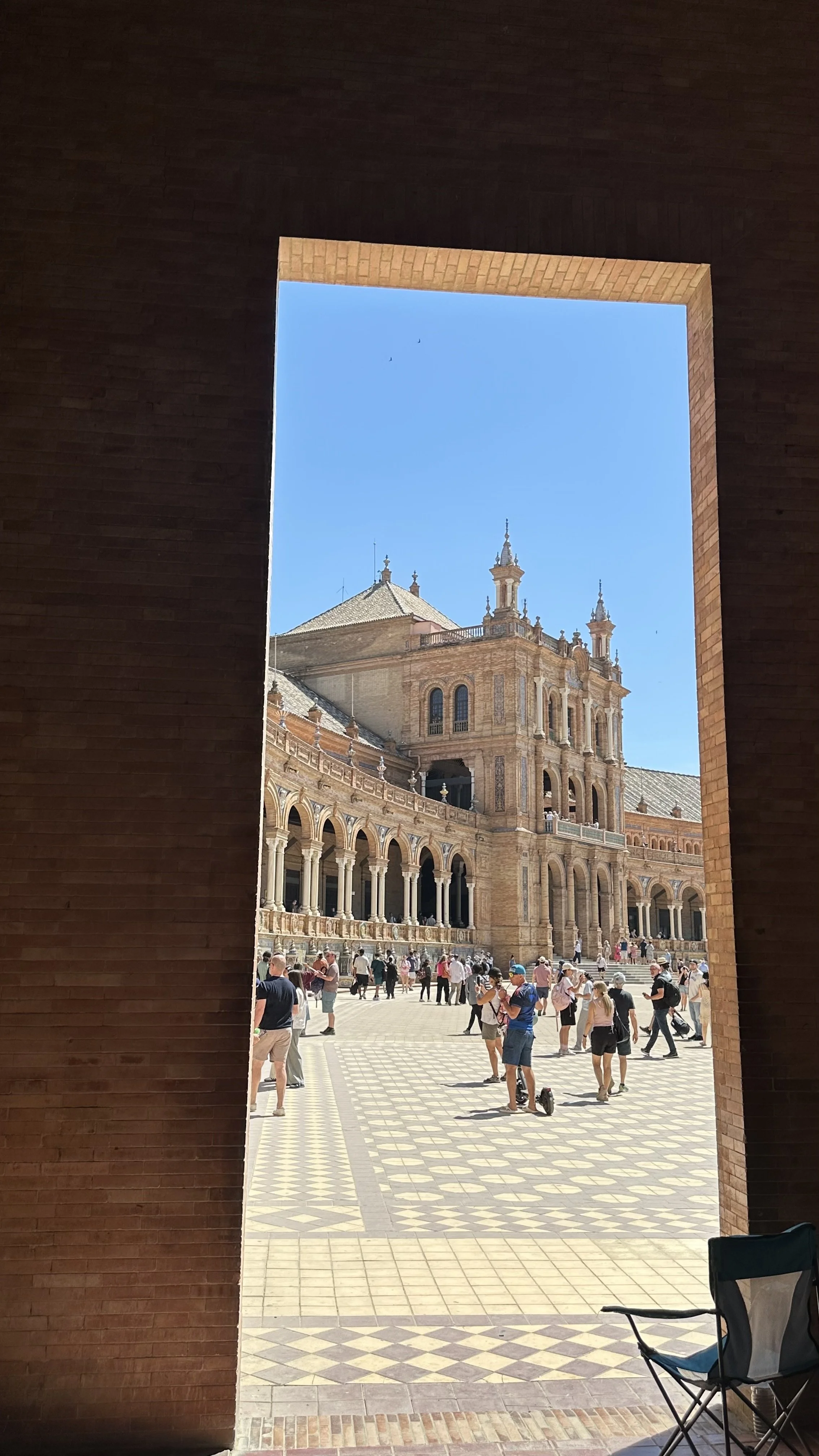
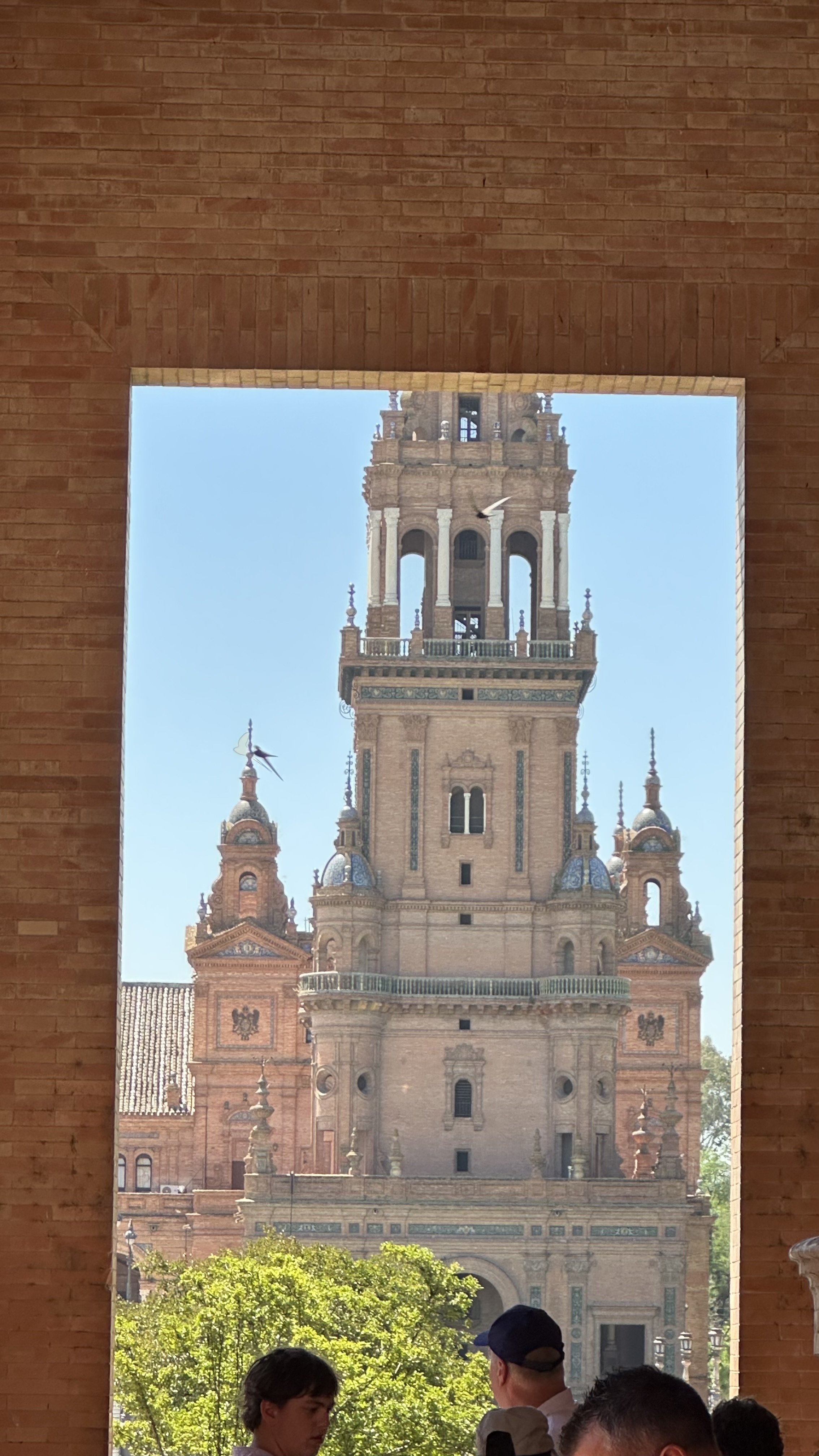
Leaving the water entrance, we headed underneath the brick courtyard to the square shaped entrance. It was quite stunning to see the famous arched. The blending of Spanish architectural styles was apparent from first view. It was so impressive to see the first sight be framed by the square opening.
Still wanting to stand back to take in the full view, we took only a few steps inside. It is really a lot to take in! What a beautiful design… The main structure is a sweeping semi-circular palace that houses government offices and cultural institutions. Its towers bookend the plaza, offering symmetry and grandeur. Photographing this was a bit challenging due to the many construction projects going on. Construction has been a common theme throughout of Spain roaming…
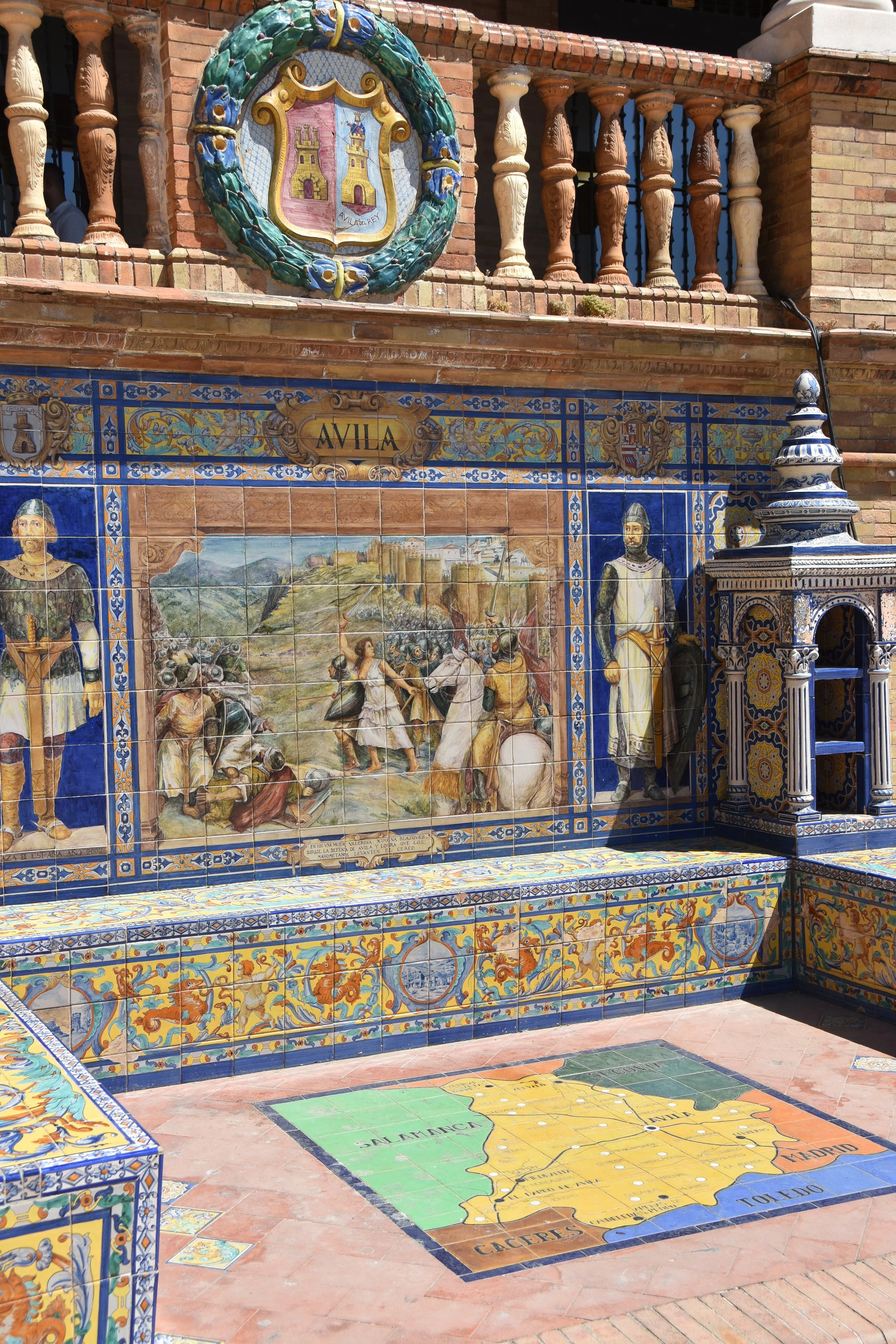
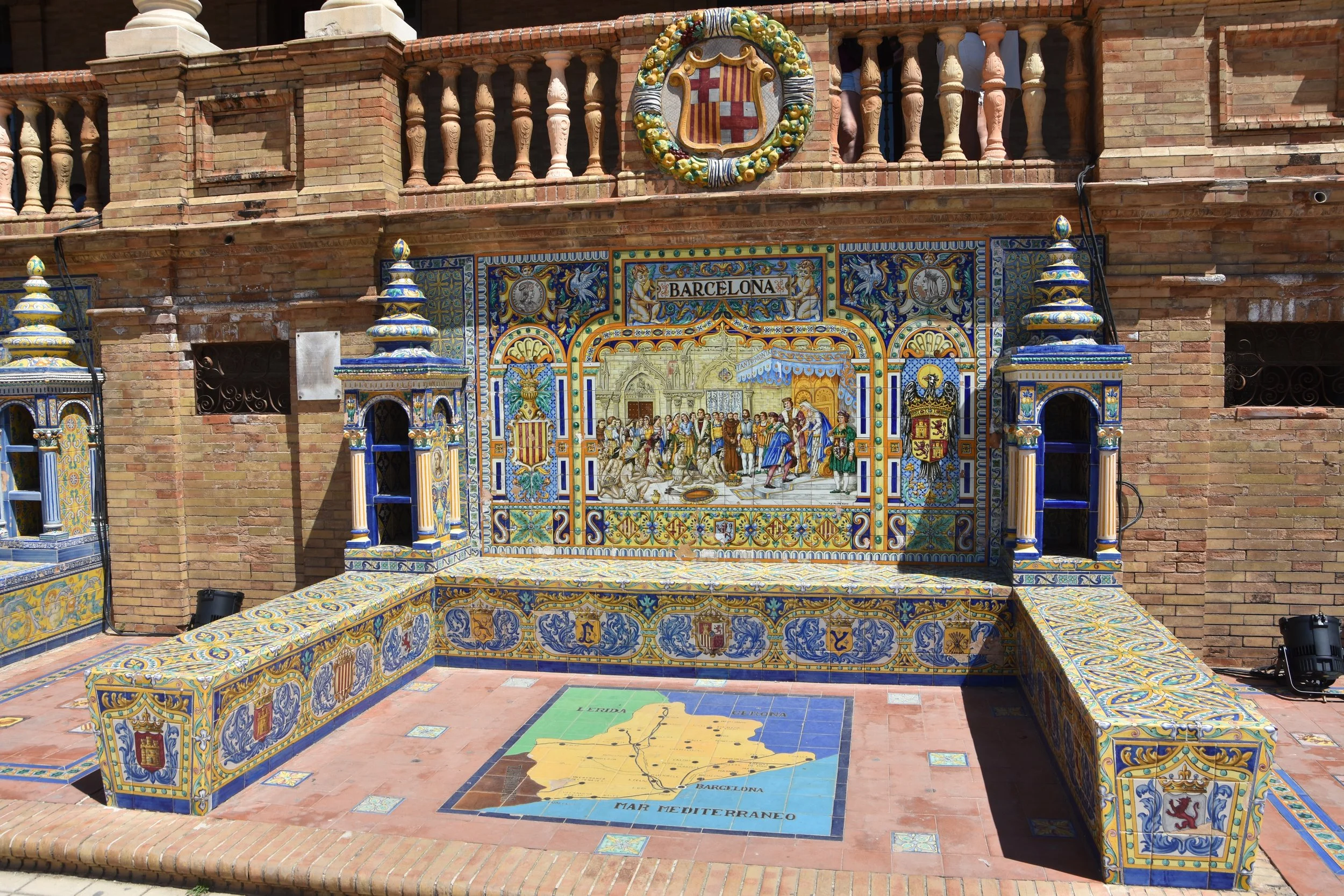
This part of the architecture was intriguing! Along the perimeter of the ground level was a series of 48 tiled alcoves with benches. Designed to represent the Spanish provinces, the ceramic tiles, mosaics and detailed maps each had a tiled plaque with the province name in alphabetical order. Looking for alcoves without tourists, I was able to get at least two that I’d visited… without any people in it. Several years back we spent time in Avila (L) and of course, we have been to Barcelona (R) many times. Click on the photo to open it up and get a closer look at the craftmanship!
With temperatures soaring, these fans were selling like hot cakes! The same lady selling these, also had coolers of water. Quite resourceful…
Here is a closeup of the tilework that can be found around the entire semi-circle. Predominantly blue hues, splashes of yellow was a beautiful addition. Similar posts lined the canal side where we first started exploring. It’s not just the posts, the banisters are also made of the same tile patterns. Contrasting ceiling tiles and the walls of brick complimented each other.
After watching the flamenco dancer from above, I decided to take a photo through a gap in the iron railing. Street artists of this type can be seen throughout the city. Accompanied by an awesome guitar player and another dancer, the lady in red shoes kept the crowd entertained for the entire time were visited the Plaza.
Splitting the semi-circle in half, this structure is the center point. The flamenco dancer was just to the left outside of the photo. The covered area was a nice respite from the blazing sun! If only there had been benches in that area, it would have been perfect.
Four identical bridges crossed the moat and led to an open plaza. Currently three of the four bridges are under construction. Materials were stored in the wide-open space, so it was unusable. Each bridge represents one of Spain’s ancient kingdoms: Castille, Aragon, Navarre and Leon. Due to the high number of visitors, there is talk of charging an admission in the future. Despite this, I would absolutely pay to visit again. My guess is, a ticket would include access to areas of the park as well as the Plaza itself. I don’t know if this will ever happen, it’s just an idea being tossed about.
Looking from one bridge to the next, you can see the scaffolding for all the construction. From this view, you can also see the canoe type boat rowing through the moat. At one end of the waterway, you will find a boat rental company. If the sun didn’t give me so much trouble, I would have definitely done that! It would be such a serene thing to do. Also, the photos you could take from that angle would be fun!
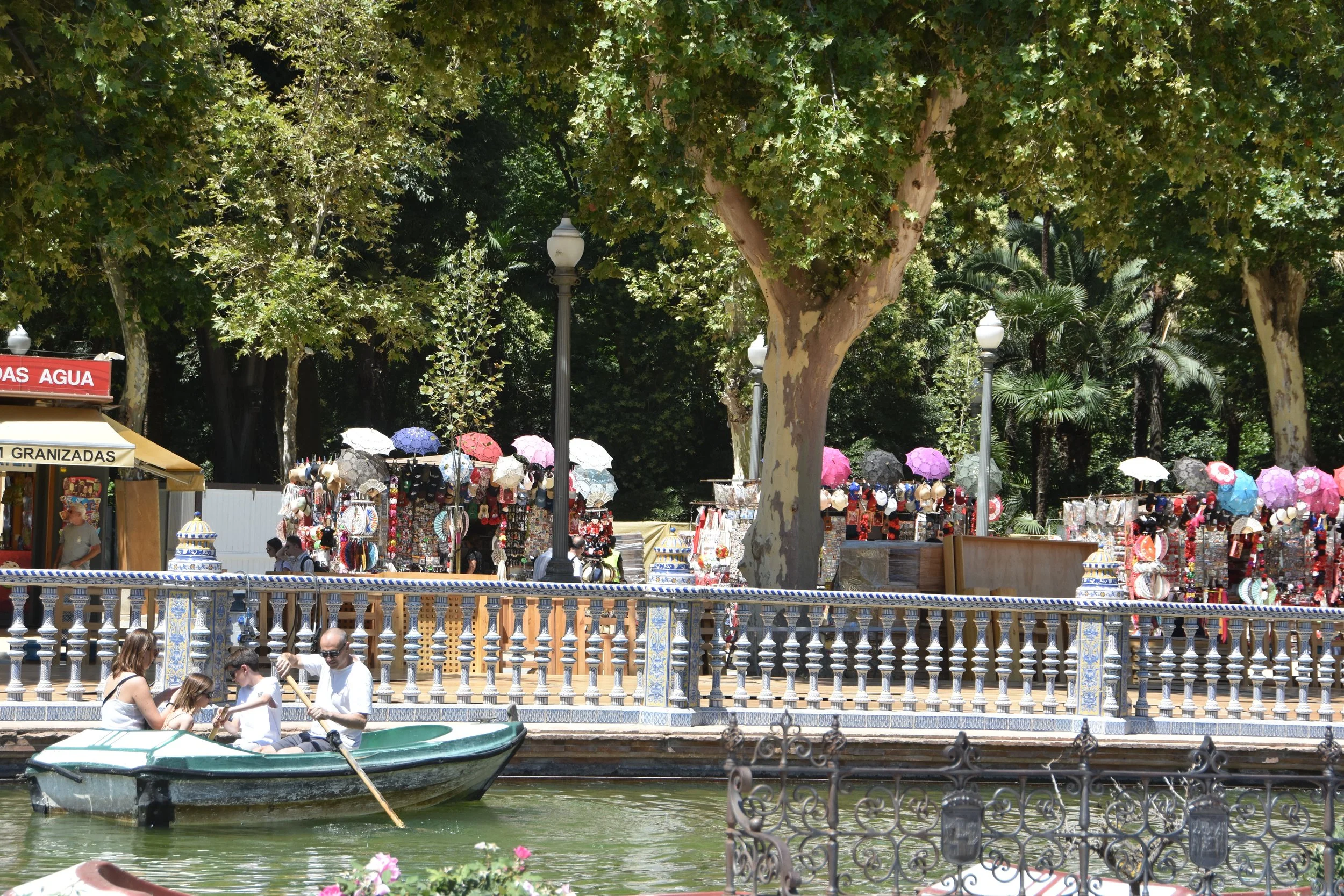
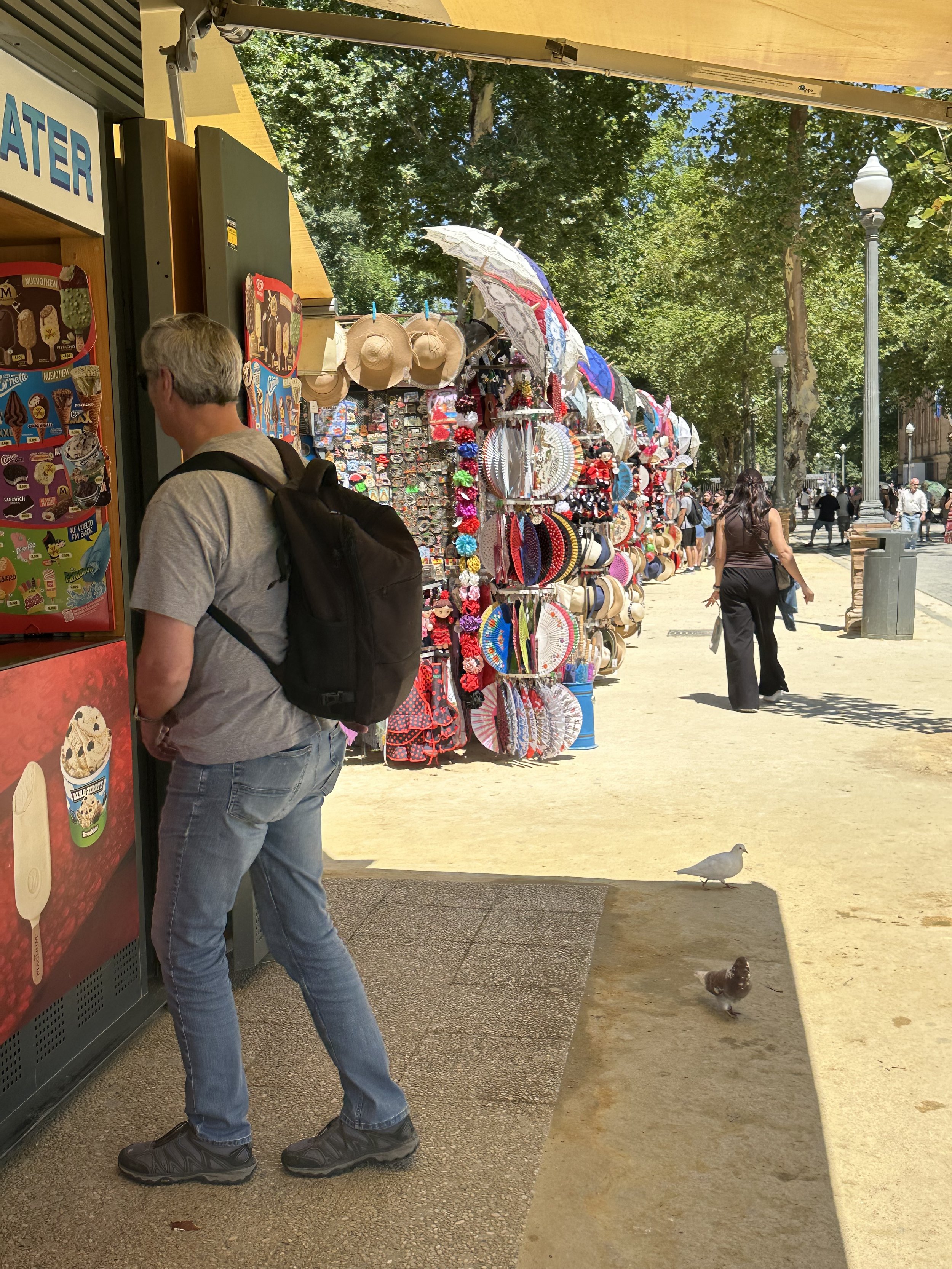
At the edge of the park, just outside the plaza, a few souvenir booths sold postcards and other goodies. There was also one drink shack. Barry headed over to buy water but they only took cash and he only had a 50 euro bill. The nice man didn’t have change. So, we moved on to find a restaurant for a little food and a beverage.
Walking down the pathways of Parque Maria Luisa, we enjoyed the cool breezes cutting through the heat. All of the seating areas were full because it was so hot. It really didn’t matter that i wasn’t a weekend… still busy, busy, busy! This park runs along the Guadalquivir River making it a very fertile area. Well-manicured, we enjoyed our time amongst the greenery!
You can see how lush the park is… thick foliage! Formerly the gardens of the Palace of San Telmo, the land was donated to the city of Seville in 1893 with the intention of creating a beautiful green space. Consisting of 400,000 square meters of trees, gardens, pavilions and roundabouts, this is the largest greenspace in the country of Spain. European design is mixed with Islamic tradition, one of the pavilions is dedicated to the Americas. This particular pavilion is populated with many doves…
We walked and walked and still found ourselves in the park. So many unique, but beautiful sections. We always leave something to do “next time” and spending an entire day with a picnic in this park area is on our future list. There is positively enough to explore for an entire day…