Busan, South Korea: Part Two
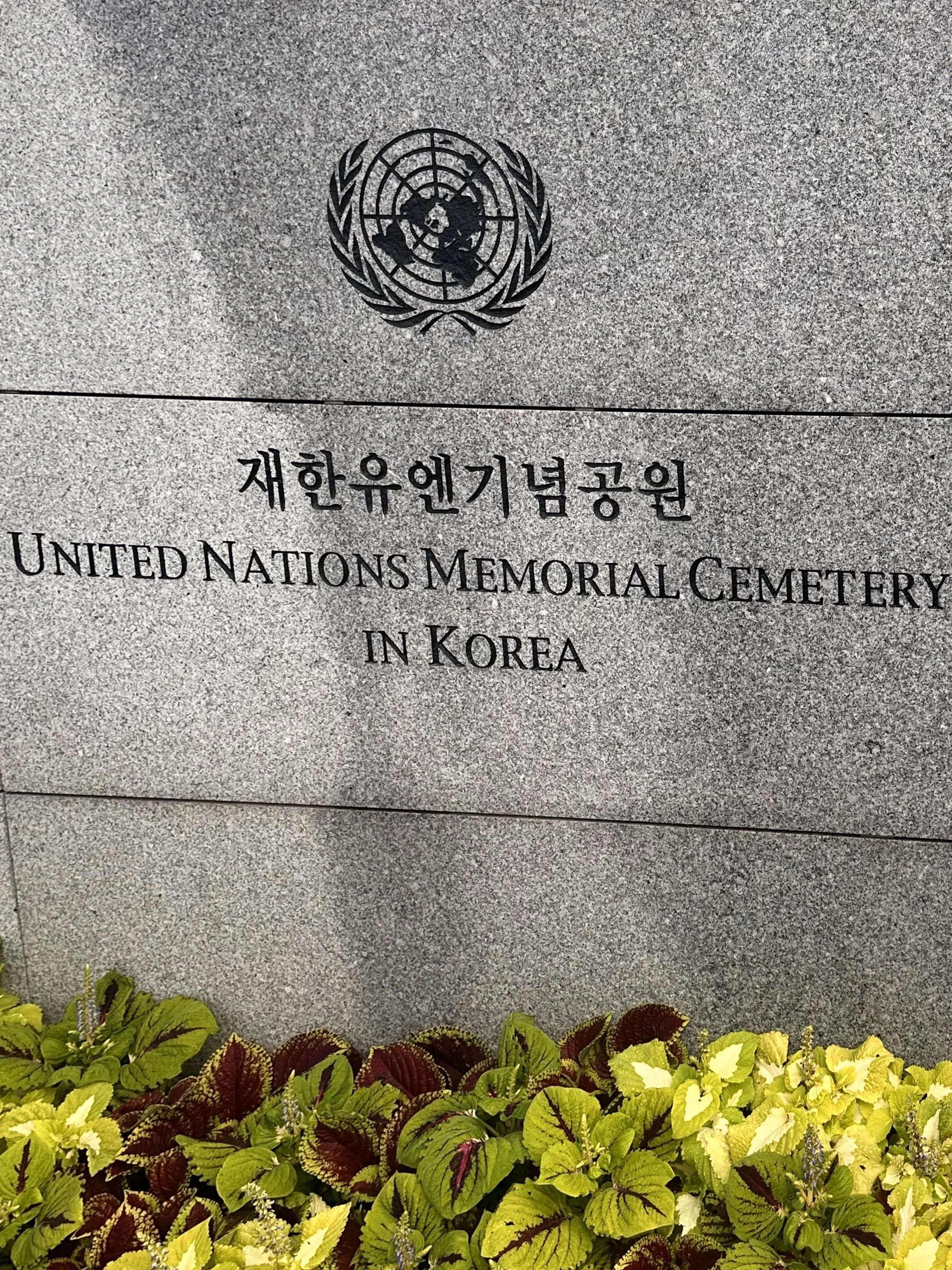
Approaching the United Nations Memorial Cemetery was impressive. As expected, the mood was somber. With the rain still falling, it wasn’t as crowded as it could have been. The only United Nations designated cemetery in the world is located in the Nam-gu District of Busan. After returning to the ship, I learned that these steps went to a Memorial Sculpture Park… I really wish I’d been more inquisitive and checked it out. It seems something is always missed that makes me want to return to see more…
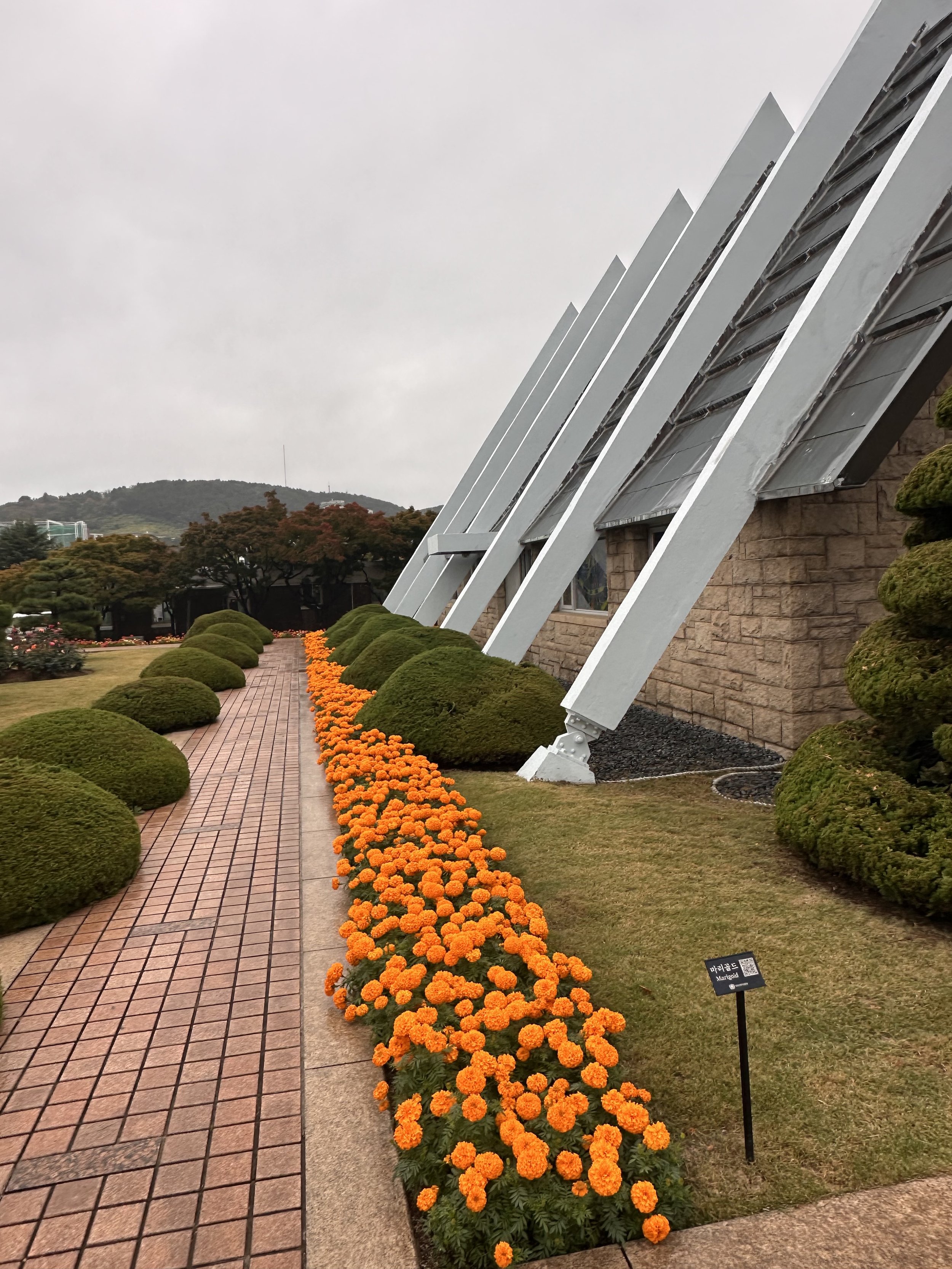
The photo on the left is the Memorial Service Hall. Though we would call this an A=frame, the Korean architect who designed it says “triangular”. Inside, church-like pews for visitors to sit and watch a 12-minute historical documentary. Straight across from this building is the Memorial Hall. It was quite interesting… there was a wall of roughly 2,300 United Nations service members who are interred at this cemetery. Behind the Memorial Hall, more manicured flowers and shrubs.
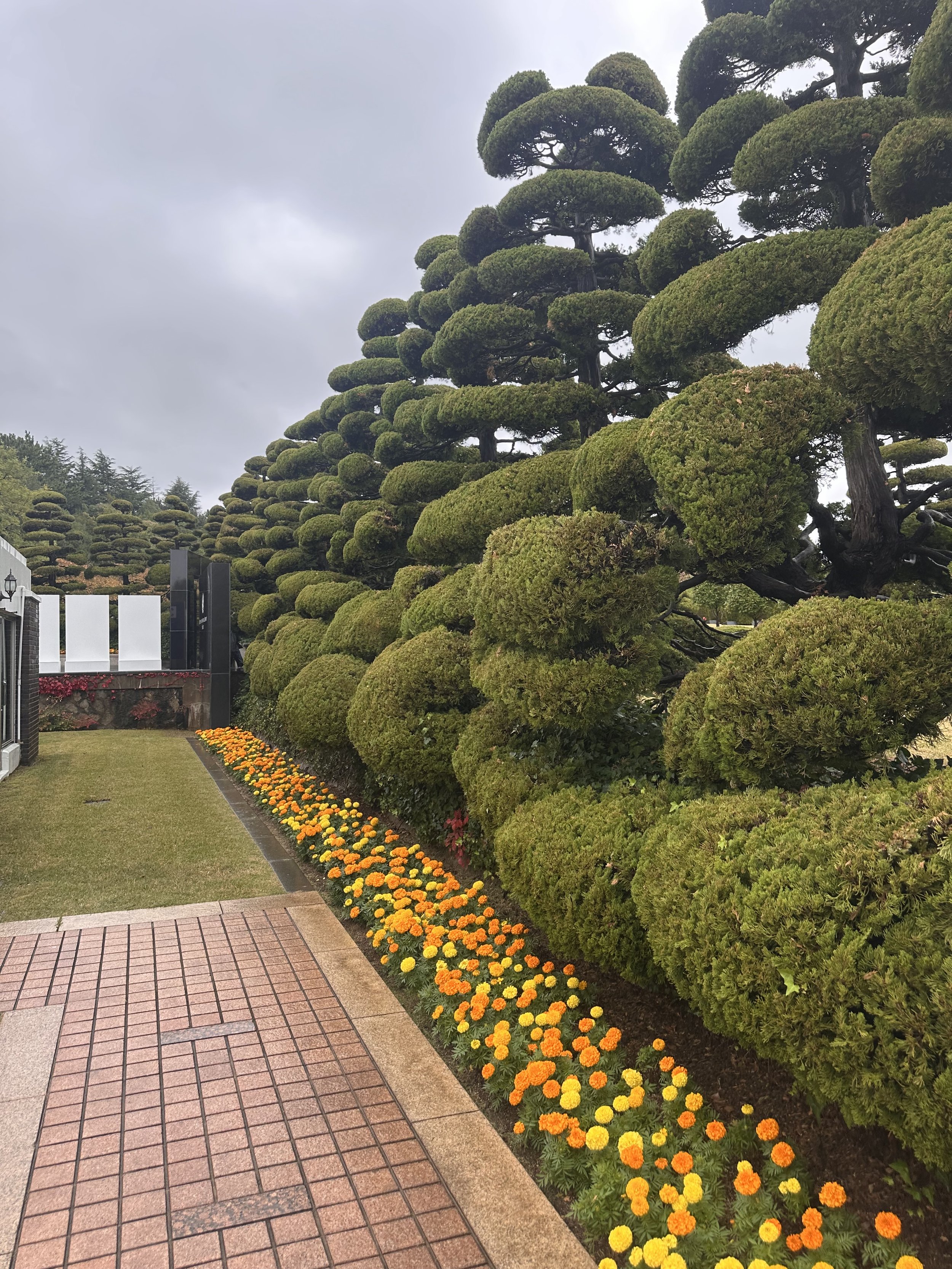
These spherical flower orbs are known as “flower balls”. They line the roadway that is used by maintenance and people driving a casket or marker to a grave. The message behind these arrangements is first, “welcome” and additionally, they honor the fallen and reflect international peace and harmony.
Referred to as “The Symbolic Area”, this plaza flies the flags of all 22 U.N. member. It includes the sixteen countries involved in combat and the six who participated with medical support. Standing in the midst of all 22 flags waving in the breeze was impressive.
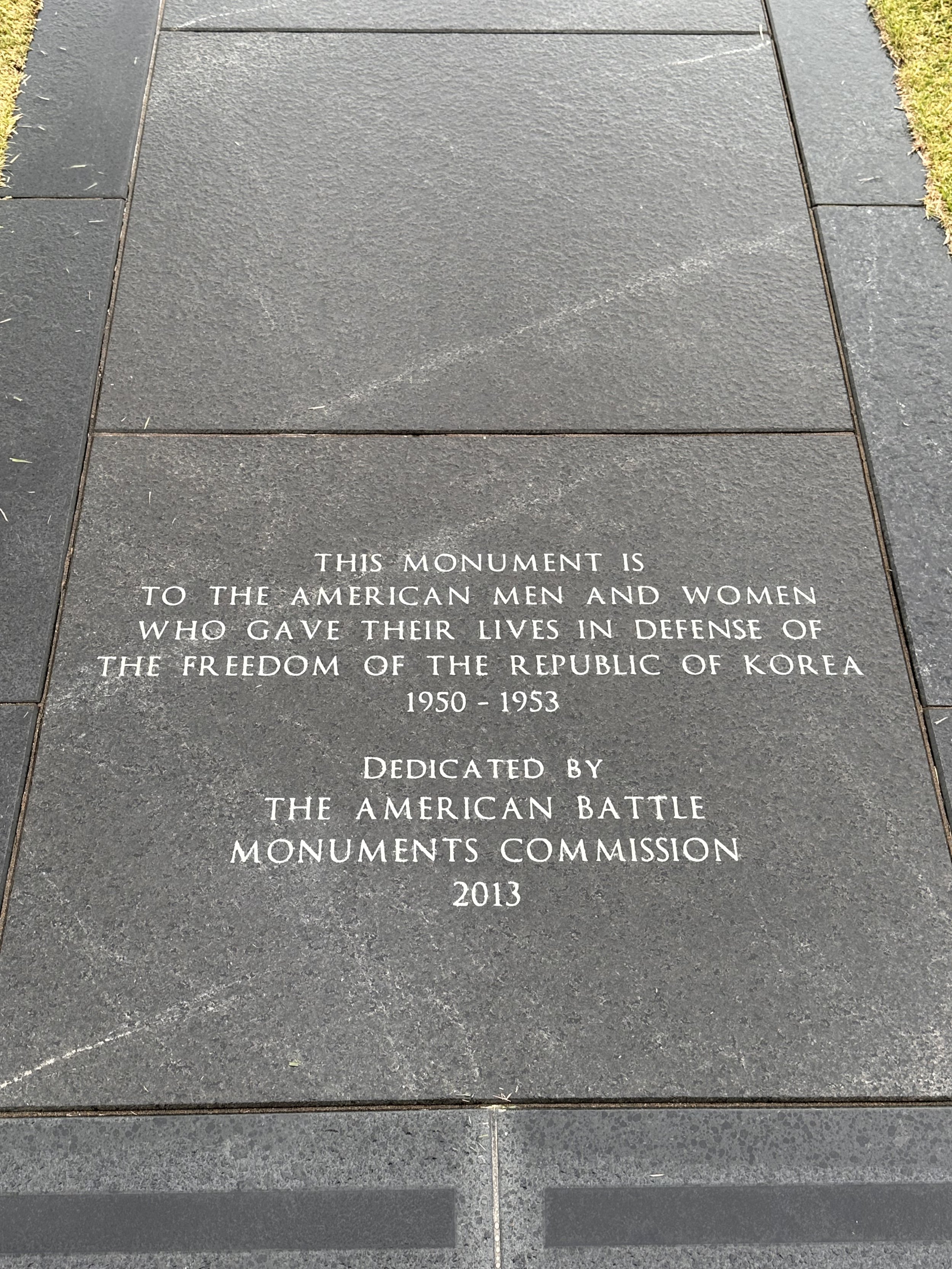
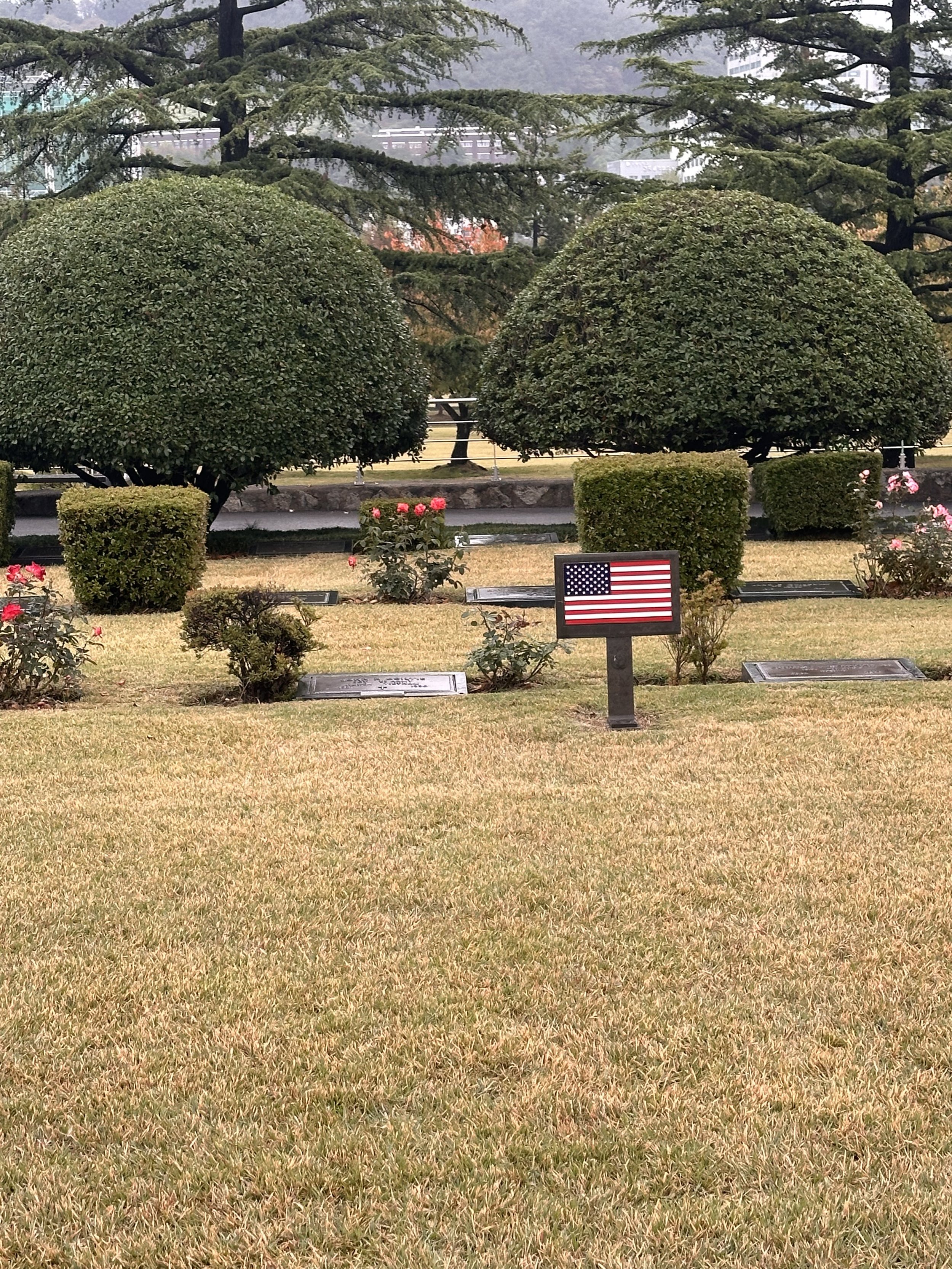
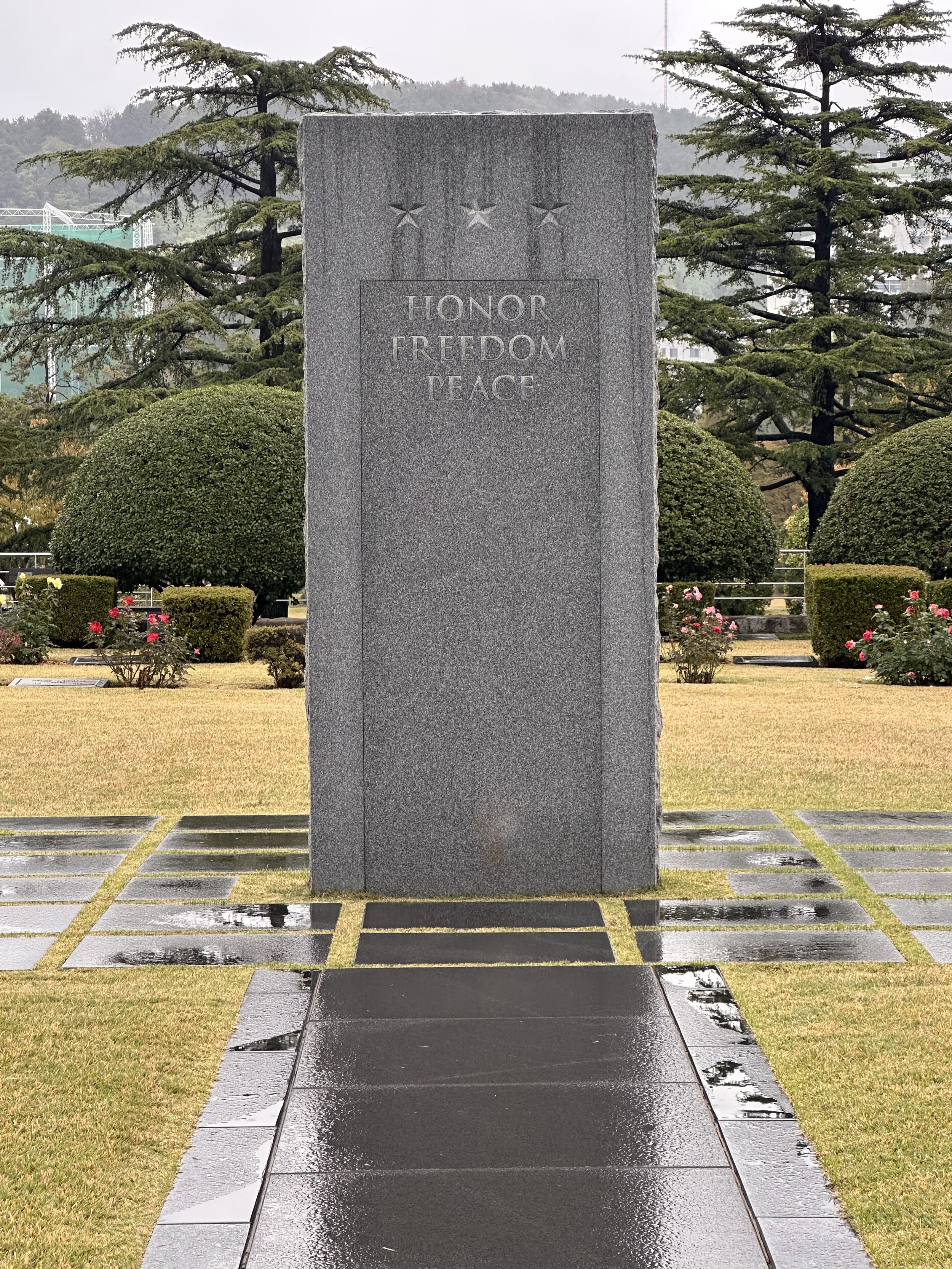
The sculpture on the far right was installed and dedicated in 2013 by the American Battle Monuments Commission. Simplicity is striking… the words “Honor, Freedom, Peace” says it all. Approximately 1.7 million service members participated. The United States suffered the loss of over 36,000 personnel but only 40 are buried here. The rest were repatriated back to the US. On a side note, Brigadier General Richard S. Whitcomb remained in Busan after the war to help rebuild the city, establish Busan National University and to care for war orphans. Additionally, he was dedicated to recovering fallen US soldiers. His will requested that he be interned in Busan.
Sculpted into layered cloudlike pads, these Kaizuka Junipers lined the perimeter of the grounds. Lining the 35 acre cemetery, the 10,000 trees were mostly donated as living symbols of peace and remembrance.
In contrast to the tall Juniper shrubs, the interior of the parklike setting is filled with low, rectangular boxwood hedges and round globose junipers, keeping the line of sight open and serene.
Honoring the “Father of War Orphans”, donations funded this sculpture of General Whitcomb. His core belief that caring for the next generation and investing in education were the most vital ways to rebuild the war-torn country.
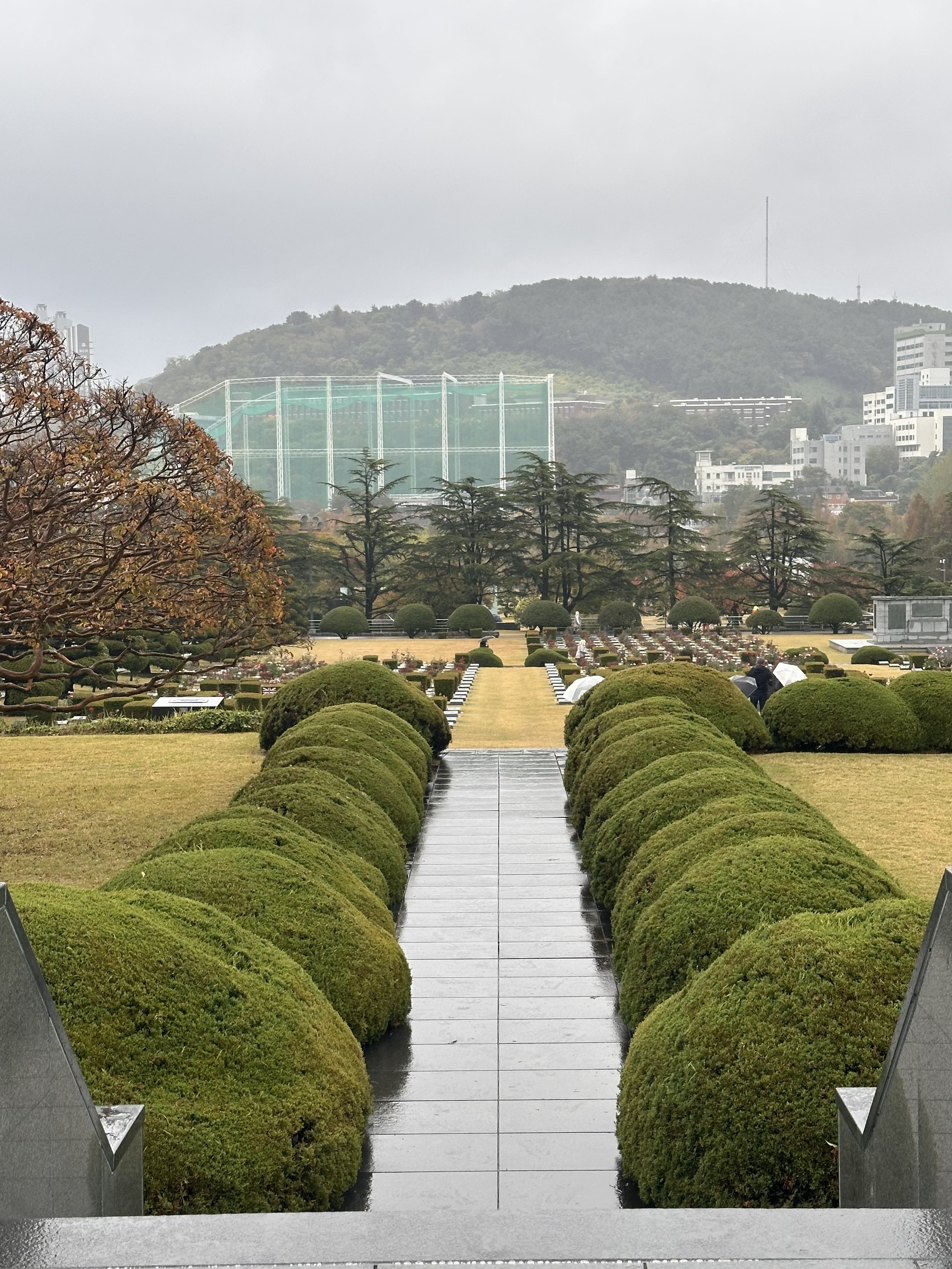
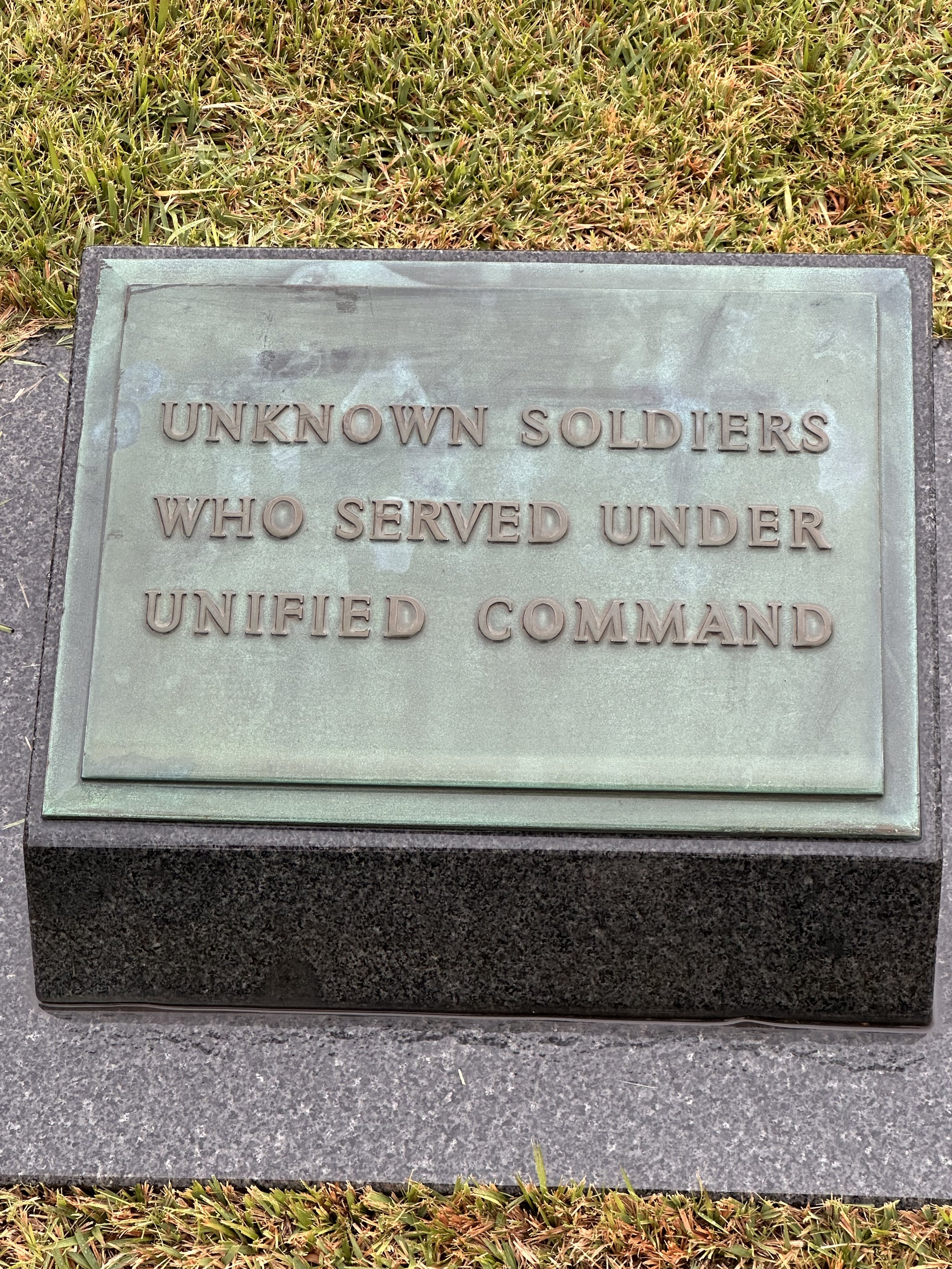
The Unknown Soldier’s Pathway honors the thousands of unidentified fallen soldiers. It also pays homage to the Missing In Action soldiers.
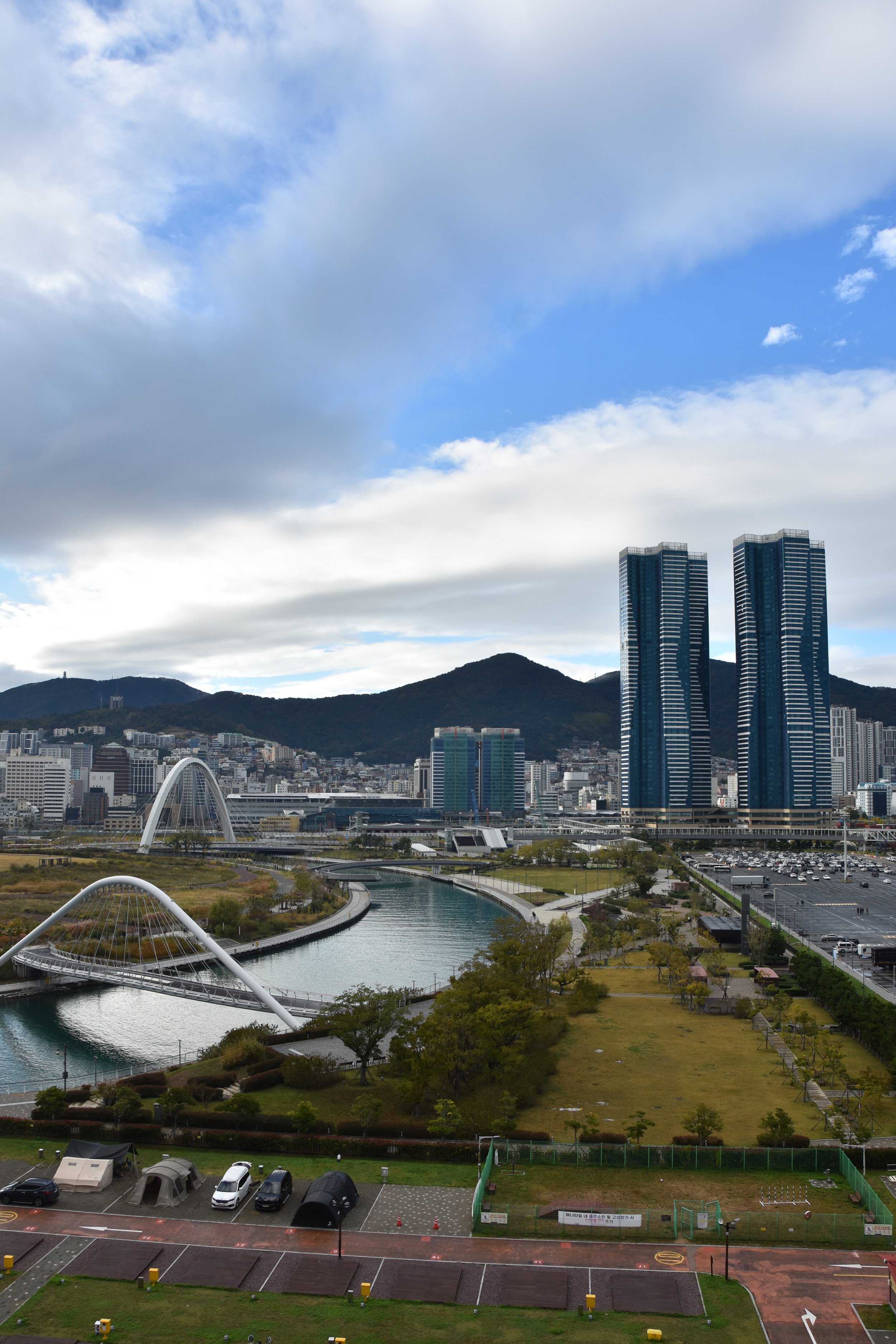
Most impressive is the skyscraper skyline the juts out as a backdrop to this cemetery. Such a powerful image. The high buildings circled the entire bottom half of the grounds.
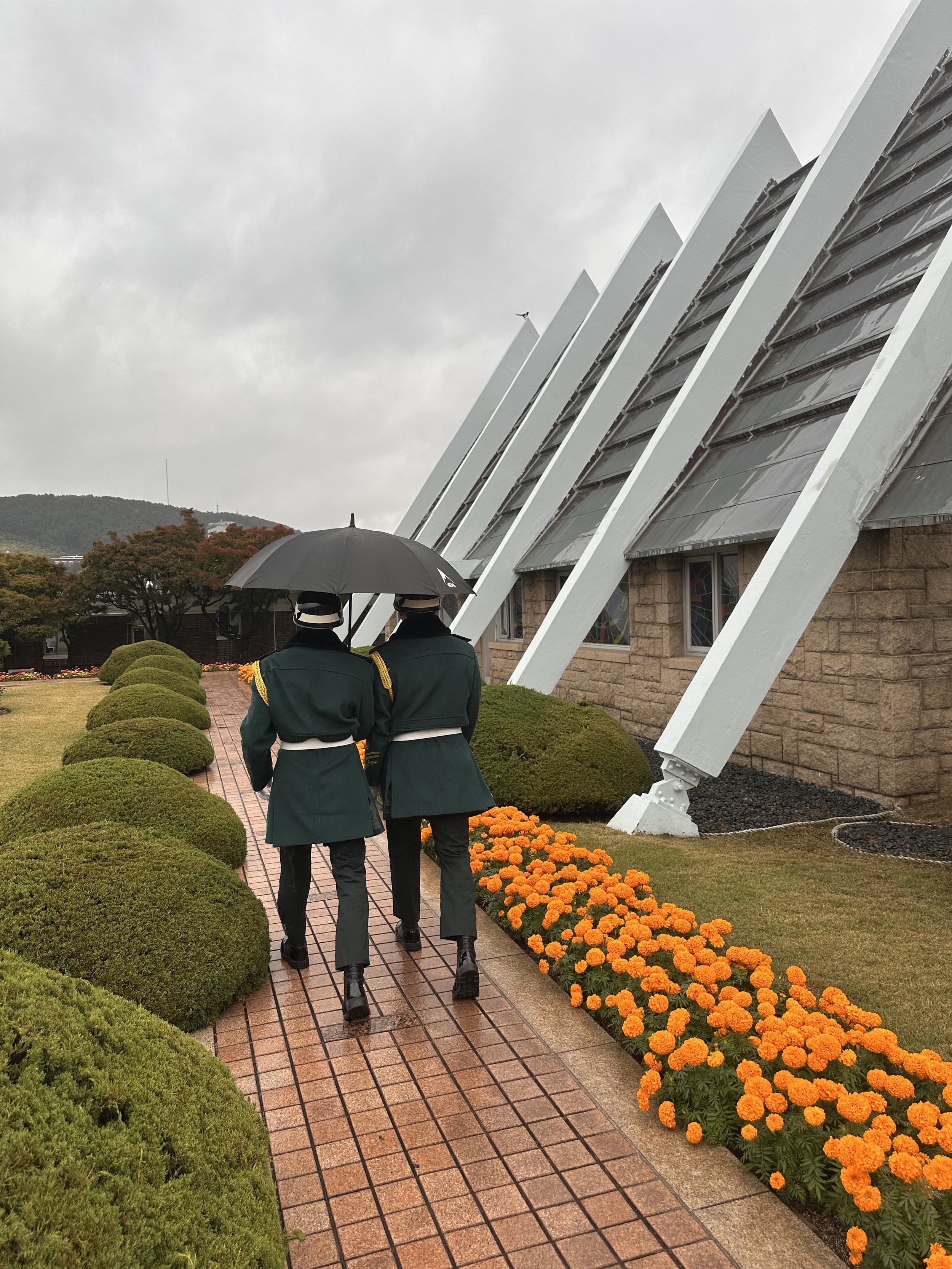
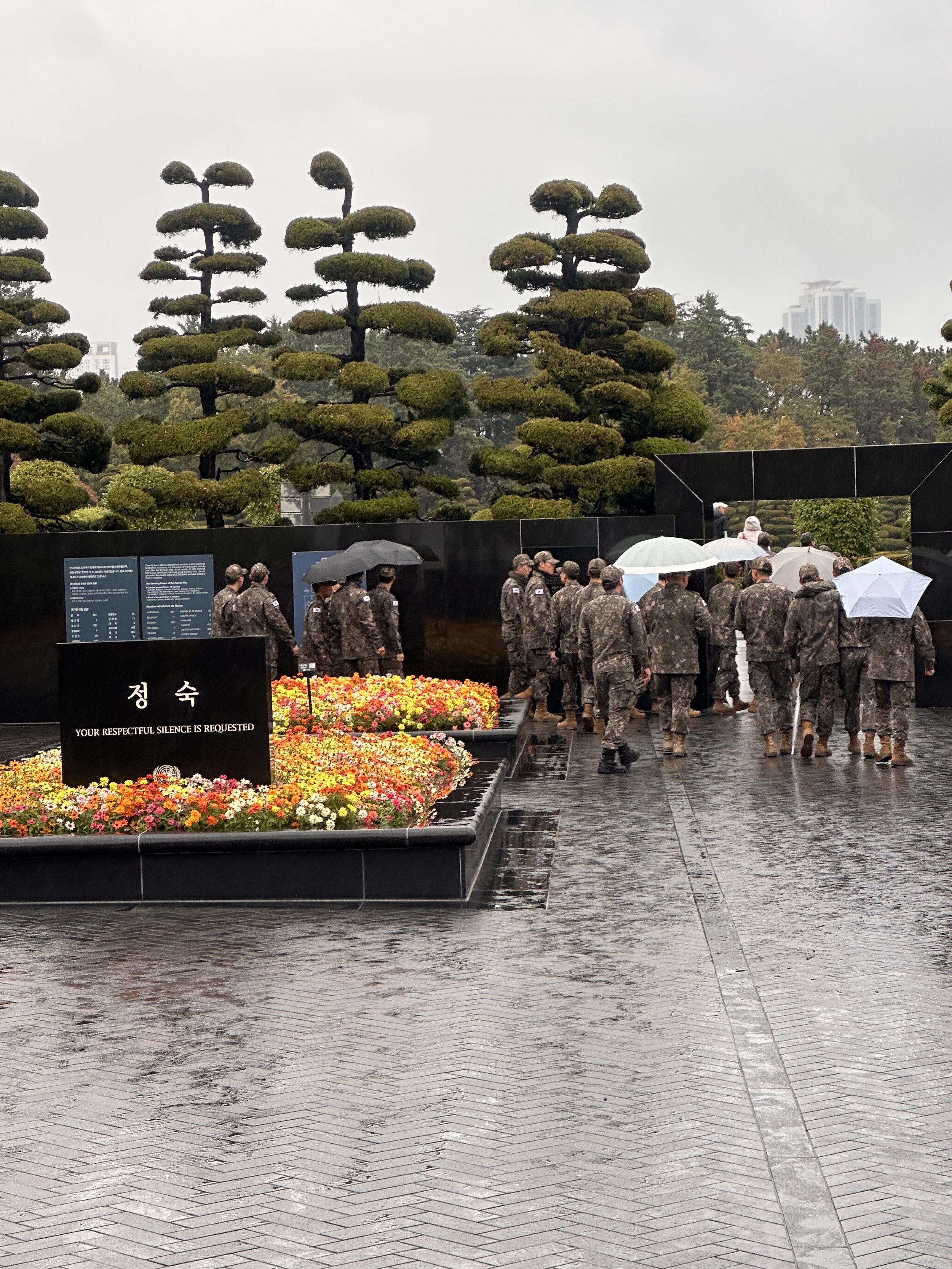
With the visitor population steadily growing, the cemetery currently welcomes between 300,000 and 500,000 people a year. With a mere 12% foreign, local residents and school children make up the majority of who comes to pay their respects. On and off duty military could be seen around the grounds. What an impressive experience… that deserves a second visit to see everything I missed. I will definitely time it to be present when the daily ceremonies raising (10am) or lowering (4pm) of the flags.