Busan, South Korea: Part One
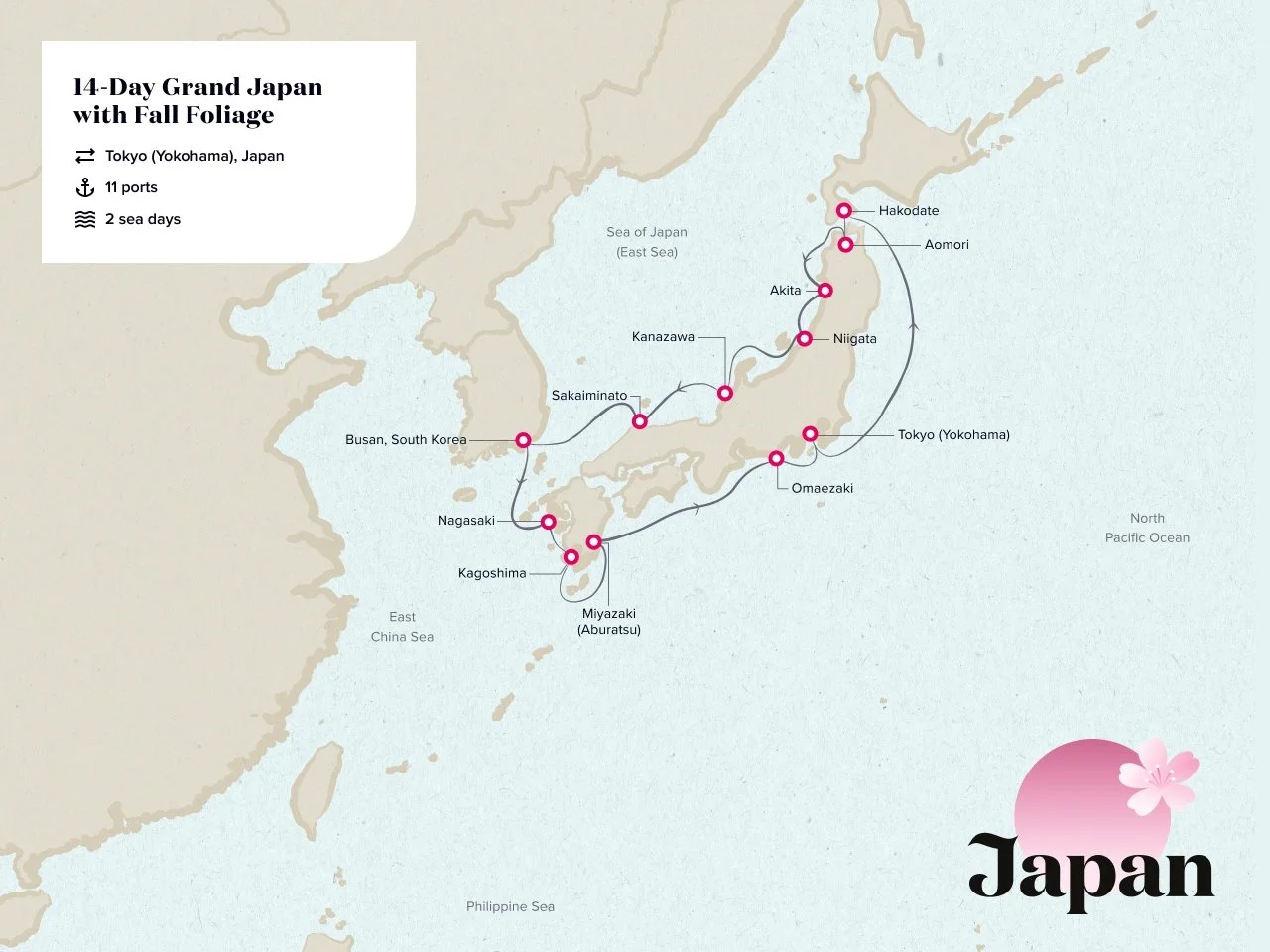
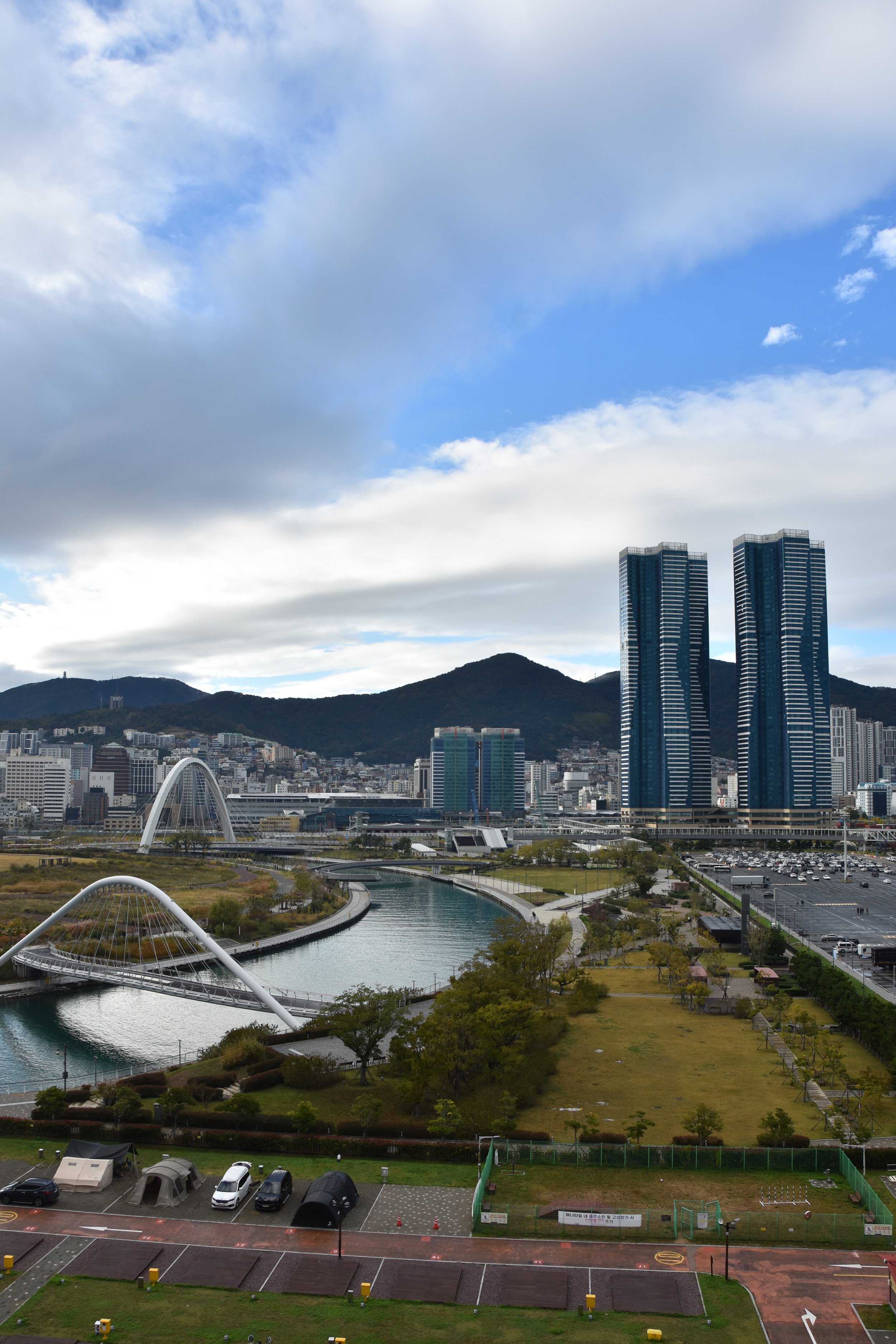
With a population of approximately 3.3 million people, from first look, Busan is a stunning city. The skyline intrigued me… Busan’s economy is based on shipping, trade and seafood. Of course, tourism is a big deal for this bustling metropolis. Time to check it out!
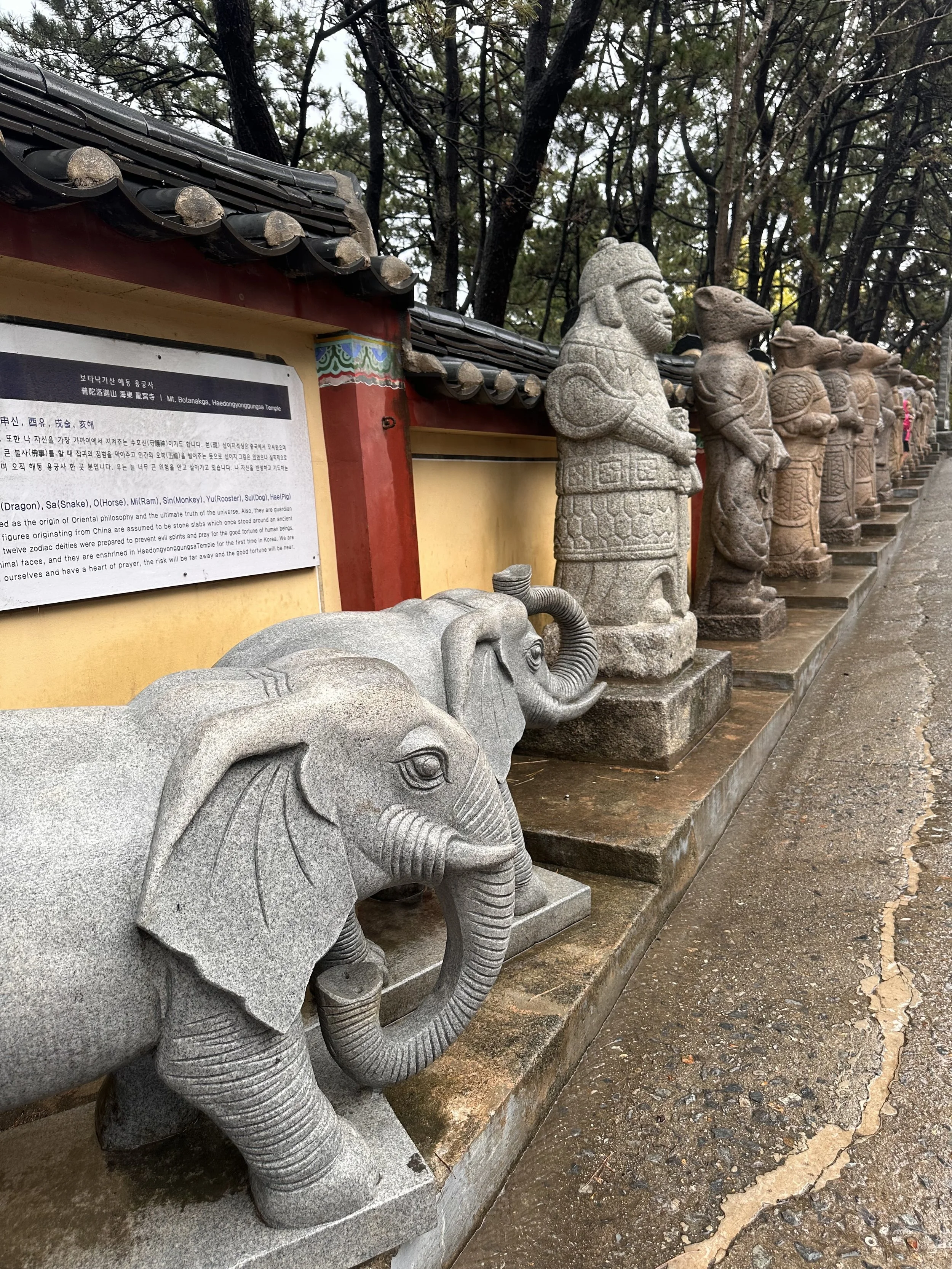
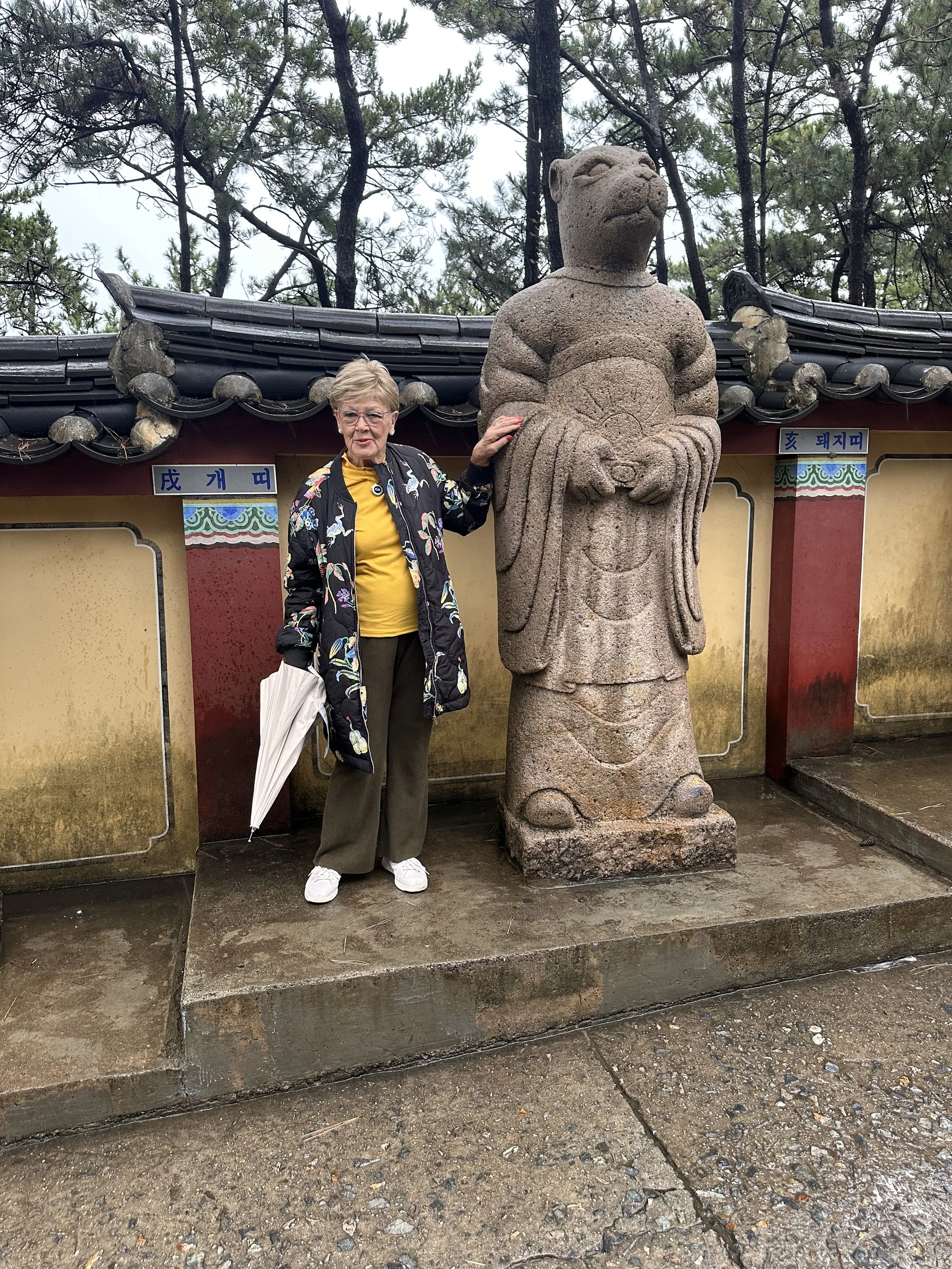
Finally, a Get Your Guide tour that didn’t cancel! Coincidentally, the two ladies I met on my first excursion booked this one also. Our first stop was a 100% “must see” and “I will definitely return” location. Haedong Yonggungsa Temple. After walking a short distance from the bus, we came upon a series of statues. It turns out these are the animals for the Korean Zodiac. Our tour guide, Joe, had a chart and after giving him my birthday, he said that I was year of the pig… that’s the first time I’d heard that. Figuring the Korean Zodiac was different that the Chinese, I took a photo beside the pig. Later, after looking it up, I found that he gave me the animal for my year, but because my birthday is January 1… I was actually with the year before. Jo was also year of the dog, so we took her photo in front of the correct statue.
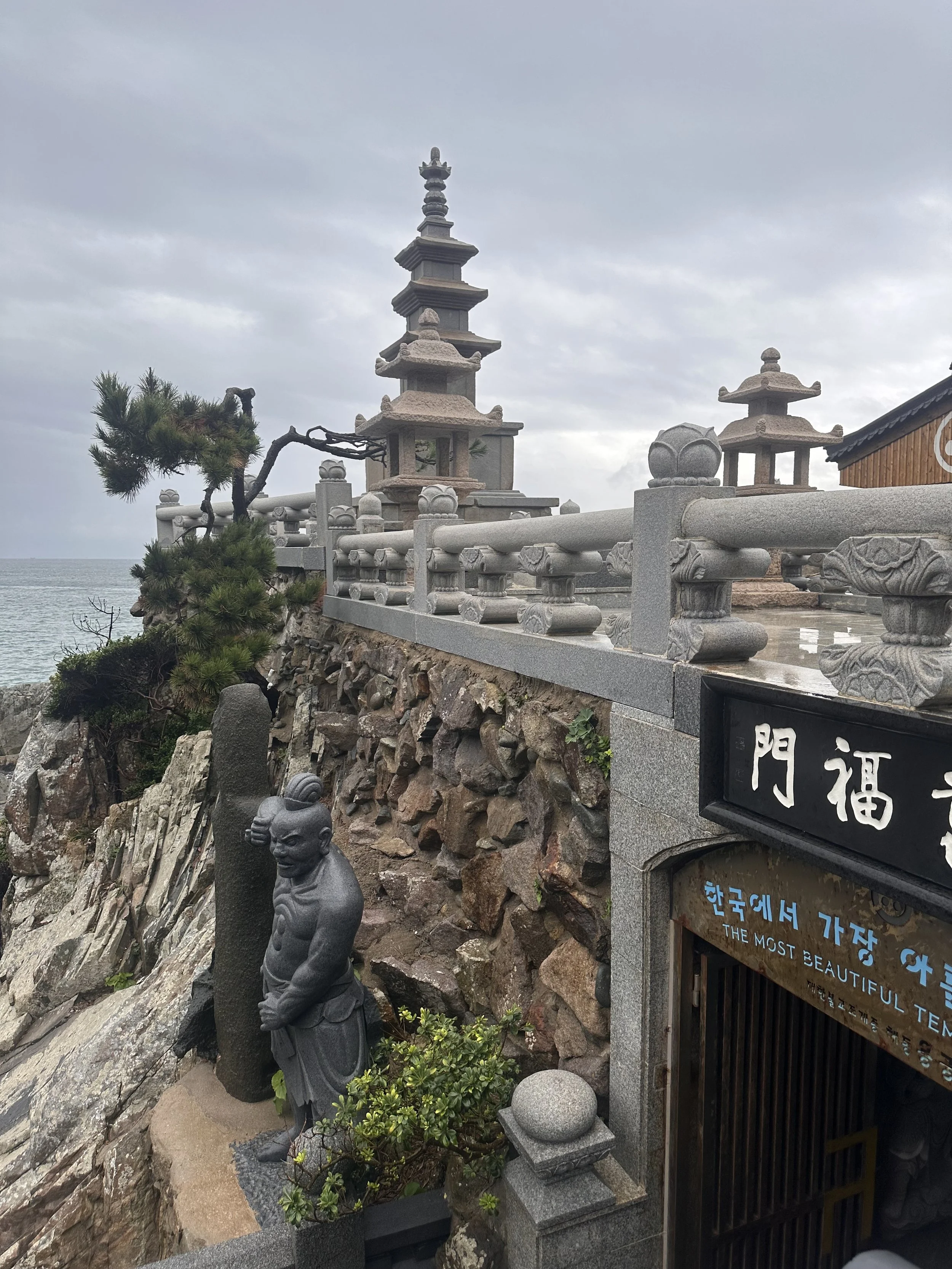
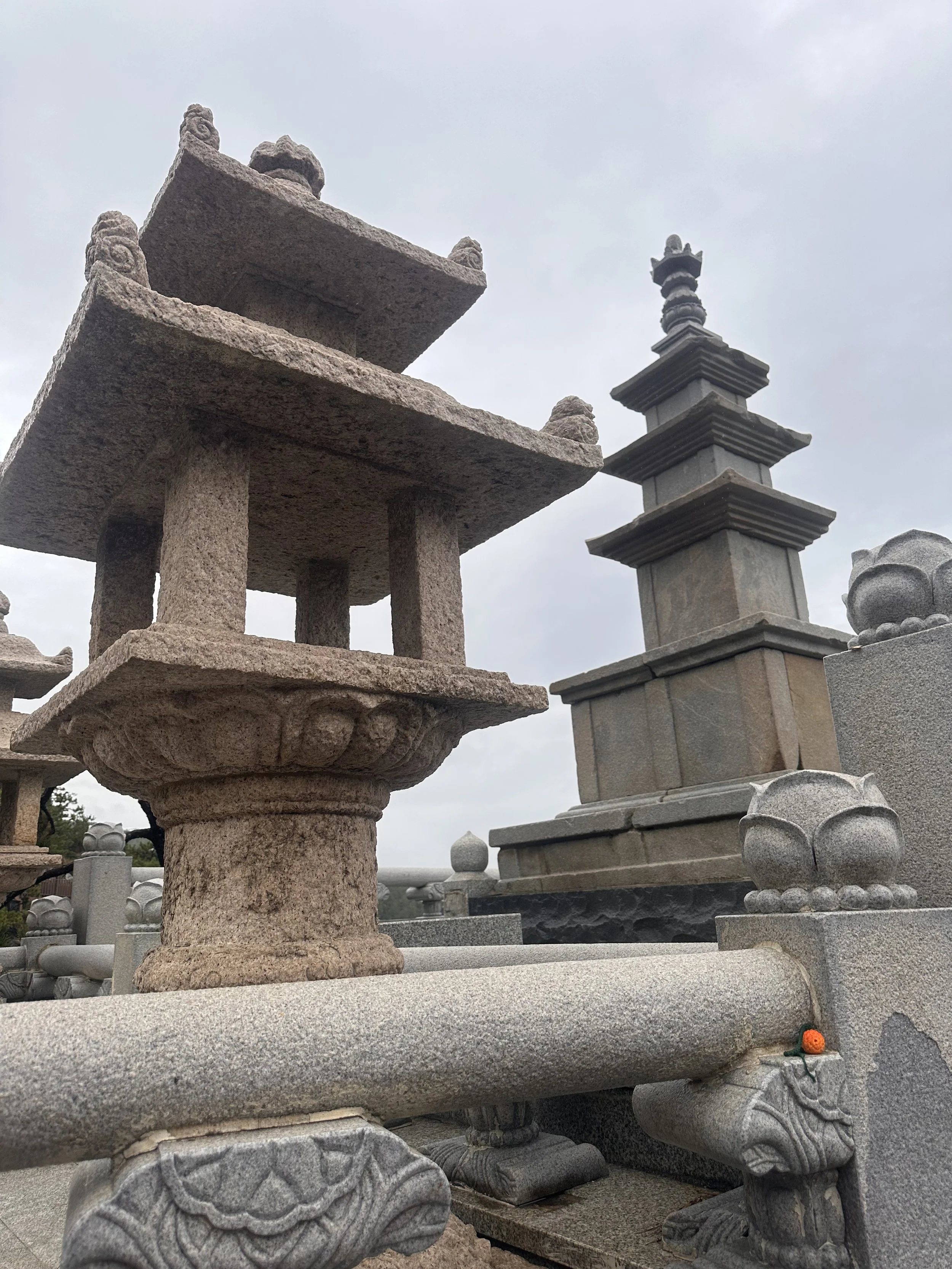
Just past the Zodiac animals, we came to a tall stone pagoda. Known as the Traffic Safety Prayer Pagoda, this was the first tower of its kind erected in South Korea. It was built to raise awareness about traffic safety and pray for accident-free driving and protection of drivers. Notice the tire mounted in front of the pagoda.
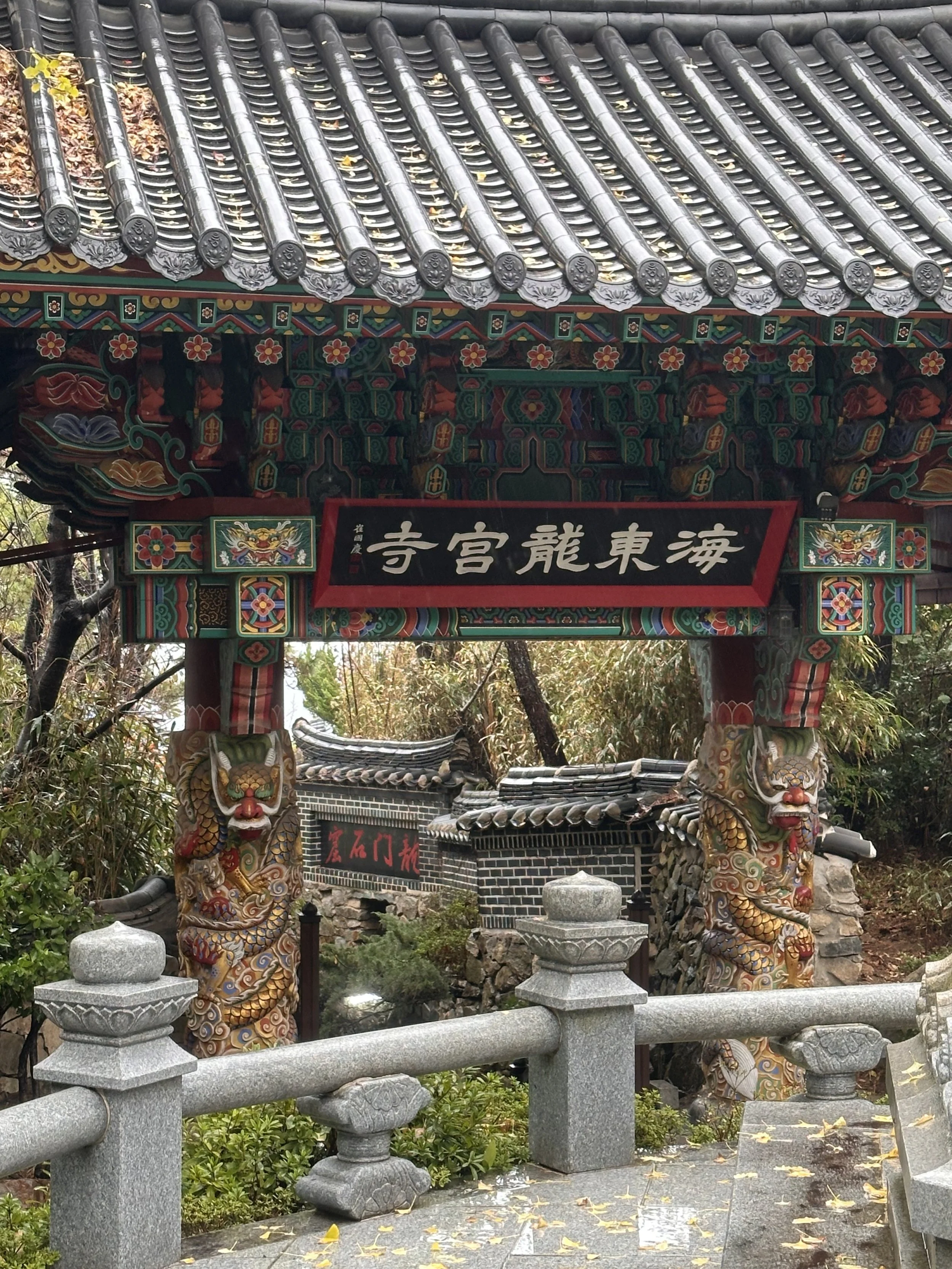
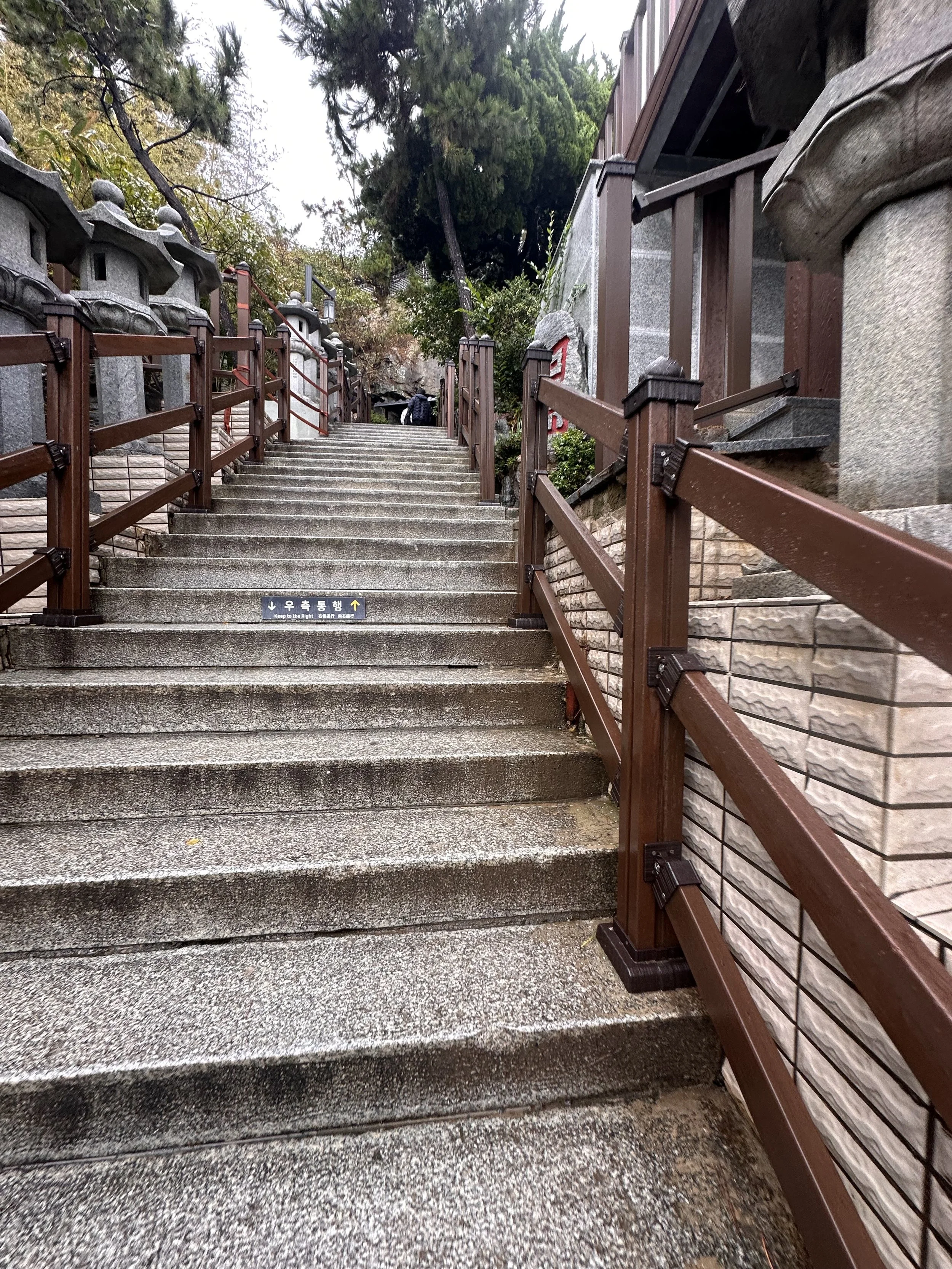
Behind the Traffic Safety Travel Pagoda is an ornate gateway to the steps leading down to the temple area. When literally translated, the steps are called the 108 Longevity Steps. Because “longevity” ties directly to a long, healthy life, English guides often refer to it more poetically as the 108 Steps of Life.
Walking down a few of the steps, I veered off to the left to a viewing platform. What a sight! Honestly? It took my breath away. Such a special place… I spent quite a bit of time taking it all in before heading down to explore more closely. The building, the sculptures, the bridges… the ocean waves crashing… the rocky terrain. This was absolutely extraordinary!
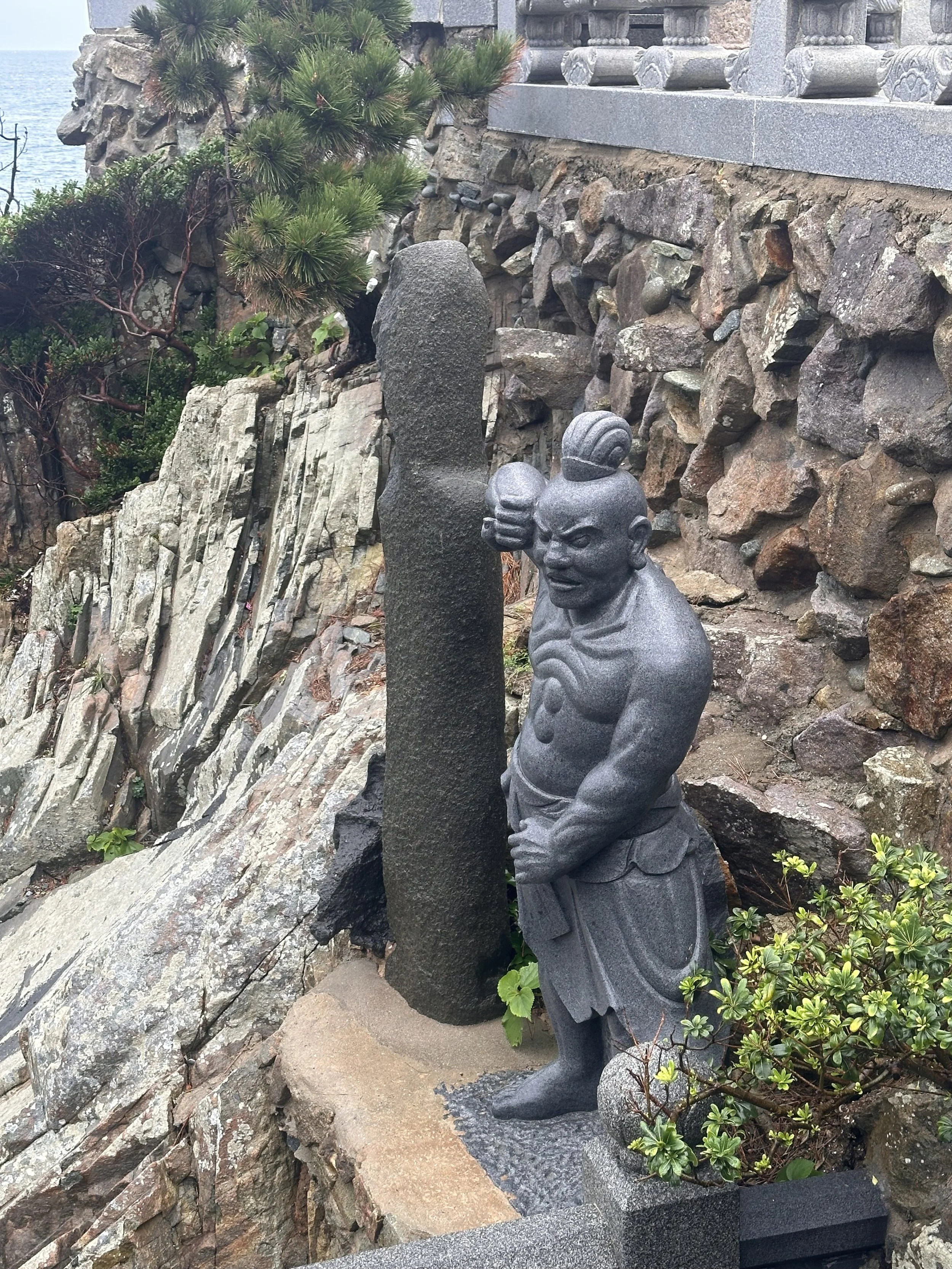
Anxious to see the grounds more closely, I continued down the steps. Down a few more steps, on the right had side, I saw these statues. Carved into the natural rock ledges, thirteen small stone Buddha and monk statues. In Korean Buddhism, these clusters represent the enlightened disciples of the Buddha. They are considered spiritual guardians watching over pilgrims entering the temple.
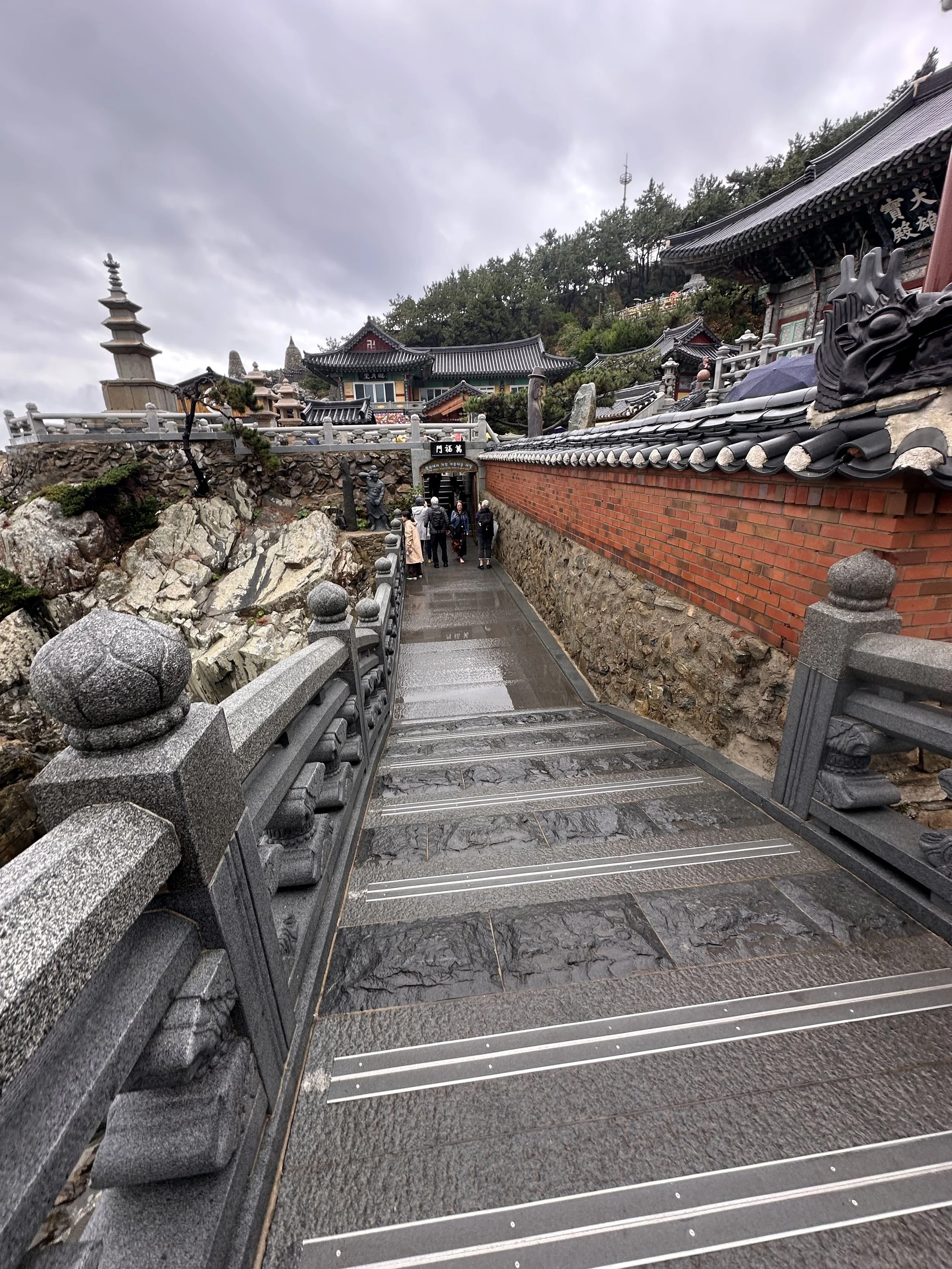
Crossing the Yongmungyo Bridge (which translates to Dragon Gate Bridge), I experienced several picturesque vantage points. Connecting the rocky coast to the main temple, this bridge has another special feature… our tour guide gave us three coins each to for a chance at good luck. Stone statues, including children and a turtle, hold shallow, stone bowls. The idea is to stop and make a wish, toss the coins into one of the bowls. Legend has it that the Haedong Yonggungsa Temple grants at least one sincere wish. Landing a coin inside one of the bowls is considered a strong sign of good luck… I was unsuccessful…
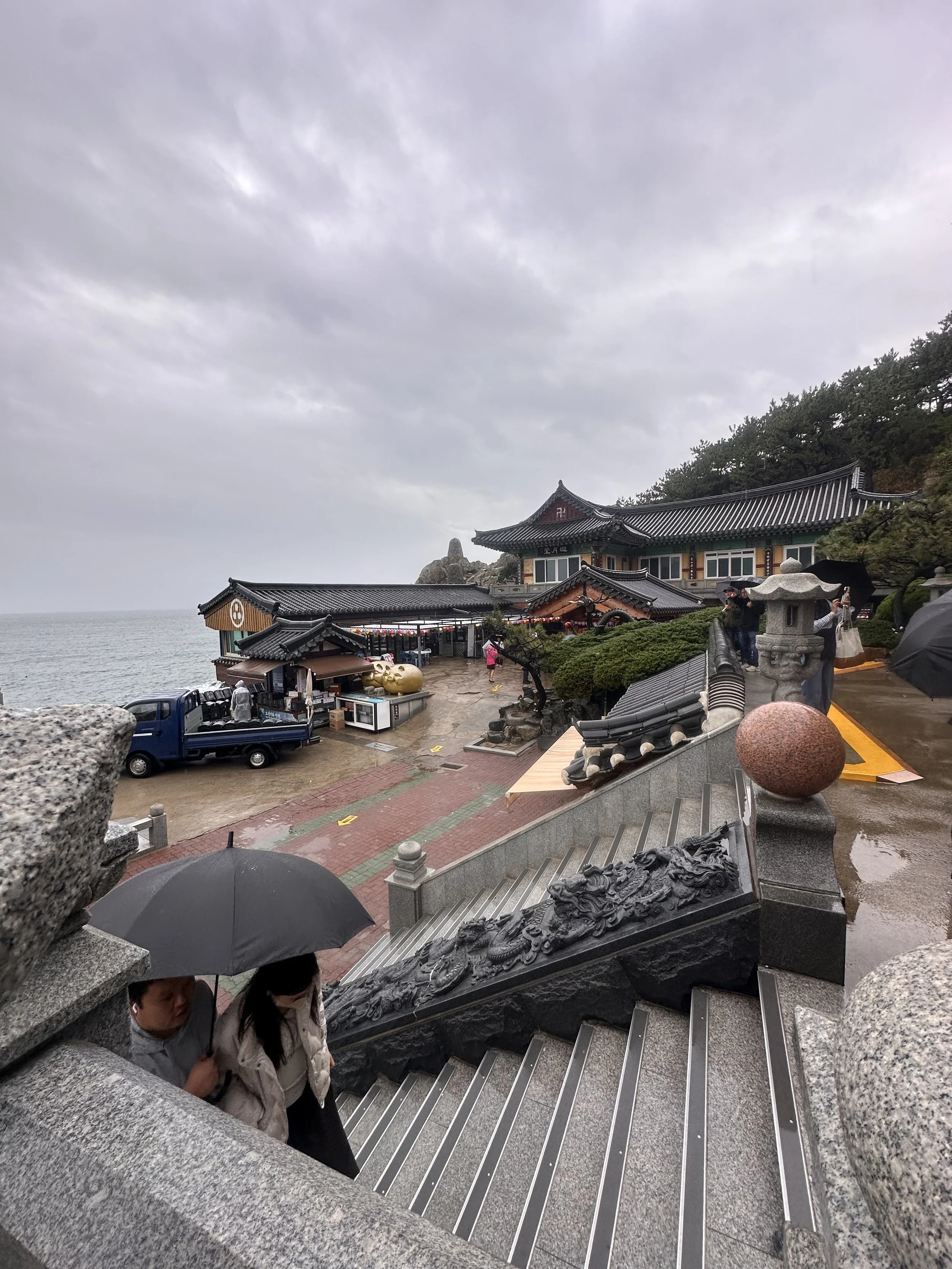
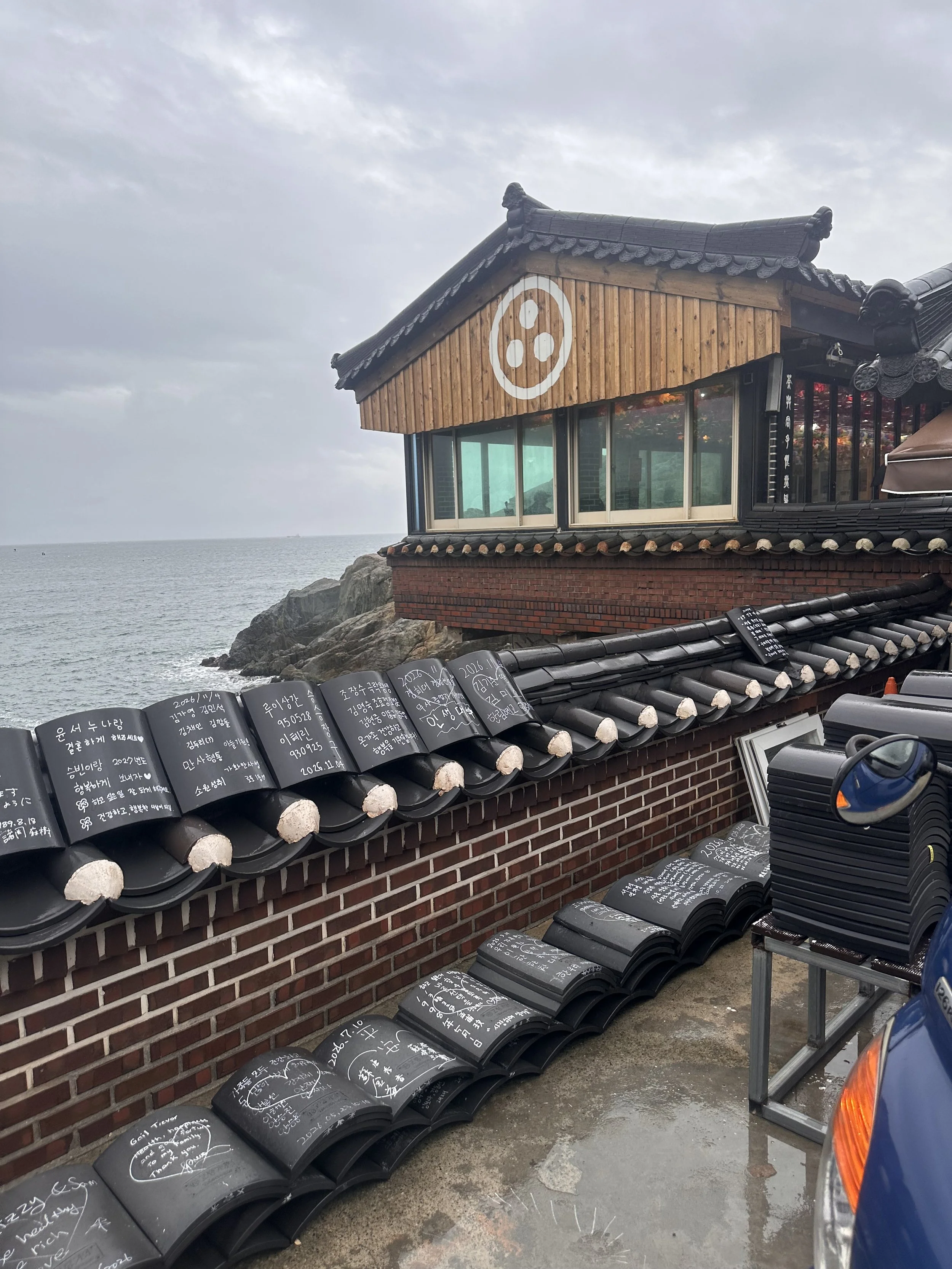
Looking toward the ocean, with my back to the temple… I had a view of a platform with several statues. On square slab of cement are many symbolic pieces. Their purpose is to protect this sanctuary from negative energy. Originally founded in 1346, the sacred buildings were destroyed by fire in the Japanese war. During a six-year attack, the grounds were completely destroyed.
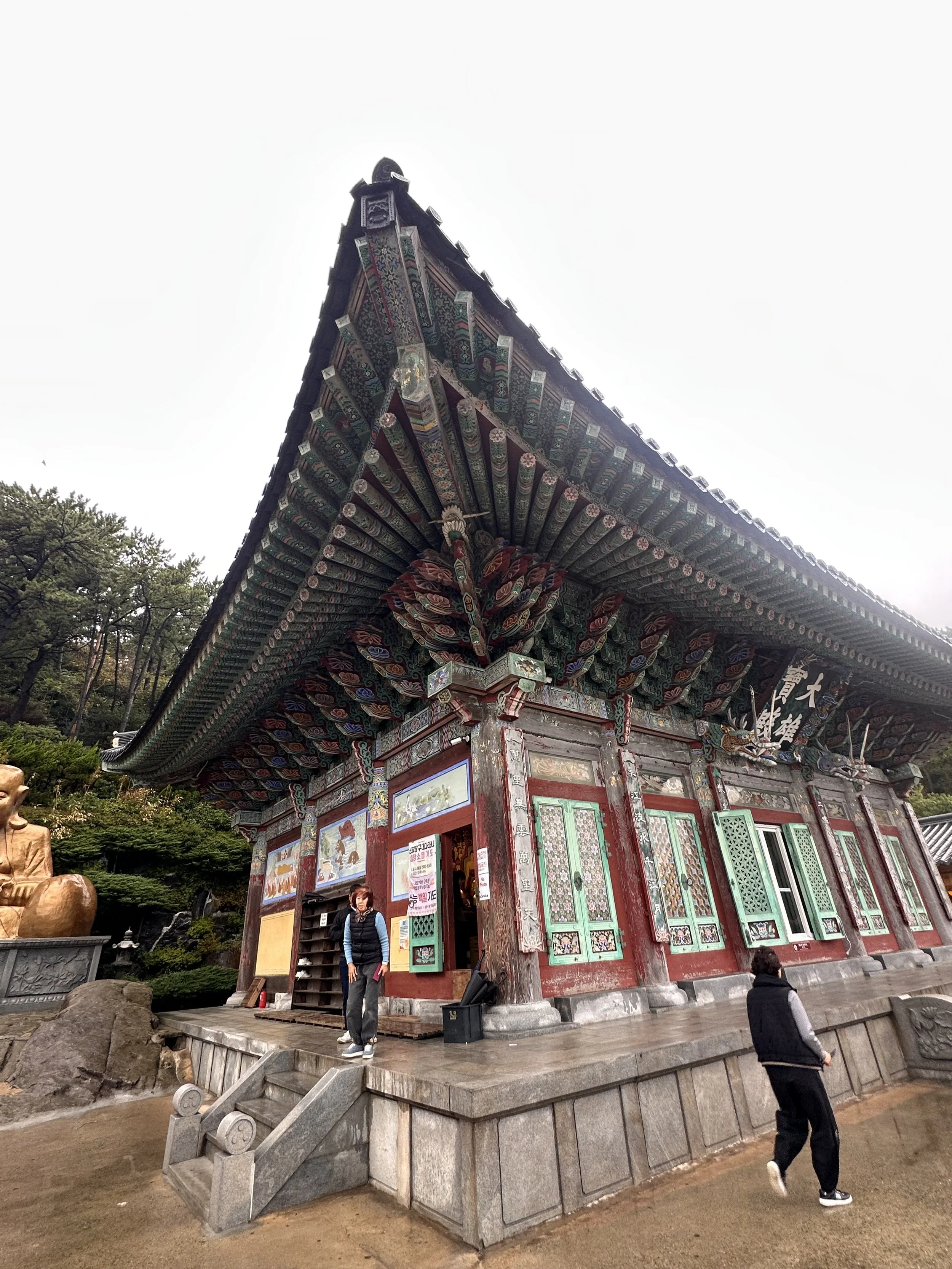
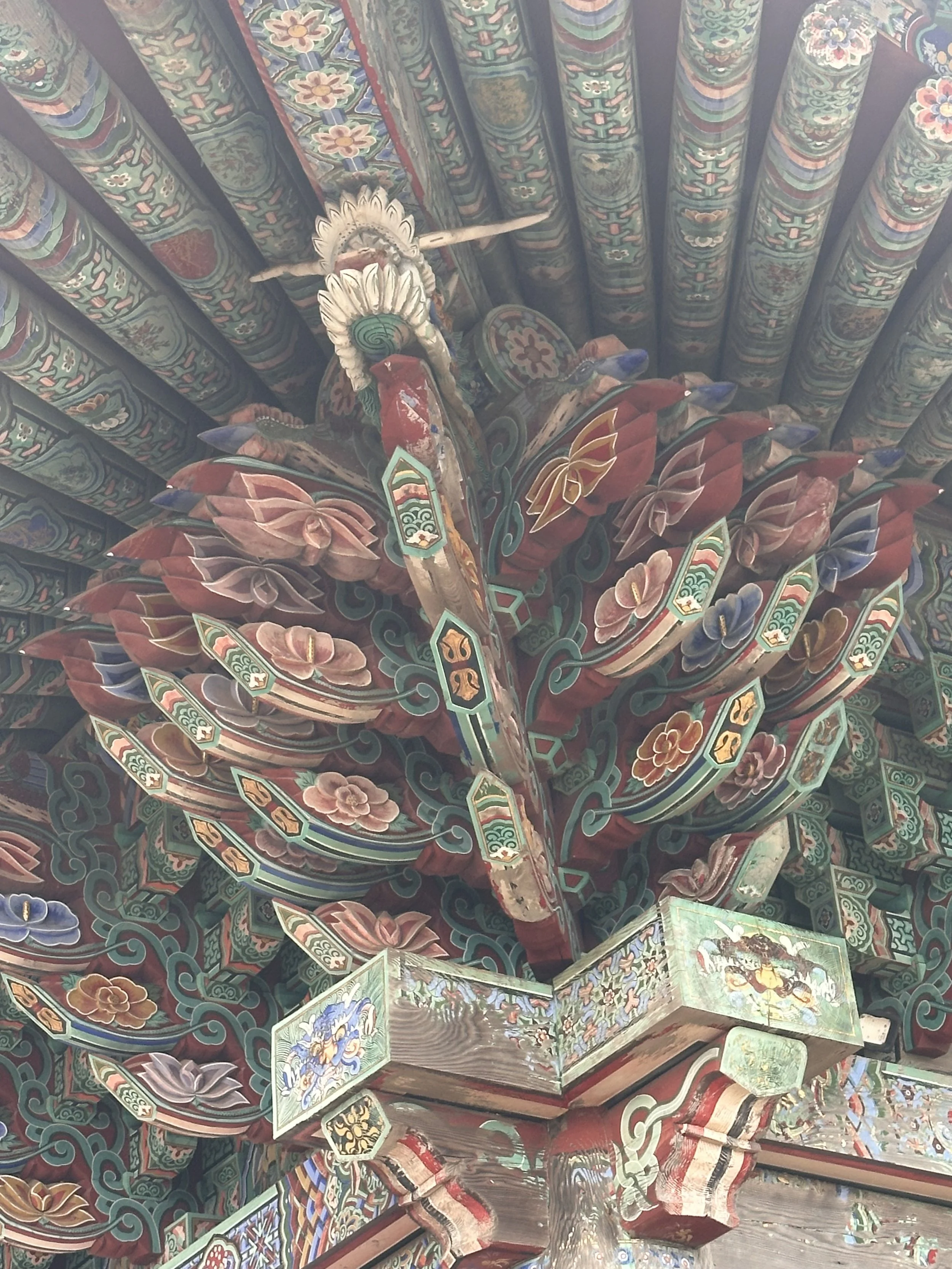
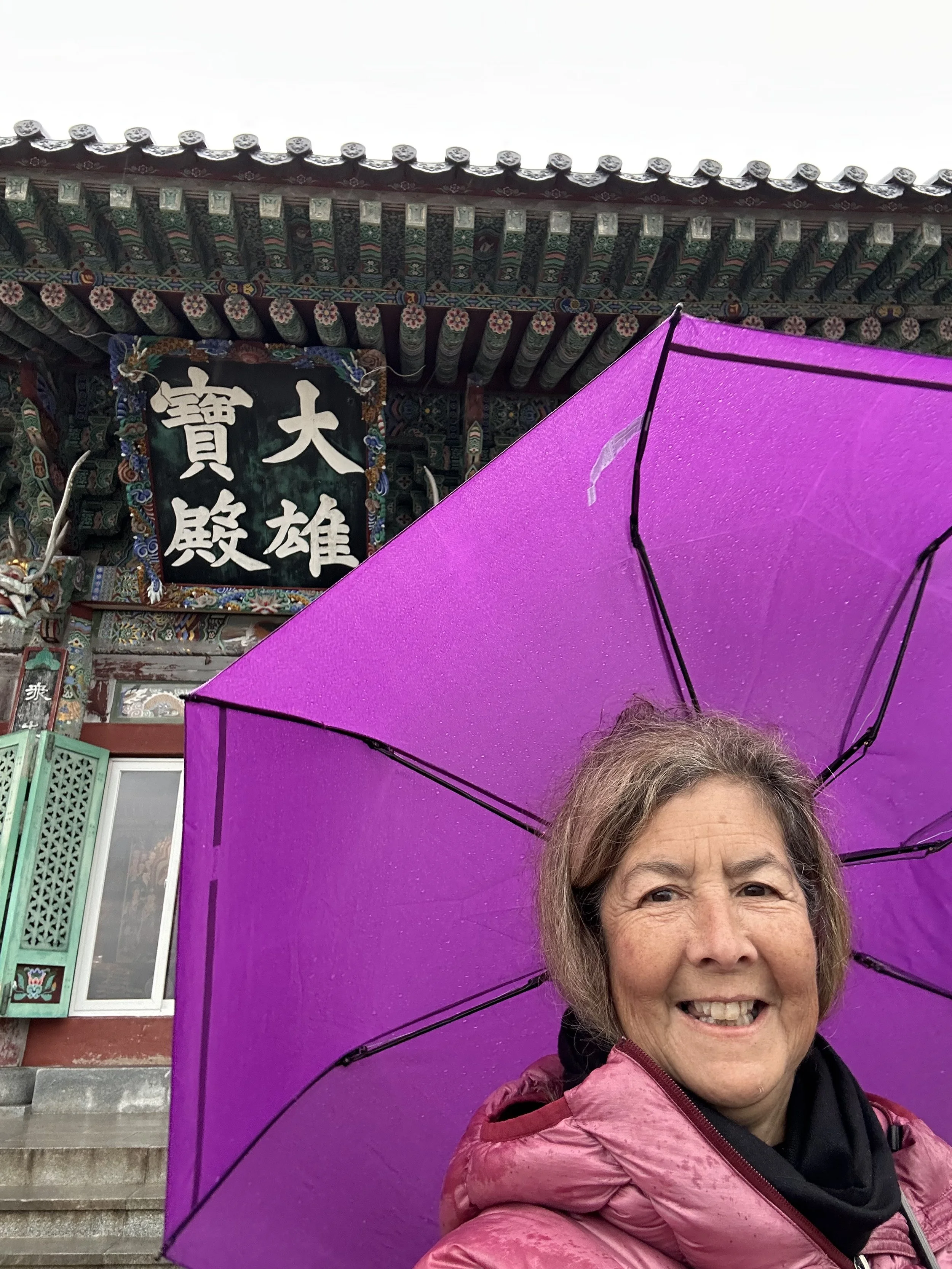
The land remained in ruins until the early 1930’s. Monk Ungang, from a nearby town saw the beauty in this coastal location and took on the task of rebuilding the temple from the ground up. The main hall was fully rejuvenated in the 1970’s. In 1974, it was renamed to Daeungjeon Main Hall.
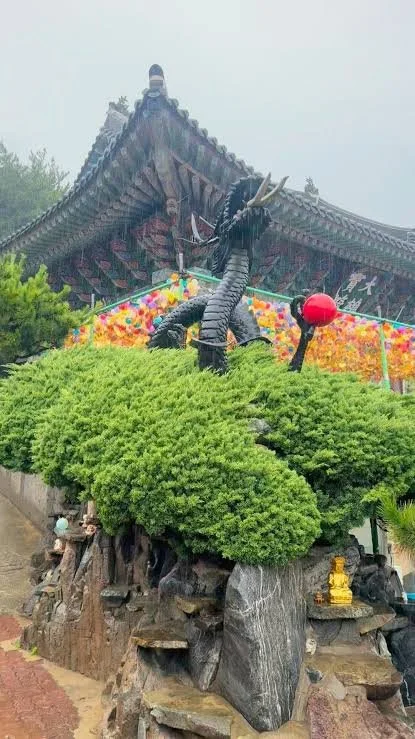
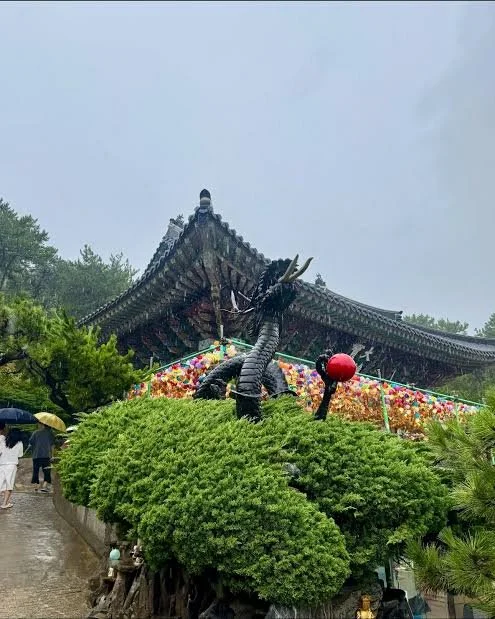
This sculpture, which I kept thinking was a snake… is actually a dragon. This particular dragon is placed in a prominent location just outside the temple. It honors the name…. Yonggungsa, which translates to Dragon Palace Temple. Dragons are protectors of the sea, weather and grounds. Wish it had provided a sunny day for us… we had only a few moments where the clouds broke and clear blue skies appeared. For the most part, it rained. Thankfully, it wasn’t in the least bit cold.
The bright red orb clutched in the dragons claw, is called a Yeouiju. It is believed, the jewel grants the bearer divine power, wisdom and the ability to create at will. As legend has it, a serpent must train for one thousand years before acquiring the jewel with the ability to become a true dragon. It is only then that the animal can ascend to the heavens and control weather and ocean waters.
Golden pigs… they really stand out, even on a rainy day. Their significance to this temple and Buddhism in general is they represent wealth, financial prosperity and good fortune. It is said that even dreaming about pigs can bring good fortune. Having two sitting outside the temple means exception good fortune. Many people walked by to rub the bellies of the pigs, hoping for their own good luck.
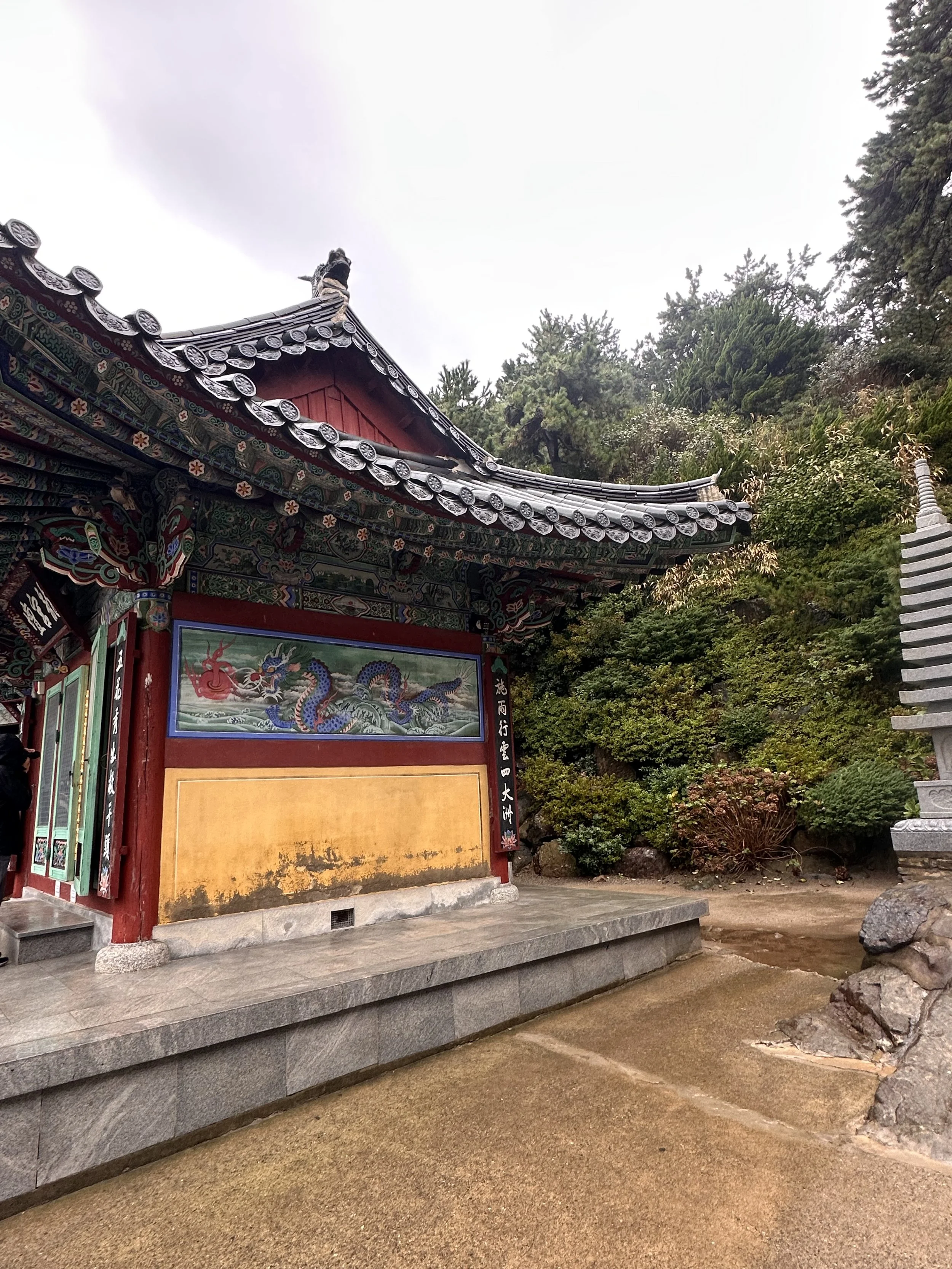
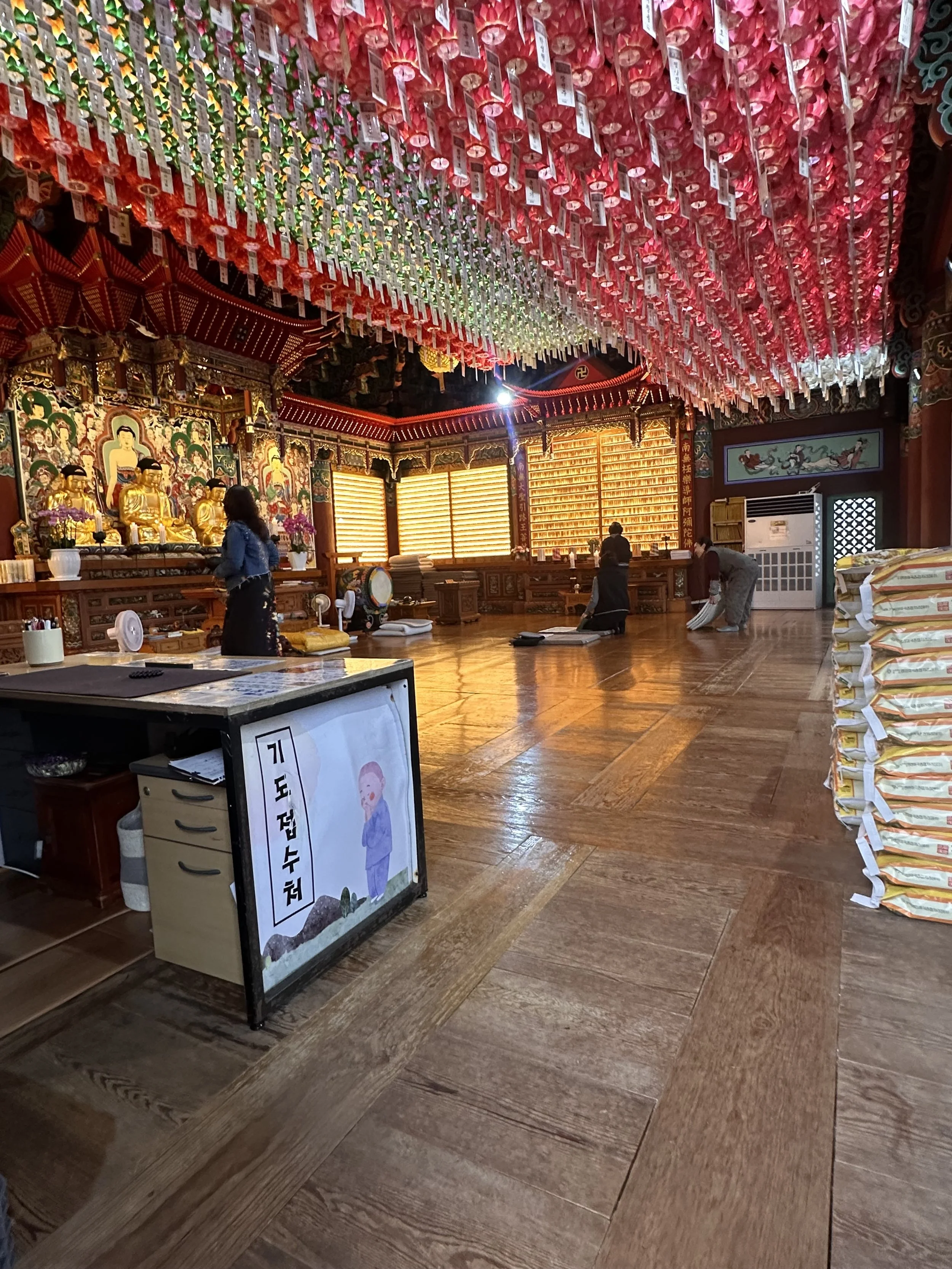
Attempting to be patient, I waited outside this house of prayer because a sign said not to interrupt someone’s worship time. It was clear about being respectful Considering there was a steady flow of people walking through to grab a mat and place it on the floor before the alter, I decided to wait until I caught a moment where someone was just setting up but not actively praying.
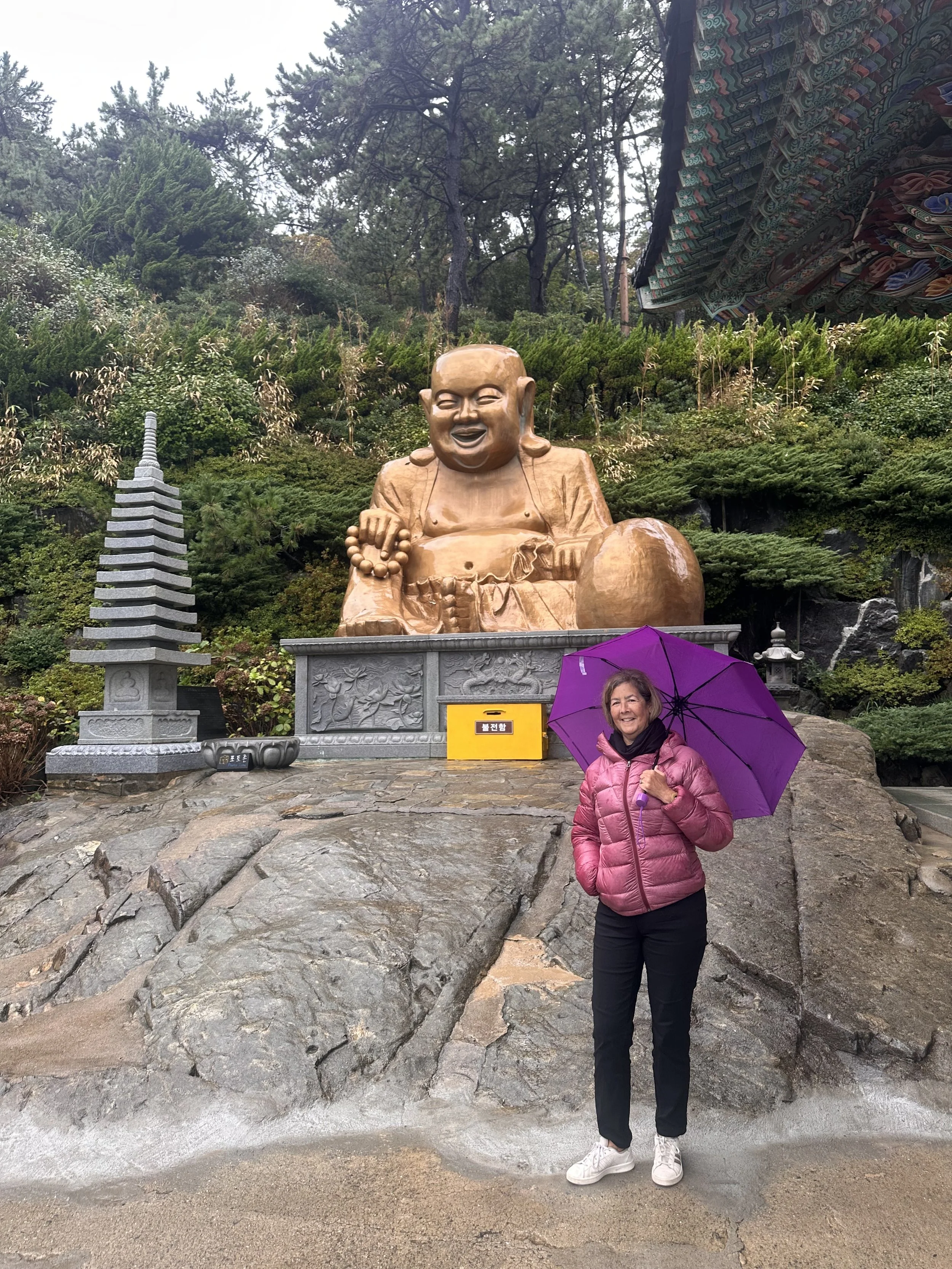
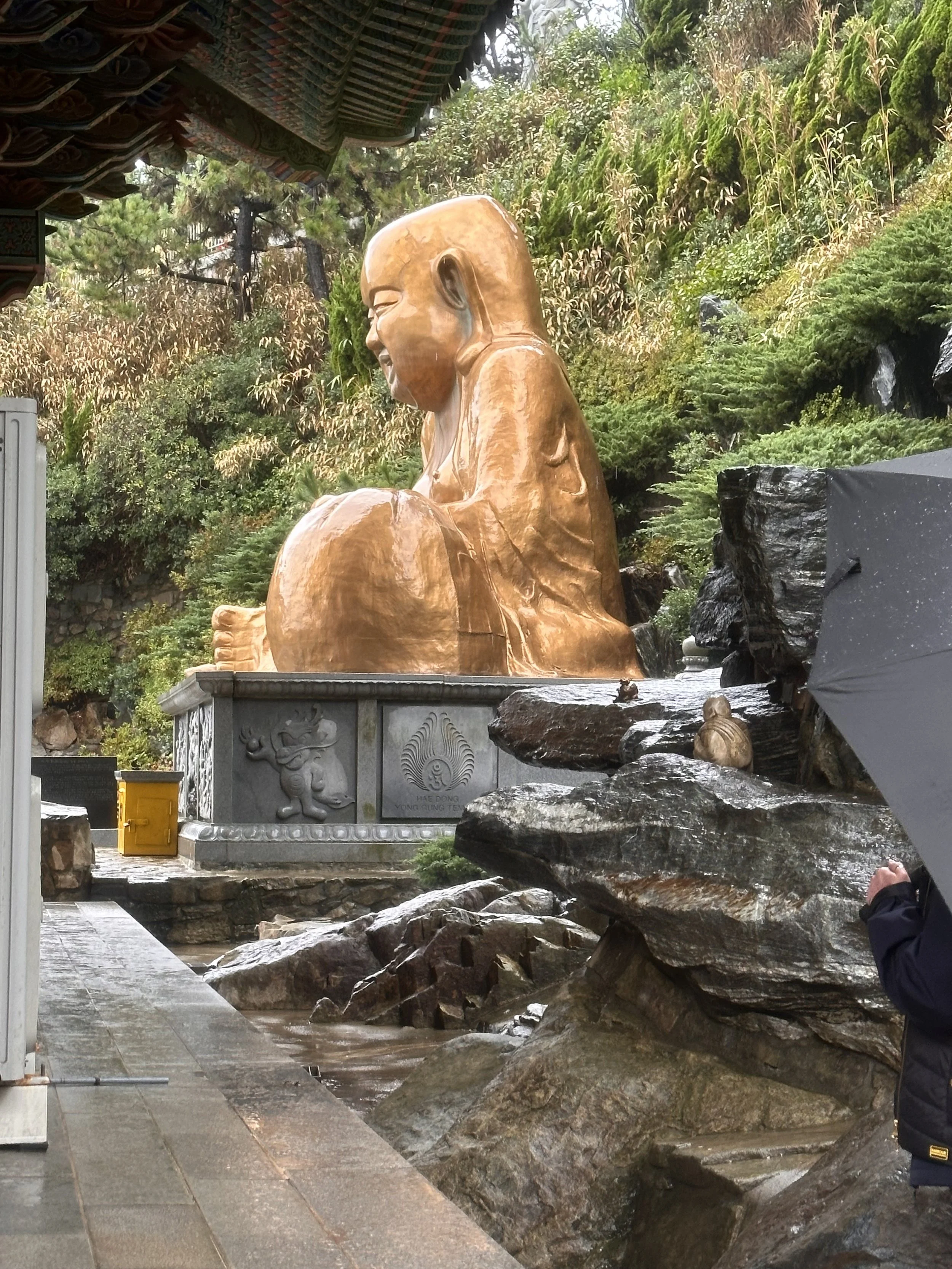
After finally taking my quick picture of the shrine inside, I turned to see the giant gold Buddha! Just as I stopped, our guide happened to be walking by and offered to take a photo of me in front of this amazing sculpture! Added to the grounds during the modernization, this Laughing Buddha is between 30-50 years old. If it was an ancient artifact, it would have been made of granite, giving it the ability to survive the weather. This “modern” version is made of gold leaf… representing wealth and good fortune.
Around every nook and cranny, little meaningful artifacts can be found. Some placed obviously out in the open and others kind of hidden. The grounds are extensive so when I return, I will probably plan to spend hours… it would be nice to have a picnic down by the water (on a sunnier day).
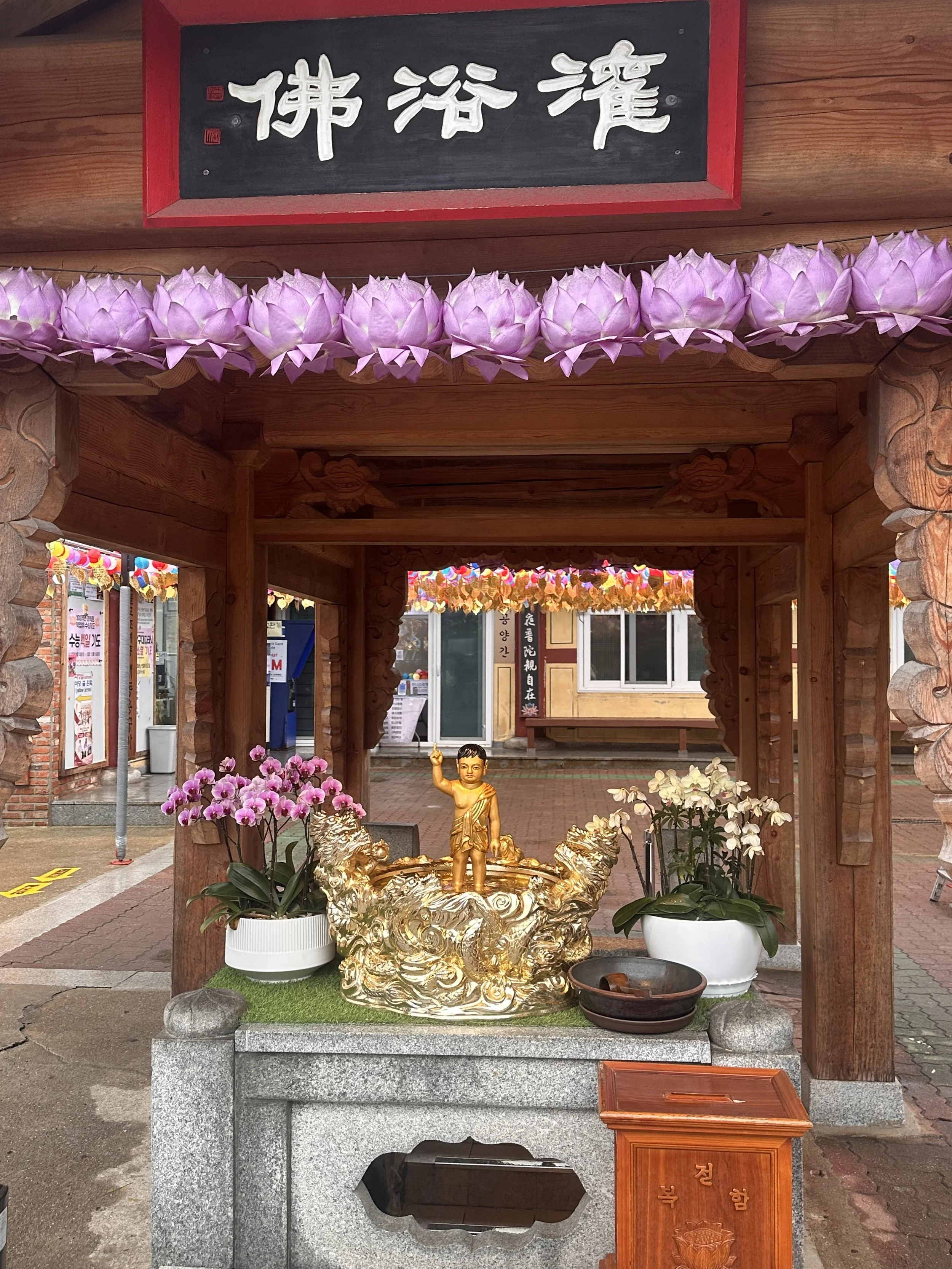
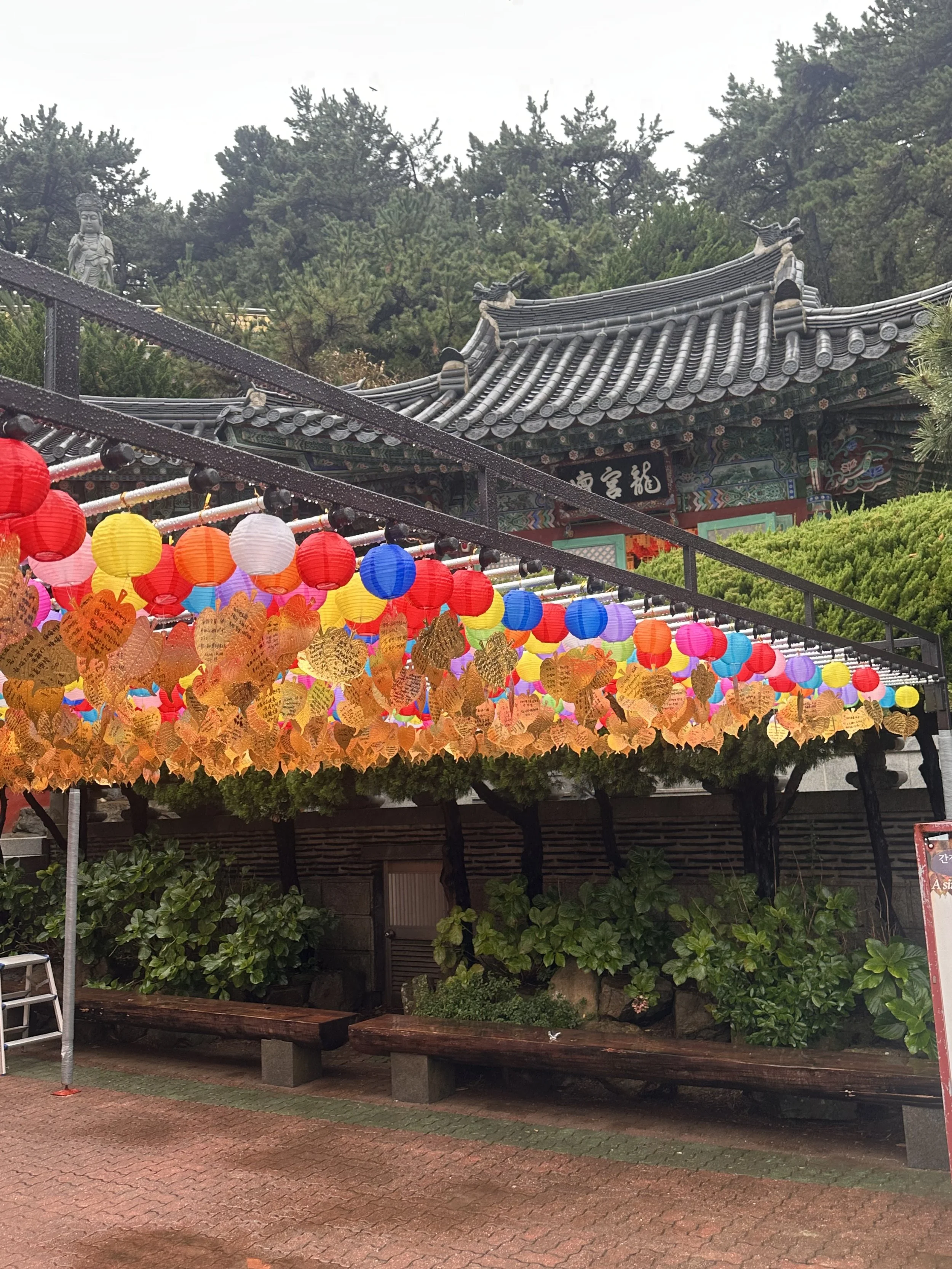
Colorful displays can be found throughout the grounds. Each with a story to tell. For example, on the right is a small gold statue. This is Baby Buddha. Visitors and locals alike, pick up a ladle and perform the ritual Gwanbul (Bathing the Buddha, which symbolizes washing away negative karma, greed and ignorance to purify one’s mind). The baby poses with one finger pointing to heaven and one pointing to earth.
The belief is that when Baby Buddha was born, not only did he immediately walk seven steps, but nine celestial dragons appeared and showered the baby to cleanse him. Now it is tradition to approach the statue, pick up a ladle and gently pour water over the Buddha’s head while quietly praying for a pure heart, inner peace and good fortune.
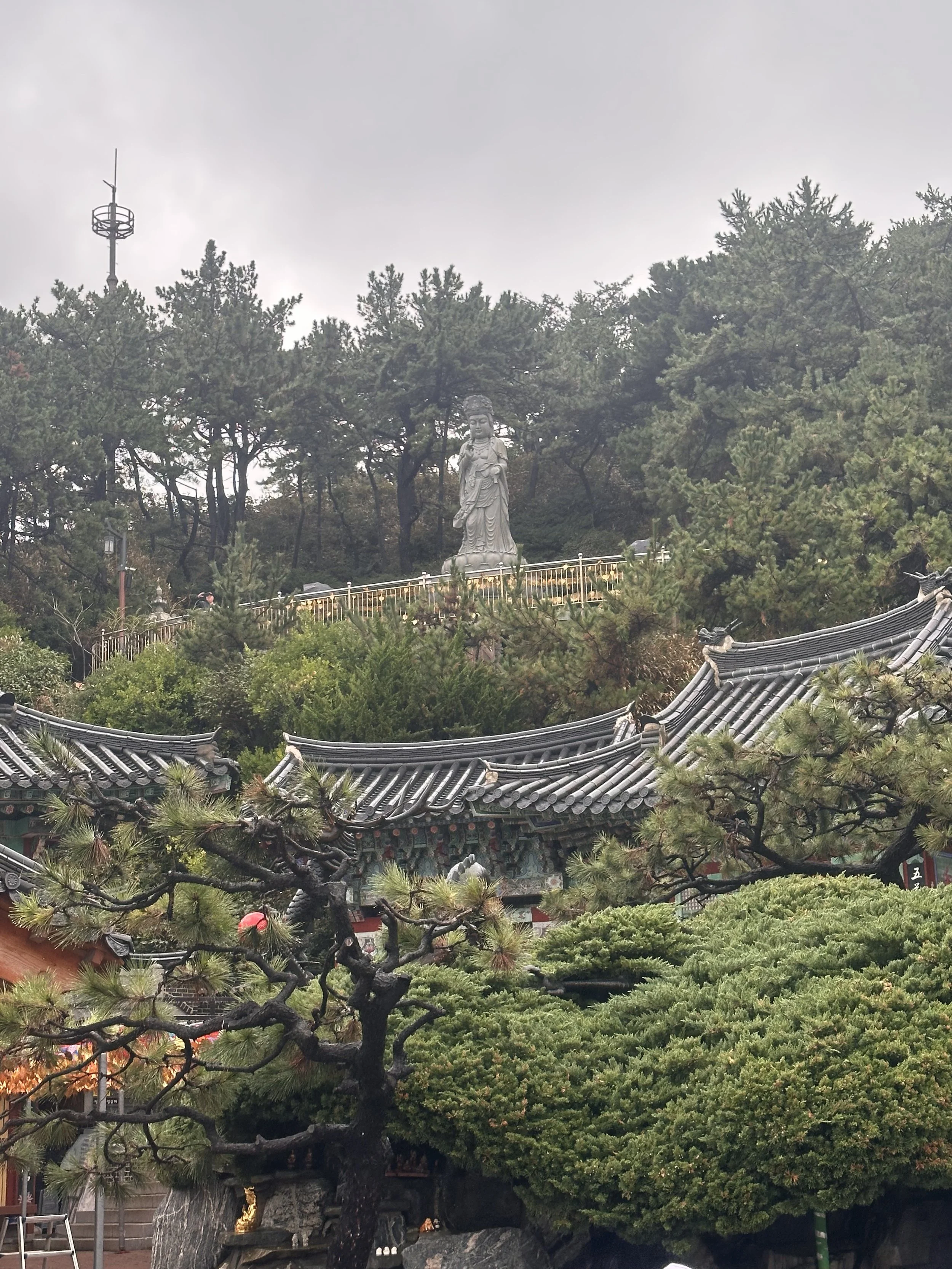
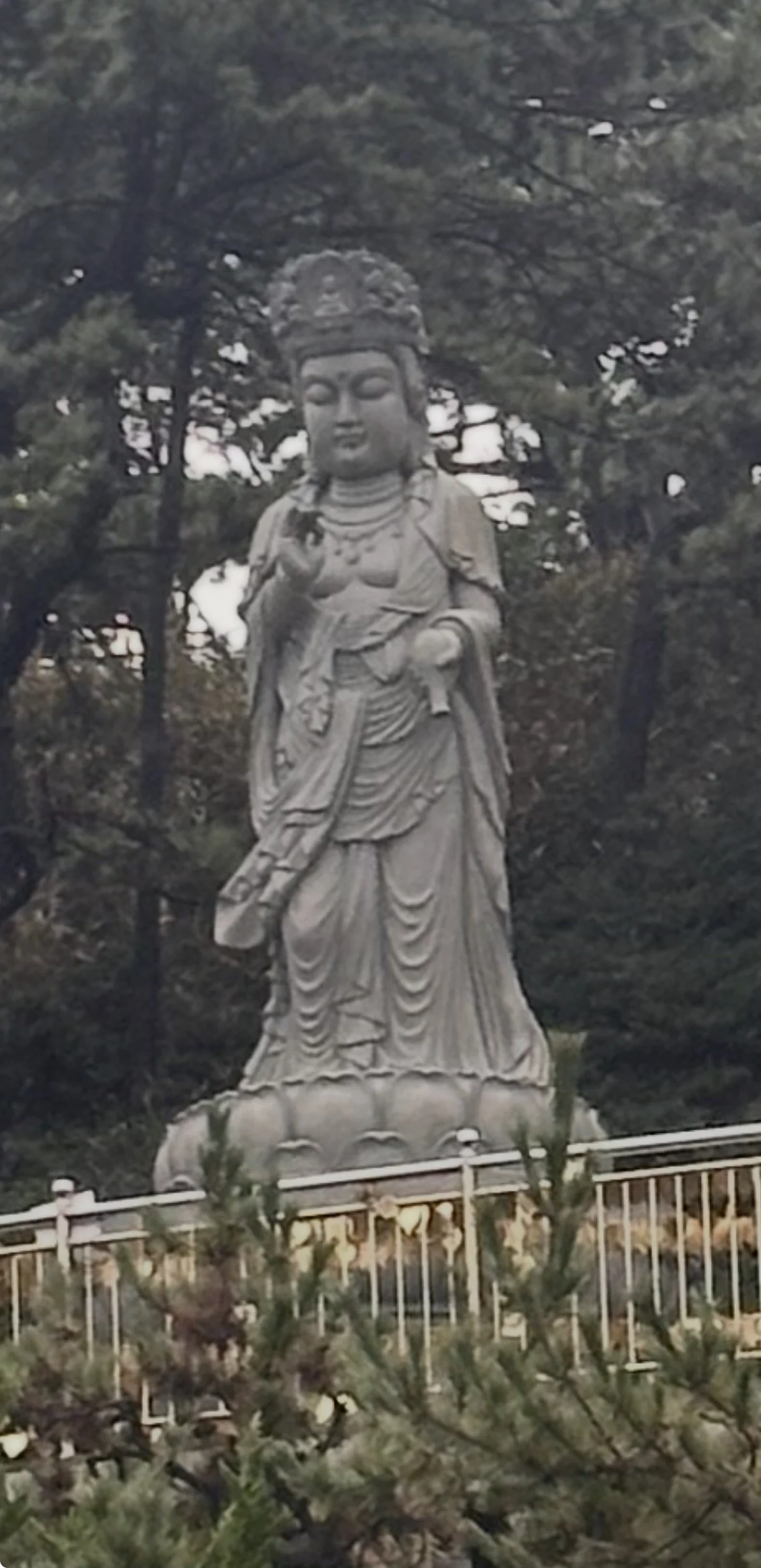
Prominently situated on a hill overlooking the ocean, this statue stands over 35 feet tall. Reading all the plaques and information, I soon realized this is called the Bodhisattva… the same as the Steely Dan song. I didn’t put the two and two together for a bit. In Buddhism, a bodhisattva is an enlightened being who delays entering final nirvana to stay in the world and help others. This is Gwaneum, the Bodhisattva of Compassion. Buddha fully exits the cycle of birth, whereas the bodhisattva reaches the threshold of enlightenment and makes a vow to stay back until every living being is saved.
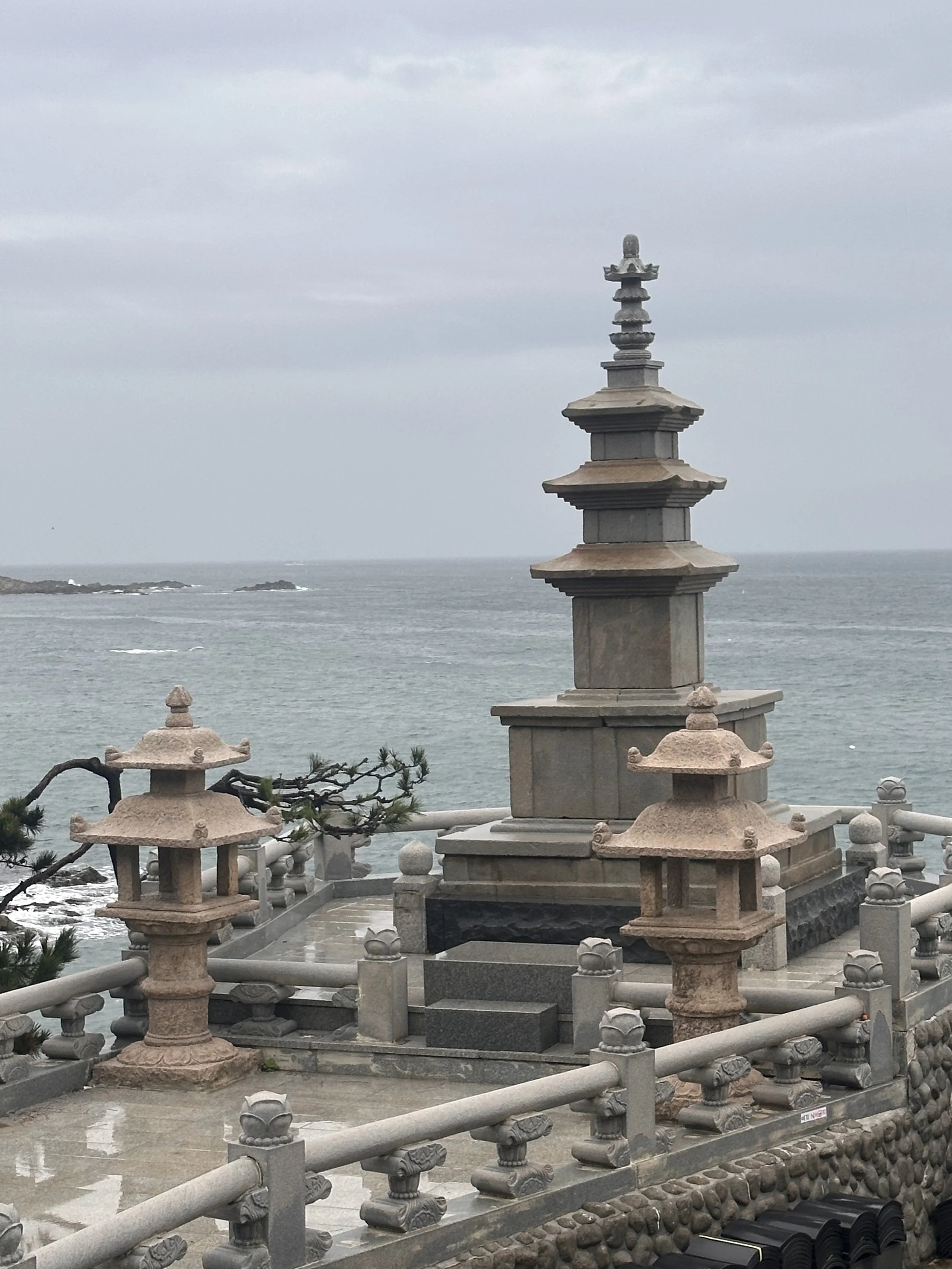
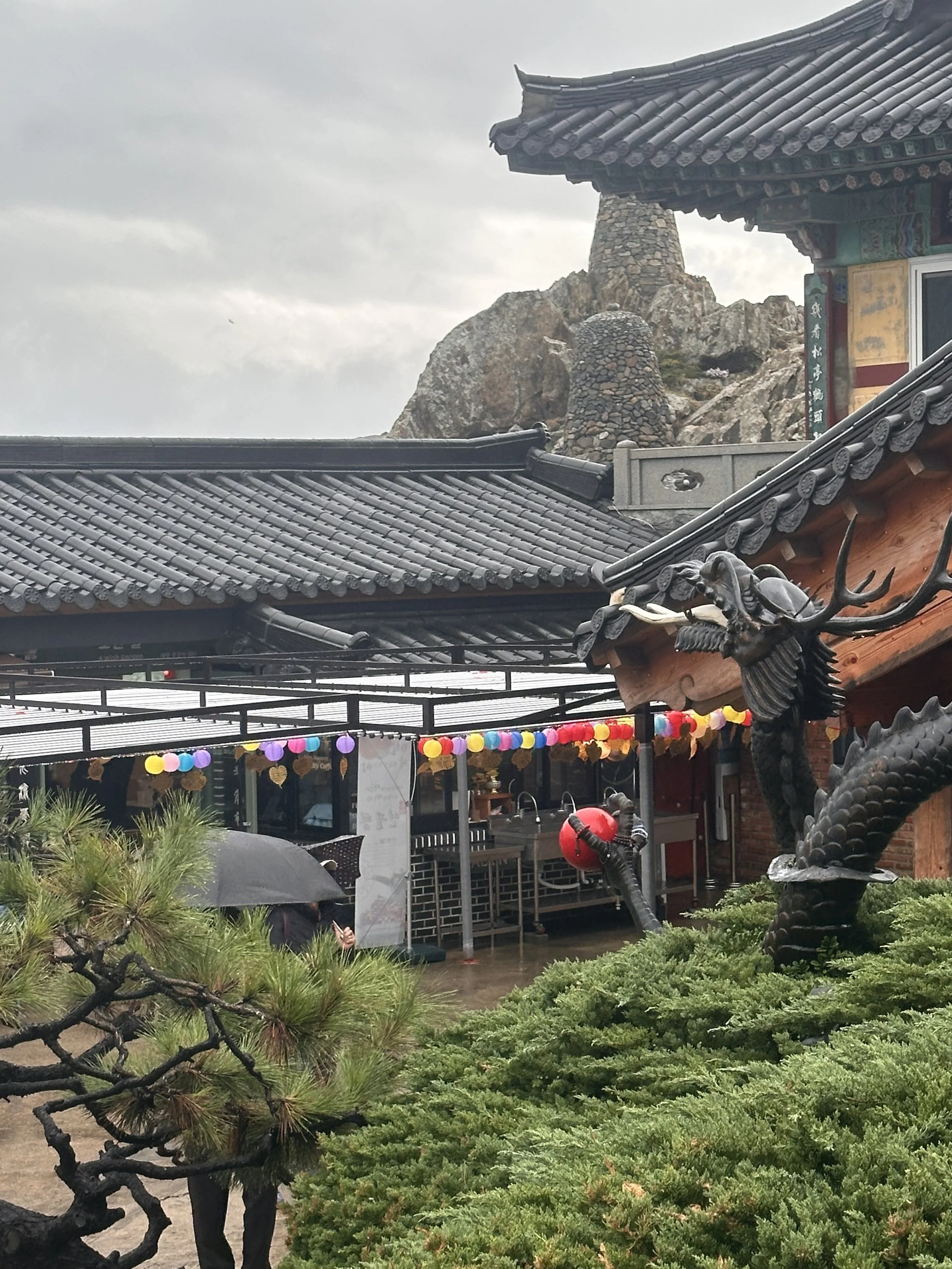
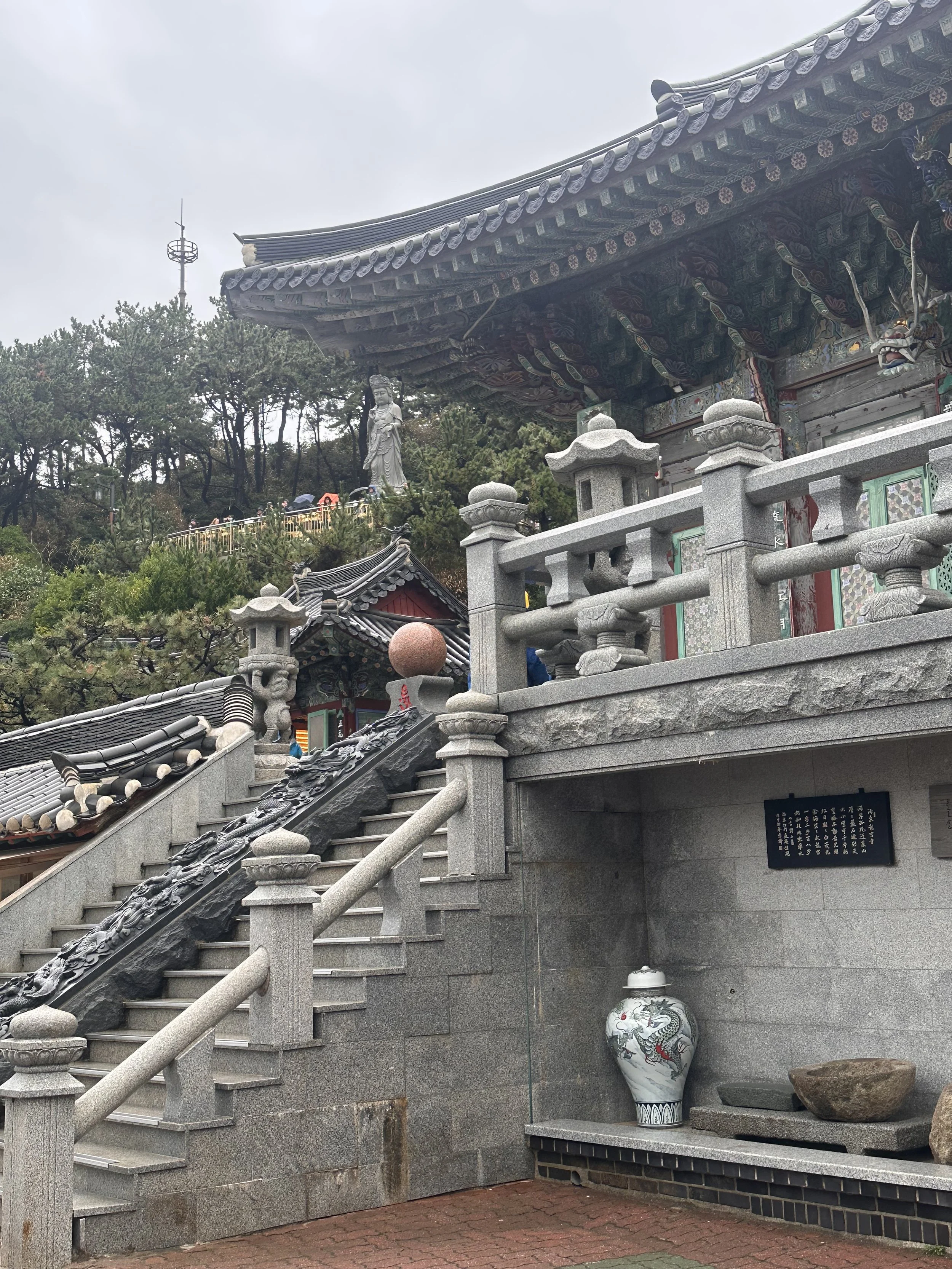
Just a few more photos before I move on… I could go on for hours, but I’ll stop. The area was so scenic and moving, that It was hard to capture everything, but I certainly tried! Next stop… very intersting.